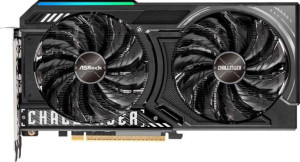
ASRock Radeon RX 9060 XT Challenger OC 16GB
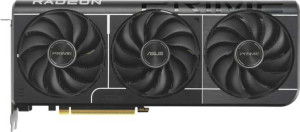
Asus Prime Radeon RX 9060 XT OC Edition 16GB

ASRock Radeon RX 9060 XT Challenger OC 16GB Asus Prime Radeon RX 9060 XT OC Edition 16GB

Overview

Welcome to our head-to-head specification comparison between the ASRock Radeon RX 9060 XT Challenger OC 16GB and the Asus Prime Radeon RX 9060 XT OC Edition 16GB. Both cards share the same RDNA 4.0 architecture and 16GB of GDDR6 memory, yet they differ in key areas such as boost clock speeds, raw compute throughput, and physical dimensions. Read on to see exactly how these two mid-range contenders stack up across every measurable specification.

Common Features

  • Both cards share a base GPU clock speed of 1700 MHz.
  • Both cards have a GPU memory speed of 2518 MHz.
  • Both cards feature 2048 shading units.
  • Both cards have 128 texture mapping units (TMUs).
  • Both cards have 64 render output units (ROPs).
  • Double Precision Floating Point (DPFP) is supported on both cards.
  • Both cards have an effective memory speed of 20000 MHz.
  • Both cards offer a maximum memory bandwidth of 322.3 GB/s.
  • Both cards come with 16GB of VRAM.
  • Both cards use GDDR6 memory.
  • Both cards have a 128-bit memory bus width.
  • ECC memory is supported on both cards.
  • Both cards support DirectX 12 Ultimate.
  • Both cards support OpenGL version 4.6.
  • Both cards support OpenCL version 2.2.
  • Multi-display technology is supported on both cards.
  • Ray tracing is supported on both cards.
  • 3D support is available on both cards.
  • DLSS is not supported on either card.
  • FSR4 is supported on both cards.
  • Both cards have one HDMI 2.1b output and two DisplayPort outputs, with no USB-C, DVI, or mini DisplayPort outputs.
  • Both cards are built on the RDNA 4.0 GPU architecture.
  • Both cards have a Thermal Design Power (TDP) of 160W.
  • Both cards use PCIe version 5.
  • Both cards are manufactured on a 4 nm semiconductor process.
  • Both cards have 29700 million transistors.
  • Air-water cooling is not available on either card.

Main Differences

  • GPU turbo clock speed is 3290 MHz on ASRock Radeon RX 9060 XT Challenger OC 16GB and 3130 MHz on Asus Prime Radeon RX 9060 XT OC Edition 16GB.
  • Pixel rate is 210.6 GPixel/s on ASRock Radeon RX 9060 XT Challenger OC 16GB and 200.3 GPixel/s on Asus Prime Radeon RX 9060 XT OC Edition 16GB.
  • Floating-point performance is 26.95 TFLOPS on ASRock Radeon RX 9060 XT Challenger OC 16GB and 25.64 TFLOPS on Asus Prime Radeon RX 9060 XT OC Edition 16GB.
  • Texture rate is 421.1 GTexels/s on ASRock Radeon RX 9060 XT Challenger OC 16GB and 400.6 GTexels/s on Asus Prime Radeon RX 9060 XT OC Edition 16GB.
  • Card width is 249 mm on ASRock Radeon RX 9060 XT Challenger OC 16GB and 304 mm on Asus Prime Radeon RX 9060 XT OC Edition 16GB.
  • Card height is 132 mm on ASRock Radeon RX 9060 XT Challenger OC 16GB and 126 mm on Asus Prime Radeon RX 9060 XT OC Edition 16GB.
Specs Comparison
ASRock Radeon RX 9060 XT Challenger OC 16GB

ASRock Radeon RX 9060 XT Challenger OC 16GB

Asus Prime Radeon RX 9060 XT OC Edition 16GB

Asus Prime Radeon RX 9060 XT OC Edition 16GB

Performance:
GPU clock speed 1700 MHz 1700 MHz
GPU turbo 3290 MHz 3130 MHz
pixel rate 210.6 GPixel/s 200.3 GPixel/s
floating-point performance 26.95 TFLOPS 25.64 TFLOPS
texture rate 421.1 GTexels/s 400.6 GTexels/s
GPU memory speed 2518 MHz 2518 MHz
shading units 2048 2048
texture mapping units (TMUs) 128 128
render output units (ROPs) 64 64
Has Double Precision Floating Point (DPFP)

Both cards share an identical foundation: the same 1700 MHz base clock, 2048 shading units, 128 TMUs, 64 ROPs, and 2518 MHz memory speed. This means they draw from the exact same silicon architecture and memory subsystem, so any real-world performance gap between them comes down entirely to how aggressively each manufacturer has tuned the boost behavior.

That is where the ASRock Radeon RX 9060 XT Challenger OC pulls ahead. Its GPU turbo of 3290 MHz outpaces the Asus Prime OC Edition's 3130 MHz — a 160 MHz advantage that cascades into measurably higher derived metrics. The ASRock delivers 26.95 TFLOPS of floating-point throughput versus 25.64 TFLOPS on the Asus, a roughly 5% lead. Similarly, its texture rate of 421.1 GTexels/s versus 400.6 GTexels/s means faster texture filtering in complex scenes, and its pixel rate of 210.6 GPixel/s versus 200.3 GPixel/s translates to a slightly higher theoretical fill rate ceiling — relevant in high-resolution or high-framerate workloads.

In practice, a 5% compute and throughput advantage rarely produces a dramatic real-world framerate gap, but it does represent a consistent, measurable edge in GPU-bound scenarios. The ASRock Challenger OC holds a clear performance advantage within this group purely by virtue of its higher factory overclock, while the Asus Prime OC Edition offers the same architectural baseline at a slightly more conservative tune.

Memory:
effective memory speed 20000 MHz 20000 MHz
maximum memory bandwidth 322.3 GB/s 322.3 GB/s
VRAM 16GB 16GB
GDDR version GDDR6 GDDR6
memory bus width 128-bit 128-bit
Supports ECC memory

Memory is one area where choosing between these two cards requires no deliberation whatsoever. Every single specification is identical: 16GB of GDDR6 running at an effective 20000 MHz across a 128-bit bus, yielding 322.3 GB/s of bandwidth. Both also support ECC memory, which is a useful reliability feature for users running compute or professional workloads alongside gaming.

It is worth putting the bandwidth figure in context. At 322.3 GB/s, these cards sit comfortably within the range expected for a mainstream 128-bit GDDR6 configuration. The 16GB capacity is the more noteworthy talking point — at this tier, it is generous enough to handle high-resolution texture packs, large open-world games, and GPU-accelerated creative tasks without hitting the VRAM ceiling that can cause stuttering or quality downgrades. Buyers upgrading from older 8GB cards will notice an immediate practical difference in headroom.

This group is an unambiguous tie. Neither the ASRock Challenger OC nor the Asus Prime OC Edition holds any memory advantage over the other — they are, for all measurable purposes, identical in this category. The decision between them on memory grounds simply cannot be made; other specification groups will have to determine the winner.

Features:
DirectX version DirectX 12 Ultimate DirectX 12 Ultimate
OpenGL version 4.6 4.6
OpenCL version 2.2 2.2
Supports multi-display technology
supports ray tracing
Supports 3D
supports DLSS
has FSR4
has XeSS (XMX)
AMD SAM / Intel Resizable BAR AMD SAM AMD SAM
has LHR
has RGB lighting
supported displays 3 3

Feature parity continues to be the defining story of this comparison. Both cards carry DirectX 12 Ultimate support — the current gold standard for gaming APIs, enabling hardware-accelerated ray tracing, mesh shaders, and variable rate shading across all compliant titles. Ray tracing support is confirmed for both, which is increasingly relevant as more modern games implement it for lighting, shadows, and reflections, though AMD's ray tracing implementation has historically trailed Nvidia's in raw performance efficiency.

The more practically significant shared feature is FSR4 (FidelityFX Super Resolution 4), AMD's latest upscaling technology. FSR4 represents a meaningful generational leap in image quality over its predecessors and is a direct competitive answer to Nvidia's DLSS — notably, neither card supports DLSS, as expected from AMD hardware. For buyers who game at resolutions above 1080p, FSR4 can substantially boost effective framerates with minimal perceptible quality loss, making it a key real-world performance multiplier. Both cards also support AMD SAM (Smart Access Memory), which allows a compatible AMD CPU to access the full VRAM pool directly, offering additional performance headroom on supported platforms.

With every feature — from API support to upscaling technology to the 3-display output limit — landing identically on both cards, this group is a complete tie. Neither the ASRock Challenger OC nor the Asus Prime OC Edition offers any feature the other lacks, and buyers should look to other specification groups to find meaningful points of differentiation.
Ports:
has an HDMI output
HDMI ports 1 1
HDMI version HDMI 2.1b HDMI 2.1b
DisplayPort outputs 2 2
USB-C ports 0 0
DVI outputs 0 0
mini DisplayPort outputs 0 0

Connectivity is straightforward and identical across both cards. Each offers a 1x HDMI 2.1b and 2x DisplayPort outputs, totaling three physical display connections — consistent with the three-display limit noted in the Features group. The absence of USB-C, DVI, and mini DisplayPort outputs is unsurprising at this tier and generation; those interfaces have largely faded from modern discrete GPU designs.

The HDMI 2.1b specification is worth highlighting as a meaningful real-world asset. It supports up to 10K resolution and high refresh rates at 4K — including 4K/144Hz without compression — making it future-proof for high-end displays and TVs. For users connecting to a large-screen television or a high-refresh 4K monitor via HDMI, this version eliminates the bandwidth bottlenecks present in older HDMI standards. The dual DisplayPort outputs complement this well for multi-monitor desktop setups.

As with the previous groups, there is no differentiation to be found here — this is a complete tie. The ASRock Challenger OC and the Asus Prime OC Edition offer an identical port layout, and neither holds any connectivity advantage over the other.

General info:
GPU architecture RDNA 4.0 RDNA 4.0
release date June 2025 May 2025
Thermal Design Power (TDP) 160W 160W
PCI Express (PCIe) version 5 5
semiconductor size 4 nm 4 nm
number of transistors 29700 million 29700 million
Has air-water cooling
width 249 mm 304 mm
height 132 mm 126 mm

At the silicon level, these two cards are indistinguishable. Both are built on the RDNA 4.0 architecture using a 4 nm process node with 29,700 million transistors, and both carry a 160W TDP. That power envelope is notably efficient for the performance tier — it means neither card will demand a high-end PSU, and thermal management in a well-ventilated case should be straightforward for most users. PCIe 5.0 support is present on both, though at current GPU bandwidth demands it remains largely forward-looking rather than immediately impactful.

Physical dimensions are where a genuine, if niche, difference emerges. The ASRock Challenger OC measures 249 mm in length, while the Asus Prime OC Edition stretches considerably further at 304 mm — a 55 mm gap that is not trivial. In compact mid-tower or mini-ITX cases with restricted GPU clearance, the ASRock's shorter footprint could be the deciding factor. The Asus is slightly slimmer in height at 126 mm versus the ASRock's 132 mm, but that 6 mm difference is unlikely to matter in any practical installation scenario.

For the majority of users with standard ATX cases, both cards will fit without issue, making this group essentially a tie in practice. However, for small form factor builds where GPU length is a hard constraint, the ASRock Challenger OC holds a clear physical advantage with its more compact design.

Comparison Summary & Verdict

After examining every specification, both cards prove to be highly capable mid-range graphics cards built on the same RDNA 4.0 foundation with identical memory configurations and feature sets. The deciding factors come down to performance headroom and physical fit. The ASRock Radeon RX 9060 XT Challenger OC 16GB holds a clear edge in raw throughput, offering a higher GPU turbo clock of 3290 MHz, 26.95 TFLOPS of floating-point performance, and a superior texture rate of 421.1 GTexels/s, making it the stronger choice for users who want every last frame. It is also the more compact card at 249 mm in length, which suits smaller PC cases. The Asus Prime Radeon RX 9060 XT OC Edition 16GB, while slightly behind on peak clocks, is a solid option for builders who prioritize a trusted brand ecosystem and are working with a standard mid-tower where its 304 mm length is not a concern. Both share the same 160W TDP, port selection, and feature support, so neither compromises on efficiency or connectivity.

ASRock Radeon RX 9060 XT Challenger OC 16GB
Buy ASRock Radeon RX 9060 XT Challenger OC 16GB if...

Buy the ASRock Radeon RX 9060 XT Challenger OC 16GB if you want the higher boost clock and greater compute throughput, or if you need a more compact card that fits smaller PC cases.

Asus Prime Radeon RX 9060 XT OC Edition 16GB
Buy Asus Prime Radeon RX 9060 XT OC Edition 16GB if...

Buy the Asus Prime Radeon RX 9060 XT OC Edition 16GB if you are building in a standard mid-tower where card length is not a constraint and the slightly lower boost clock meets your needs.