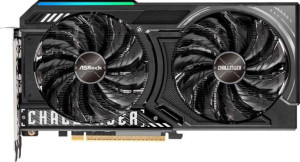
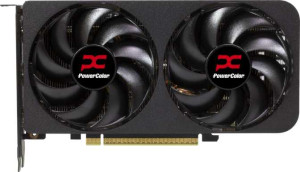
Underneath, these two cards are built from the same foundation: identical RDNA 4.0 architecture, the same 4 nm process node, the same 29,700 million transistors, and a shared 160W TDP. PCIe 5.0 support is present on both, ensuring neither will face interface bandwidth limitations on current or near-future platforms. In terms of what's inside the PCB, there is no story to tell — they are the same chip, drawing the same power.
Physical dimensions, however, tell a different tale. The ASRock Challenger OC measures 249 × 132 mm, while the PowerColor Reaper comes in at a notably more compact 220 × 120 mm — a difference of 29 mm in length and 12 mm in height. That gap is significant in practice. Smaller cases, Mini-ITX and Micro-ATX builds in particular, often impose strict length limits on GPU clearance, and the PowerColor's shorter footprint meaningfully broadens its compatibility with space-constrained enclosures. For standard mid-tower and full-tower builds, the size difference is largely irrelevant.
The PowerColor Reaper holds a clear advantage in this category for anyone building in a compact chassis. Identical power consumption means neither card demands more from the system — the Reaper simply delivers the same platform in a smaller envelope. Builders with no case constraints will find this distinction inconsequential, but for small form factor builds, the PowerColor's dimensions are a genuine differentiator.