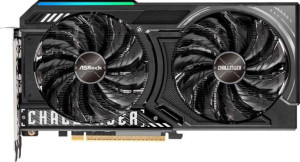
ASRock Radeon RX 9060 XT Challenger OC 16GB
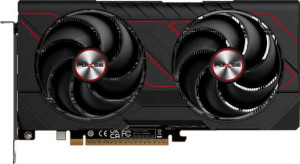
Sapphire Pulse Radeon RX 9060 XT 16GB

ASRock Radeon RX 9060 XT Challenger OC 16GB Sapphire Pulse Radeon RX 9060 XT 16GB

Common Features

  • Both products have a GPU clock speed of 1700 MHz.
  • Both products have a GPU turbo of 3290 MHz.
  • Both products have a pixel rate of 210.6 GPixel/s.
  • Both products have a floating-point performance of 26.95 TFLOPS.
  • Both products have a texture rate of 421.1 GTexels/s.
  • Both products have a GPU memory speed of 2518 MHz.
  • Both products have 2048 shading units.
  • Both products have 128 texture mapping units (TMUs).
  • Both products have an effective memory speed of 20000 MHz.
  • Both products have a maximum memory bandwidth of 322.3 GB/s.
  • Both products have 16GB of VRAM.
  • Both products use GDDR6 memory.
  • Both products have a memory bus width of 128-bit.
  • Both products support ECC memory.
  • Both products support DirectX 12 Ultimate.
  • Both products support OpenGL version 4.6.
  • Both products support OpenCL version 2.2.
  • Both products support multi-display technology.
  • Both products support ray tracing.
  • Both products support 3D.

Main Differences

  • Thermal Design Power (TDP) is 160W on ASRock Radeon RX 9060 XT Challenger OC 16GB and 170W on Sapphire Pulse Radeon RX 9060 XT 16GB.
  • The width is 249 mm on ASRock Radeon RX 9060 XT Challenger OC 16GB and 240 mm on Sapphire Pulse Radeon RX 9060 XT 16GB.
  • The height is 132 mm on ASRock Radeon RX 9060 XT Challenger OC 16GB and 124 mm on Sapphire Pulse Radeon RX 9060 XT 16GB.
  • RGB lighting is present on ASRock Radeon RX 9060 XT Challenger OC 16GB but not available on Sapphire Pulse Radeon RX 9060 XT 16GB.
  • ASRock Radeon RX 9060 XT Challenger OC 16GB has 1 HDMI port while Sapphire Pulse Radeon RX 9060 XT 16GB has 1 HDMI port as well, but they differ in RGB lighting support.
Specs Comparison
ASRock Radeon RX 9060 XT Challenger OC 16GB

ASRock Radeon RX 9060 XT Challenger OC 16GB

Sapphire Pulse Radeon RX 9060 XT 16GB

Sapphire Pulse Radeon RX 9060 XT 16GB

Performance:
GPU clock speed 1700 MHz 1700 MHz
GPU turbo 3290 MHz 3290 MHz
pixel rate 210.6 GPixel/s 210.6 GPixel/s
floating-point performance 26.95 TFLOPS 26.95 TFLOPS
texture rate 421.1 GTexels/s 421.1 GTexels/s
GPU memory speed 2518 MHz 2518 MHz
shading units 2048 2048
texture mapping units (TMUs) 128 128
render output units (ROPs) 64 64
Has Double Precision Floating Point (DPFP)

Both the ASRock Radeon RX 9060 XT Challenger OC 16GB and the Sapphire Pulse Radeon RX 9060 XT 16GB have identical performance specifications. The GPU clock speed for both products is 1700 MHz, with a turbo boost reaching 3290 MHz. Their pixel rate is the same at 210.6 GPixel/s, and they both deliver 26.95 TFLOPS of floating-point performance. In terms of texture rate, both products also match at 421.1 GTexels/s. The GPU memory speed for both is 2518 MHz, and each has 2048 shading units, 128 texture mapping units (TMUs), and 64 render output units (ROPs). Additionally, both products support Double Precision Floating Point (DPFP).

There are no differences between the two models in the performance group specifications provided. Every key, from GPU clock speed to DPFP support, is exactly the same for both products. This makes them equivalent in terms of raw performance metrics within the given specs.

In summary, if you're comparing the ASRock Radeon RX 9060 XT Challenger OC 16GB and the Sapphire Pulse Radeon RX 9060 XT 16GB based on performance, you will find no distinguishing factors in the data. Both cards offer identical performance capabilities across all the listed specifications.

Memory:
effective memory speed 20000 MHz 20000 MHz
maximum memory bandwidth 322.3 GB/s 322.3 GB/s
VRAM 16GB 16GB
GDDR version GDDR6 GDDR6
memory bus width 128-bit 128-bit
Supports ECC memory

The ASRock Radeon RX 9060 XT Challenger OC 16GB and the Sapphire Pulse Radeon RX 9060 XT 16GB have identical memory specifications. Both products feature an effective memory speed of 20000 MHz, a maximum memory bandwidth of 322.3 GB/s, and 16GB of VRAM. Both cards use GDDR6 memory, have a memory bus width of 128-bit, and support ECC (Error Correcting Code) memory.

There are no differences between the two models in the memory group. All the key memory-related specs, including memory speed, bandwidth, VRAM, GDDR version, bus width, and ECC support, are the same for both products.

In summary, the ASRock Radeon RX 9060 XT Challenger OC 16GB and the Sapphire Pulse Radeon RX 9060 XT 16GB are identical when it comes to memory specifications, offering the same performance and features in this area.

Features:
DirectX version DirectX 12 Ultimate DirectX 12 Ultimate
OpenGL version 4.6 4.6
OpenCL version 2.2 2.2
Supports multi-display technology
supports ray tracing
Supports 3D
supports DLSS
has FSR4
has XeSS (XMX)
AMD SAM / Intel Resizable BAR AMD SAM AMD SAM
has LHR
has RGB lighting
supported displays 3 3

The ASRock Radeon RX 9060 XT Challenger OC 16GB and the Sapphire Pulse Radeon RX 9060 XT 16GB have identical features in most areas. Both cards support DirectX 12 Ultimate, OpenGL 4.6, and OpenCL 2.2. They also both support multi-display technology, ray tracing, and 3D rendering. Neither product supports DLSS, but both have FSR4 (FidelityFX Super Resolution 4). Additionally, both cards support AMD SAM (Smart Access Memory) / Intel Resizable BAR, and neither has LHR (Lite Hash Rate) limitations.

The key difference between these two models is the RGB lighting. The ASRock Radeon RX 9060 XT Challenger OC 16GB features RGB lighting, while the Sapphire Pulse Radeon RX 9060 XT 16GB does not. Aside from this, both cards support up to 3 displays.

In summary, the ASRock Radeon RX 9060 XT Challenger OC 16GB and the Sapphire Pulse Radeon RX 9060 XT 16GB are largely identical in features, with the exception of the RGB lighting. If RGB is important to you, the ASRock model is the clear choice, while the Sapphire version lacks this feature.

Ports:
has an HDMI output
HDMI ports 1 1
HDMI version HDMI 2.1b HDMI 2.1b
DisplayPort outputs 2 2
USB-C ports 0 0
DVI outputs 0 0
mini DisplayPort outputs 0 0

The ASRock Radeon RX 9060 XT Challenger OC 16GB and the Sapphire Pulse Radeon RX 9060 XT 16GB have identical port configurations. Both cards feature one HDMI output, with HDMI 2.1b support. They also each have two DisplayPort outputs and do not include USB-C, DVI, or mini DisplayPort outputs.

There are no differences between the two models in terms of ports. Both offer the same HDMI and DisplayPort options, and neither card includes additional video output types.

In summary, the ASRock and Sapphire models are identical in their port setups, providing the same HDMI and DisplayPort connections with no other output options.

General info:
GPU architecture RDNA 4.0 RDNA 4.0
release date June 2025 June 2025
Thermal Design Power (TDP) 160W 170W
PCI Express (PCIe) version 5 5
semiconductor size 4 nm 4 nm
number of transistors 29700 million 29700 million
Has air-water cooling
width 249 mm 240 mm
height 132 mm 124 mm

The ASRock Radeon RX 9060 XT Challenger OC 16GB and the Sapphire Pulse Radeon RX 9060 XT 16GB share many common features in their general specifications. Both cards use the RDNA 4.0 GPU architecture, have a PCIe version of 5, and utilize a semiconductor size of 4 nm. Additionally, both cards have the same number of transistors at 29,700 million. Neither product includes air-water cooling solutions.

However, there are a few differences between the two models. The ASRock model has a Thermal Design Power (TDP) of 160W, while the Sapphire model has a slightly higher TDP of 170W. The physical dimensions also differ slightly: the ASRock card is 249 mm in width and 132 mm in height, while the Sapphire card is 240 mm wide and 124 mm high.

In summary, the ASRock and Sapphire models are very similar in terms of architecture and core specifications, with the main differences being in the TDP and physical size. These variations may impact factors like power consumption and case compatibility.

Comparison Summary

This is a specification comparison between ASRock Radeon RX 9060 XT Challenger OC 16GB and Sapphire Pulse Radeon RX 9060 XT 16GB. Both products share 1700 MHz GPU clock speed, 3290 MHz GPU turbo, 16GB GDDR6 VRAM, and support DirectX 12 Ultimate. However, the ASRock model has a 160W TDP, while the Sapphire model has a 170W TDP. The ASRock version is 249 mm wide, and the Sapphire version is slightly narrower at 240 mm. Additionally, the ASRock model has RGB lighting, while the Sapphire model does not.