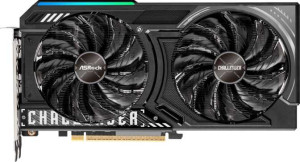
ASRock Radeon RX 9060 XT Challenger OC 8GB
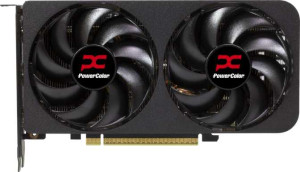
PowerColor Reaper Radeon RX 9060 XT 16GB

ASRock Radeon RX 9060 XT Challenger OC 8GB PowerColor Reaper Radeon RX 9060 XT 16GB

Common Features

  • Both products have a GPU clock speed of 1700 MHz.
  • Both products have a GPU memory speed of 2518 MHz.
  • Both products have 2048 shading units.
  • Both products have 128 texture mapping units (TMUs).
  • Both products have 64 render output units (ROPs).
  • Both products support double precision floating point (DPFP).
  • Both products have an effective memory speed of 20000 MHz.
  • Both products have a maximum memory bandwidth of 322.3 GB/s.
  • Both products use GDDR6 memory.
  • Both products have a memory bus width of 128-bit.
  • Both products support ECC memory.
  • Both products support DirectX 12 Ultimate.
  • Both products support OpenGL version 4.6.
  • Both products support OpenCL version 2.2.
  • Both products support multi-display technology.
  • Both products support ray tracing.
  • Both products support 3D.
  • Both products support FSR4.
  • Both products have HDMI 2.1b and DisplayPort outputs.

Main Differences

  • GPU turbo is 3290 MHz on ASRock Radeon RX 9060 XT Challenger OC 8GB and 3230 MHz on PowerColor Reaper Radeon RX 9060 XT 16GB.
  • Pixel rate is 210.6 GPixel/s on ASRock Radeon RX 9060 XT Challenger OC 8GB and 206.7 GPixel/s on PowerColor Reaper Radeon RX 9060 XT 16GB.
  • Floating-point performance is 26.95 TFLOPS on ASRock Radeon RX 9060 XT Challenger OC 8GB and 26.46 TFLOPS on PowerColor Reaper Radeon RX 9060 XT 16GB.
  • Texture rate is 421.1 GTexels/s on ASRock Radeon RX 9060 XT Challenger OC 8GB and 413.4 GTexels/s on PowerColor Reaper Radeon RX 9060 XT 16GB.
  • VRAM is 8GB on ASRock Radeon RX 9060 XT Challenger OC 8GB and 16GB on PowerColor Reaper Radeon RX 9060 XT 16GB.
  • ASRock Radeon RX 9060 XT Challenger OC 8GB has RGB lighting, while PowerColor Reaper Radeon RX 9060 XT 16GB does not.
  • ASRock Radeon RX 9060 XT Challenger OC 8GB has a width of 249 mm, while PowerColor Reaper Radeon RX 9060 XT 16GB has a width of 220 mm.
  • ASRock Radeon RX 9060 XT Challenger OC 8GB has a height of 132 mm, while PowerColor Reaper Radeon RX 9060 XT 16GB has a height of 120 mm.
Specs Comparison
ASRock Radeon RX 9060 XT Challenger OC 8GB

ASRock Radeon RX 9060 XT Challenger OC 8GB

PowerColor Reaper Radeon RX 9060 XT 16GB

PowerColor Reaper Radeon RX 9060 XT 16GB

Performance:
GPU clock speed 1700 MHz 1700 MHz
GPU turbo 3290 MHz 3230 MHz
pixel rate 210.6 GPixel/s 206.7 GPixel/s
floating-point performance 26.95 TFLOPS 26.46 TFLOPS
texture rate 421.1 GTexels/s 413.4 GTexels/s
GPU memory speed 2518 MHz 2518 MHz
shading units 2048 2048
texture mapping units (TMUs) 128 128
render output units (ROPs) 64 64
Has Double Precision Floating Point (DPFP)

Both the ASRock Radeon RX 9060 XT Challenger OC 8GB and PowerColor Reaper Radeon RX 9060 XT 16GB feature a GPU clock speed of 1700 MHz, but the PowerColor model has a slightly lower GPU turbo at 3230 MHz, compared to the ASRock's 3290 MHz. The pixel rate also varies, with the ASRock reaching 210.6 GPixel/s, while the PowerColor delivers 206.7 GPixel/s. In terms of floating-point performance, the ASRock is slightly ahead with 26.95 TFLOPS, while the PowerColor offers 26.46 TFLOPS. Texture rates are similar, with the ASRock offering 421.1 GTexels/s and the PowerColor at 413.4 GTexels/s.

When it comes to memory, both models feature the same GPU memory speed of 2518 MHz, as well as identical shading units (2048), texture mapping units (128), and render output units (64). Both products also support Double Precision Floating Point (DPFP), confirming their high computational capabilities in both models.

Overall, while the two products share many similarities, the ASRock model slightly edges out the PowerColor in terms of GPU turbo, pixel rate, floating-point performance, and texture rate, though the differences are modest.

Memory:
effective memory speed 20000 MHz 20000 MHz
maximum memory bandwidth 322.3 GB/s 322.3 GB/s
VRAM 8GB 16GB
GDDR version GDDR6 GDDR6
memory bus width 128-bit 128-bit
Supports ECC memory

Both the ASRock Radeon RX 9060 XT Challenger OC 8GB and PowerColor Reaper Radeon RX 9060 XT 16GB offer identical effective memory speeds of 20000 MHz and maximum memory bandwidth of 322.3 GB/s. They also share the same GDDR6 memory type and memory bus width of 128-bit, ensuring similar data transfer capabilities. Additionally, both products support ECC memory, which provides error correction for more reliable performance.

The main difference between the two models lies in the VRAM capacity. The ASRock model features 8GB of VRAM, while the PowerColor model is equipped with 16GB of VRAM, offering twice the memory size. This could be a key factor if you're looking for more memory for demanding applications or future-proofing, as the extra VRAM in the PowerColor may help in scenarios that require more memory, such as higher-resolution textures in gaming or more complex workloads.

In summary, while the memory specifications are largely the same, the PowerColor has a notable advantage in VRAM, with 16GB compared to the 8GB in the ASRock model.

Features:
DirectX version DirectX 12 Ultimate DirectX 12 Ultimate
OpenGL version 4.6 4.6
OpenCL version 2.2 2.2
Supports multi-display technology
supports ray tracing
Supports 3D
supports DLSS
has FSR4
has XeSS (XMX)
AMD SAM / Intel Resizable BAR AMD SAM AMD SAM
has LHR
has RGB lighting
supported displays 3 3

Both the ASRock Radeon RX 9060 XT Challenger OC 8GB and PowerColor Reaper Radeon RX 9060 XT 16GB support the same set of key features, including DirectX 12 Ultimate, OpenGL 4.6, and OpenCL 2.2. They also both support multi-display technology, ray tracing, and 3D, ensuring strong compatibility with modern gaming and multimedia applications. Additionally, neither product supports DLSS, but both support FSR4, providing an alternative for performance improvements in supported games. They also both support AMD SAM (Smart Access Memory) for enhanced performance when paired with compatible AMD processors and motherboards.

The two models differ slightly in terms of RGB lighting, with the ASRock model featuring RGB lighting, while the PowerColor model does not. Both products lack LHR (Lite Hash Rate), meaning they are equally suitable for cryptocurrency mining. Additionally, both products can support up to 3 displays, making them great options for multi-monitor setups.

In summary, while the two products share almost identical feature sets, the ASRock model offers RGB lighting, which may be a point of interest for users who prefer customizable lighting effects in their builds.

Ports:
has an HDMI output
HDMI ports 1 1
HDMI version HDMI 2.1b HDMI 2.1b
DisplayPort outputs 2 2
USB-C ports 0 0
DVI outputs 0 0
mini DisplayPort outputs 0 0

Both the ASRock Radeon RX 9060 XT Challenger OC 8GB and PowerColor Reaper Radeon RX 9060 XT 16GB are equipped with identical port configurations. They both have 1 HDMI output supporting HDMI 2.1b, and 2 DisplayPort outputs. Neither card includes USB-C ports, DVI outputs, or mini DisplayPort outputs, meaning their display connectivity options are almost identical.

As both models have the same set of ports, there are no differences in this area, ensuring that either card offers the same flexibility for connecting to various monitors or displays.

In conclusion, both the ASRock and PowerColor models provide the same port options, giving users equivalent connectivity possibilities.

General info:
GPU architecture RDNA 4.0 RDNA 4.0
release date June 2025 June 2025
Thermal Design Power (TDP) 160W 160W
PCI Express (PCIe) version 5 5
semiconductor size 4 nm 4 nm
number of transistors 29700 million 29700 million
Has air-water cooling
width 249 mm 220 mm
height 132 mm 120 mm

Both the ASRock Radeon RX 9060 XT Challenger OC 8GB and PowerColor Reaper Radeon RX 9060 XT 16GB are built on the same GPU architecture, RDNA 4.0, and share identical specifications for Thermal Design Power (TDP) at 160W, PCI Express version 5, semiconductor size at 4 nm, and number of transistors at 29700 million. Both models also lack air-water cooling solutions, which is worth noting for cooling preferences.

The primary difference between the two cards lies in their physical dimensions. The ASRock model measures 249 mm in width and 132 mm in height, while the PowerColor model is slightly smaller, measuring 220 mm in width and 120 mm in height. This makes the PowerColor card a bit more compact, which may be a consideration for users with limited space in their PC case.

Overall, while the two products are almost identical in terms of core specifications, the difference in size may affect installation and fit, with the PowerColor model being more compact than the ASRock model.

Comparison Summary

This is a specification comparison between ASRock Radeon RX 9060 XT Challenger OC 8GB and PowerColor Reaper Radeon RX 9060 XT 16GB. Both products share a GPU clock speed of 1700 MHz, GPU memory speed of 2518 MHz, and GDDR6 memory with a memory bus width of 128-bit. Key differences include the GPU turbo speeds of 3290 MHz on the ASRock model and 3230 MHz on the PowerColor model, the VRAM amount of 8GB on the ASRock and 16GB on the PowerColor, and the presence of RGB lighting on the ASRock product but not on the PowerColor. Additionally, the ASRock version has a width of 249 mm and height of 132 mm, compared to the PowerColor’s 220 mm width and 120 mm height.