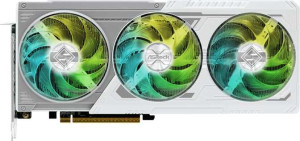
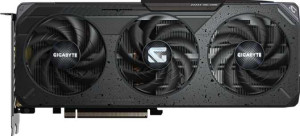
When comparing the performance specifications of the ASRock RX 9060 XT Steel Legend OC 16GB and the Gigabyte RX 9060 XT Gaming OC 16GB, the result is a rare and complete tie across every single metric in this group. Both cards share an identical base clock of 1900 MHz and a turbo clock of 3320 MHz, meaning neither will boost higher or sustain a frequency advantage over the other under load. That turbo figure is meaningful in practice — a higher boost clock directly translates to more instructions processed per second in GPU-bound scenarios like gaming or rendering.
The theoretical throughput numbers confirm this parity. Both deliver 27.2 TFLOPS of floating-point performance, a texture rate of 425 GTexels/s, and a pixel fill rate of 212.5 GPixel/s — figures that reflect identical shader, TMU, and ROP configurations of 2048 shading units, 128 TMUs, and 64 ROPs respectively. In real-world terms, the texture rate governs how quickly surfaces can be rendered with detail, while the pixel rate determines how fast the GPU can output final pixels to the display. Equal numbers here mean equal performance ceilings in these workloads. Memory bandwidth potential is also matched, with both running at 2518 MHz VRAM speed, ensuring neither has an edge in data-throughput-sensitive tasks like high-resolution texturing or compute workloads.
Both GPUs also support Double Precision Floating Point (DPFP), which is relevant for scientific compute, simulation, or professional workflows beyond gaming. The conclusion for this group is straightforward: on paper, these two cards are performance equals. Any real-world difference in frame rates or compute throughput will come down to thermal management and sustained clock behavior under load — factors outside the scope of these specification figures.