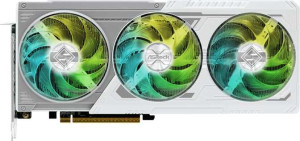
ASRock Radeon RX 9060 XT Steel Legend OC 16GB
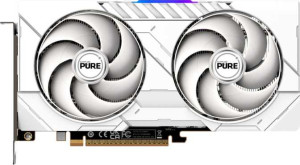
Sapphire Pure Radeon RX 9060 XT 16GB

ASRock Radeon RX 9060 XT Steel Legend OC 16GB Sapphire Pure Radeon RX 9060 XT 16GB

Common Features

  • Both products have 16GB of VRAM.
  • Both products use GDDR6 memory.
  • Both products support ECC memory.
  • Both products have a 128-bit memory bus width.
  • Both products have a maximum memory bandwidth of 322.3 GB/s.
  • Both products support DirectX 12 Ultimate.
  • Both products support OpenGL version 4.6.
  • Both products support OpenCL version 2.2.
  • Both products support multi-display technology.
  • Both products support ray tracing.
  • Both products support 3D.
  • Both products support FSR4.
  • Both products have one HDMI output with HDMI 2.1b version.
  • Both products have two DisplayPort outputs.
  • Both products have a GPU architecture of RDNA 4.0.
  • Both products have PCI Express (PCIe) version 5.
  • Both products are built on a 4 nm semiconductor size.
  • Both products have 29700 million transistors.
  • Neither product has air-water cooling.

Main Differences

  • GPU clock speed is 1900 MHz on ASRock Radeon RX 9060 XT Steel Legend OC 16GB and 1700 MHz on Sapphire Pure Radeon RX 9060 XT 16GB.
  • GPU turbo is 3320 MHz on ASRock Radeon RX 9060 XT Steel Legend OC 16GB and 3290 MHz on Sapphire Pure Radeon RX 9060 XT 16GB.
  • Pixel rate is 212.5 GPixel/s on ASRock Radeon RX 9060 XT Steel Legend OC 16GB and 210.6 GPixel/s on Sapphire Pure Radeon RX 9060 XT 16GB.
  • Floating-point performance is 27.2 TFLOPS on ASRock Radeon RX 9060 XT Steel Legend OC 16GB and 26.95 TFLOPS on Sapphire Pure Radeon RX 9060 XT 16GB.
  • Texture rate is 425 GTexels/s on ASRock Radeon RX 9060 XT Steel Legend OC 16GB and 421.1 GTexels/s on Sapphire Pure Radeon RX 9060 XT 16GB.
  • ASRock Radeon RX 9060 XT Steel Legend OC 16GB has RGB lighting, while Sapphire Pure Radeon RX 9060 XT 16GB does not.
  • Thermal Design Power (TDP) is 160W on ASRock Radeon RX 9060 XT Steel Legend OC 16GB and 170W on Sapphire Pure Radeon RX 9060 XT 16GB.
  • ASRock Radeon RX 9060 XT Steel Legend OC 16GB is 298 mm wide and 131 mm high, while Sapphire Pure Radeon RX 9060 XT 16GB is 240 mm wide and 124 mm high.
Specs Comparison
ASRock Radeon RX 9060 XT Steel Legend OC 16GB

ASRock Radeon RX 9060 XT Steel Legend OC 16GB

Sapphire Pure Radeon RX 9060 XT 16GB

Sapphire Pure Radeon RX 9060 XT 16GB

Performance:
GPU clock speed 1900 MHz 1700 MHz
GPU turbo 3320 MHz 3290 MHz
pixel rate 212.5 GPixel/s 210.6 GPixel/s
floating-point performance 27.2 TFLOPS 26.95 TFLOPS
texture rate 425 GTexels/s 421.1 GTexels/s
GPU memory speed 2518 MHz 2518 MHz
shading units 2048 2048
texture mapping units (TMUs) 128 128
render output units (ROPs) 64 64
Has Double Precision Floating Point (DPFP)

The ASRock Radeon RX 9060 XT Steel Legend OC 16GB and the Sapphire Pure Radeon RX 9060 XT 16GB are similar in many of their performance specs, but there are some key differences worth noting. The ASRock model has a slightly higher GPU clock speed at 1900 MHz, compared to Sapphire's 1700 MHz. However, both products feature the same GPU turbo speeds, with the ASRock reaching 3320 MHz and the Sapphire slightly trailing at 3290 MHz. This means both GPUs can offer similar peak performance when pushed to their limits.

In terms of pixel rate, the ASRock card offers 212.5 GPixel/s, while the Sapphire card delivers 210.6 GPixel/s, showing a very small difference in favor of the ASRock model. For floating-point performance, the ASRock also holds a marginal advantage with 27.2 TFLOPS compared to the Sapphire’s 26.95 TFLOPS. The texture rate is nearly identical, with the ASRock at 425 GTexels/s and the Sapphire just slightly lower at 421.1 GTexels/s.

Both cards feature the same GPU memory speed of 2518 MHz and identical counts of shading units (2048), texture mapping units (128), and render output units (64). Additionally, both products support Double Precision Floating Point (DPFP), ensuring high-precision computing for demanding tasks.

Memory:
effective memory speed 20000 MHz 20000 MHz
maximum memory bandwidth 322.3 GB/s 322.3 GB/s
VRAM 16GB 16GB
GDDR version GDDR6 GDDR6
memory bus width 128-bit 128-bit
Supports ECC memory

The memory specifications for the ASRock Radeon RX 9060 XT Steel Legend OC 16GB and the Sapphire Pure Radeon RX 9060 XT 16GB are identical across all key metrics. Both products feature an effective memory speed of 20000 MHz, providing high-speed data transfer rates. They also offer a maximum memory bandwidth of 322.3 GB/s, which ensures efficient handling of large amounts of data.

Both cards are equipped with 16GB of VRAM, ensuring sufficient memory for demanding gaming and professional applications. Additionally, both the ASRock and Sapphire models use GDDR6 memory, offering a good balance of performance and power efficiency. The memory bus width is the same for both at 128-bit, which is a common width for this class of graphics cards.

In terms of memory reliability, both cards support ECC (Error-Correcting Code) memory, which helps in detecting and correcting memory errors, ensuring stability during long periods of heavy use.

Features:
DirectX version DirectX 12 Ultimate DirectX 12 Ultimate
OpenGL version 4.6 4.6
OpenCL version 2.2 2.2
Supports multi-display technology
supports ray tracing
Supports 3D
supports DLSS
has FSR4
has XeSS (XMX)
AMD SAM / Intel Resizable BAR AMD SAM AMD SAM
has LHR
has RGB lighting
supported displays 3 3

The ASRock Radeon RX 9060 XT Steel Legend OC 16GB and the Sapphire Pure Radeon RX 9060 XT 16GB are quite similar in terms of features, with both cards supporting the same key technologies. Both cards are compatible with DirectX 12 Ultimate, OpenGL 4.6, and OpenCL 2.2, ensuring support for modern gaming and professional applications. They also both support multi-display technology, ray tracing, and 3D, making them suitable for a wide range of immersive experiences.

One key difference between the two products is the presence of RGB lighting. The ASRock model features RGB lighting, while the Sapphire model does not. Otherwise, both cards lack support for DLSS (Deep Learning Super Sampling) and XeSS (XMX), and both support FSR4 (FidelityFX Super Resolution 4), providing an alternative method for improved performance in supported games.

In terms of system compatibility, both cards support AMD SAM (Smart Access Memory) and do not include LHR (Lite Hash Rate), which is important for users concerned with mining performance. Both models can support up to 3 displays, offering ample connectivity for multi-monitor setups.

Ports:
has an HDMI output
HDMI ports 1 1
HDMI version HDMI 2.1b HDMI 2.1b
DisplayPort outputs 2 2
USB-C ports 0 0
DVI outputs 0 0
mini DisplayPort outputs 0 0

The ASRock Radeon RX 9060 XT Steel Legend OC 16GB and the Sapphire Pure Radeon RX 9060 XT 16GB share identical port configurations. Both cards come equipped with a single HDMI 2.1b output, making them compatible with modern HDMI standards for high refresh rates and resolution. Additionally, both models feature two DisplayPort outputs, which are ideal for users looking to connect multiple monitors for expanded setups.

Neither product includes USB-C ports, DVI outputs, or mini DisplayPort outputs, so users looking for those specific connection types will need to consider other options. Overall, both cards offer a similar selection of display ports suitable for a wide range of use cases.

General info:
GPU architecture RDNA 4.0 RDNA 4.0
release date June 2025 June 2025
Thermal Design Power (TDP) 160W 170W
PCI Express (PCIe) version 5 5
semiconductor size 4 nm 4 nm
number of transistors 29700 million 29700 million
Has air-water cooling
width 298 mm 240 mm
height 131 mm 124 mm

The ASRock Radeon RX 9060 XT Steel Legend OC 16GB and the Sapphire Pure Radeon RX 9060 XT 16GB are equipped with the same RDNA 4.0 GPU architecture, ensuring they offer similar fundamental graphics performance. Both cards use the same 4 nm semiconductor size and have 29,700 million transistors, providing a solid base for powerful processing capabilities.

There is a slight difference in the thermal design power (TDP), with the ASRock model having a TDP of 160W, while the Sapphire model has a slightly higher TDP of 170W. This suggests that the Sapphire card may draw more power under load, though both are within typical limits for high-performance GPUs.

Both cards support PCIe version 5, ensuring compatibility with the latest motherboards and maximizing data transfer rates. The ASRock card is larger, measuring 298 mm in width and 131 mm in height, while the Sapphire card is more compact, at 240 mm in width and 124 mm in height. Neither card features air-water cooling, so users will need to rely on traditional cooling solutions for thermal management.

Comparison Summary

This is a specification comparison between ASRock Radeon RX 9060 XT Steel Legend OC 16GB and Sapphire Pure Radeon RX 9060 XT 16GB. Both products share a 16GB VRAM capacity, use GDDR6 memory, support ray tracing, and have a 128-bit memory bus width. The ASRock model has a higher GPU clock speed of 1900 MHz compared to 1700 MHz on the Sapphire model, while its floating-point performance reaches 27.2 TFLOPS versus 26.95 TFLOPS on the Sapphire model. Additionally, the ASRock model features RGB lighting, which is absent on the Sapphire model. The ASRock card also has a lower TDP of 160W, while the Sapphire model is rated at 170W. Finally, the ASRock model is slightly larger in width and height than the Sapphire model.