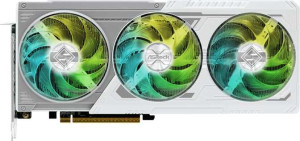
ASRock Radeon RX 9060 XT Steel Legend OC 16GB
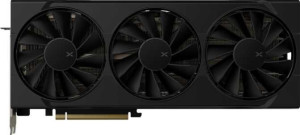
XFX Swift Radeon RX 9070 XT Triple Fan Gaming Edition

ASRock Radeon RX 9060 XT Steel Legend OC 16GB XFX Swift Radeon RX 9070 XT Triple Fan Gaming Edition

Overview

Welcome to our in-depth specification comparison between the ASRock Radeon RX 9060 XT Steel Legend OC 16GB and the XFX Swift Radeon RX 9070 XT Triple Fan Gaming Edition. Both cards share the same RDNA 4.0 architecture, 16GB of GDDR6 memory, and a 4 nm manufacturing process, yet they target very different segments of the market. This comparison explores key battlegrounds including raw compute performance, memory bandwidth, power consumption, and physical dimensions to help you make the most informed decision.

Common Features

  • Both cards share a GPU memory speed of 2518 MHz.
  • Double Precision Floating Point (DPFP) is supported on both products.
  • Both cards have an effective memory speed of 20000 MHz.
  • Both cards feature 16GB of VRAM.
  • Both cards use GDDR6 memory.
  • ECC memory support is available on both products.
  • Both cards support DirectX 12 Ultimate.
  • Both cards support OpenGL version 4.6.
  • Both cards support OpenCL version 2.2.
  • Multi-display technology is supported on both products.
  • Ray tracing is supported on both products.
  • 3D support is available on both products.
  • DLSS is not supported on either product.
  • FSR4 is supported on both products.
  • Both cards include one HDMI port using HDMI version 2.1b.
  • Neither card has any USB-C ports, DVI outputs, or mini DisplayPort outputs.
  • Both cards are built on the RDNA 4.0 GPU architecture.
  • Both cards use PCIe version 5.
  • Both cards are manufactured using a 4 nm semiconductor process.
  • Air-water cooling is not available on either product.

Main Differences

  • GPU base clock speed is 1900 MHz on ASRock Radeon RX 9060 XT Steel Legend OC 16GB and 1660 MHz on XFX Swift Radeon RX 9070 XT Triple Fan Gaming Edition.
  • GPU turbo clock speed is 3320 MHz on ASRock Radeon RX 9060 XT Steel Legend OC 16GB and 2970 MHz on XFX Swift Radeon RX 9070 XT Triple Fan Gaming Edition.
  • Pixel rate is 212.5 GPixel/s on ASRock Radeon RX 9060 XT Steel Legend OC 16GB and 380.2 GPixel/s on XFX Swift Radeon RX 9070 XT Triple Fan Gaming Edition.
  • Floating-point performance is 27.2 TFLOPS on ASRock Radeon RX 9060 XT Steel Legend OC 16GB and 48.66 TFLOPS on XFX Swift Radeon RX 9070 XT Triple Fan Gaming Edition.
  • Texture rate is 425 GTexels/s on ASRock Radeon RX 9060 XT Steel Legend OC 16GB and 760.3 GTexels/s on XFX Swift Radeon RX 9070 XT Triple Fan Gaming Edition.
  • Shading units number 2048 on ASRock Radeon RX 9060 XT Steel Legend OC 16GB and 4096 on XFX Swift Radeon RX 9070 XT Triple Fan Gaming Edition.
  • Texture mapping units (TMUs) total 128 on ASRock Radeon RX 9060 XT Steel Legend OC 16GB and 256 on XFX Swift Radeon RX 9070 XT Triple Fan Gaming Edition.
  • Render output units (ROPs) number 64 on ASRock Radeon RX 9060 XT Steel Legend OC 16GB and 128 on XFX Swift Radeon RX 9070 XT Triple Fan Gaming Edition.
  • Maximum memory bandwidth is 322.3 GB/s on ASRock Radeon RX 9060 XT Steel Legend OC 16GB and 640 GB/s on XFX Swift Radeon RX 9070 XT Triple Fan Gaming Edition.
  • Memory bus width is 128-bit on ASRock Radeon RX 9060 XT Steel Legend OC 16GB and 256-bit on XFX Swift Radeon RX 9070 XT Triple Fan Gaming Edition.
  • Supported display count is 3 on ASRock Radeon RX 9060 XT Steel Legend OC 16GB and 4 on XFX Swift Radeon RX 9070 XT Triple Fan Gaming Edition.
  • DisplayPort outputs number 2 on ASRock Radeon RX 9060 XT Steel Legend OC 16GB and 3 on XFX Swift Radeon RX 9070 XT Triple Fan Gaming Edition.
  • Thermal Design Power (TDP) is 160W on ASRock Radeon RX 9060 XT Steel Legend OC 16GB and 304W on XFX Swift Radeon RX 9070 XT Triple Fan Gaming Edition.
  • Transistor count is 29700 million on ASRock Radeon RX 9060 XT Steel Legend OC 16GB and 53900 million on XFX Swift Radeon RX 9070 XT Triple Fan Gaming Edition.
  • Card width is 298 mm on ASRock Radeon RX 9060 XT Steel Legend OC 16GB and 325 mm on XFX Swift Radeon RX 9070 XT Triple Fan Gaming Edition.
  • Card height is 131 mm on ASRock Radeon RX 9060 XT Steel Legend OC 16GB and 150 mm on XFX Swift Radeon RX 9070 XT Triple Fan Gaming Edition.
Specs Comparison
ASRock Radeon RX 9060 XT Steel Legend OC 16GB

ASRock Radeon RX 9060 XT Steel Legend OC 16GB

XFX Swift Radeon RX 9070 XT Triple Fan Gaming Edition

XFX Swift Radeon RX 9070 XT Triple Fan Gaming Edition

Performance:
GPU clock speed 1900 MHz 1660 MHz
GPU turbo 3320 MHz 2970 MHz
pixel rate 212.5 GPixel/s 380.2 GPixel/s
floating-point performance 27.2 TFLOPS 48.66 TFLOPS
texture rate 425 GTexels/s 760.3 GTexels/s
GPU memory speed 2518 MHz 2518 MHz
shading units 2048 4096
texture mapping units (TMUs) 128 256
render output units (ROPs) 64 128
Has Double Precision Floating Point (DPFP)

The most telling story in this performance group is not clock speed — it is shader count. The ASRock RX 9060 XT runs at a higher base and turbo clock (1900 MHz / 3320 MHz) compared to the XFX RX 9070 XT (1660 MHz / 2970 MHz), which might suggest a raw speed advantage. However, the 9070 XT carries exactly twice the shading units (4096 vs 2048), twice the TMUs (256 vs 128), and twice the ROPs (128 vs 64). In GPU architecture, these units do the actual computational heavy lifting, and doubling them outweighs a clock speed lead by a wide margin.

That architectural gap translates directly into the throughput numbers. The XFX 9070 XT delivers 48.66 TFLOPS of floating-point performance versus 27.2 TFLOPS for the 9060 XT — nearly an 80% advantage in raw compute. Similarly, its texture rate of 760.3 GTexels/s versus 425 GTexels/s means it can process far more texture data per second, which matters in high-resolution and detail-rich scenes. The pixel fill rate of 380.2 GPixel/s versus 212.5 GPixel/s gives the 9070 XT a substantial edge in rendering output, particularly at 4K where the pipeline needs to push far more pixels per frame. Both cards share identical memory speed at 2518 MHz and both support Double Precision Floating Point, so those two attributes offer no differentiation.

The XFX RX 9070 XT holds a clear and decisive performance advantage in this group. Its lower clock speeds are a non-issue given its far wider execution architecture — the 9060 XT's higher clocks are essentially compensating for having half the hardware resources. For users prioritizing raw rendering throughput, compute workloads, or high-resolution gaming, the 9070 XT is the significantly more capable card based strictly on these specs.

Memory:
effective memory speed 20000 MHz 20000 MHz
maximum memory bandwidth 322.3 GB/s 640 GB/s
VRAM 16GB 16GB
GDDR version GDDR6 GDDR6
memory bus width 128-bit 256-bit
Supports ECC memory

On the surface, these two cards look nearly identical in memory configuration: both carry 16GB of GDDR6 VRAM, run at the same effective memory speed of 20000 MHz, and both support ECC memory. For users focused purely on VRAM capacity — which determines how much texture, geometry, and scene data can be held on-card — neither card has an edge. 16GB is a generous and future-facing amount at this tier, comfortably handling 4K texture packs and large generative AI workloads.

Where the two cards diverge sharply is the memory bus width. The RX 9060 XT uses a 128-bit bus, while the RX 9070 XT doubles that to a 256-bit bus. Since both chips run memory at identical speeds, the wider bus on the 9070 XT is directly responsible for its 640 GB/s of memory bandwidth versus just 322.3 GB/s on the 9060 XT — almost exactly a 2x difference. Bandwidth governs how quickly the GPU can feed data to its shaders, and at higher resolutions or with complex rendering effects, a starved memory bus becomes a bottleneck regardless of how fast the compute units are.

The XFX RX 9070 XT takes a clear win in this group. While equal VRAM capacity means neither card runs out of memory sooner than the other, the 9070 XT's doubled bandwidth ensures its more powerful execution units are consistently well-fed with data. Combined with the compute advantage seen in the performance group, this memory configuration reinforces that the 9060 XT's narrower bus is a meaningful architectural constraint at demanding workloads.

Features:
DirectX version DirectX 12 Ultimate DirectX 12 Ultimate
OpenGL version 4.6 4.6
OpenCL version 2.2 2.2
Supports multi-display technology
supports ray tracing
Supports 3D
supports DLSS
has FSR4
has XeSS (XMX)
AMD SAM / Intel Resizable BAR AMD SAM AMD SAM
has LHR
has RGB lighting
supported displays 3 4

Rarely in a comparison do two products align this closely on features, but that is precisely the case here. Both cards share an identical software and API foundation: DirectX 12 Ultimate, OpenGL 4.6, OpenCL 2.2, ray tracing support, FSR4, and AMD SAM. Neither supports DLSS or XeSS, which is expected given both are AMD products. FSR4 is AMD's most advanced upscaling generation and its presence on both cards means users of either will have access to the same quality upscaling technology in supported titles.

The sole differentiator in this entire group is the number of supported displays — the RX 9060 XT tops out at 3 displays, while the RX 9070 XT supports 4 displays. For the vast majority of gamers this is irrelevant, but for users running expansive multi-monitor productivity setups or niche four-screen configurations, the 9070 XT has a practical edge without needing any adapters or workarounds.

Outside of that single distinction, this group is essentially a tie. Both cards deliver the same feature set, the same API compatibility, and the same upscaling ecosystem. The 9070 XT edges ahead by the narrowest possible margin thanks to its additional display output, but feature parity is the dominant story here — any differentiation between these two cards comes from performance and memory, not what they support on paper.

Ports:
has an HDMI output
HDMI ports 1 1
HDMI version HDMI 2.1b HDMI 2.1b
DisplayPort outputs 2 3
USB-C ports 0 0
DVI outputs 0 0
mini DisplayPort outputs 0 0

Port configurations on modern GPUs rarely make headlines, but they carry real practical weight for multi-monitor users. Both cards offer an identical base: one HDMI 2.1b port and no USB-C or DVI outputs. HDMI 2.1b is a capable standard supporting high refresh rates at 4K and beyond, so a single shared HDMI output is a non-issue for most single or dual-display setups.

The only difference between the two is DisplayPort count. The RX 9060 XT provides 2 DisplayPort outputs, giving it a total of 3 physical display connections, while the RX 9070 XT offers 3 DisplayPort outputs for a total of 4. This directly mirrors the supported display count noted in the features group, confirming that the 9070 XT's fourth-display capability is backed by an actual physical port rather than a software-only distinction.

For users running a single monitor or a dual-display setup, this difference is completely irrelevant — both cards have more than enough outputs. Where it matters is for triple-DisplayPort configurations without sacrificing the HDMI port, or for anyone planning a four-screen desk setup. In that narrow but real use case, the XFX RX 9070 XT holds the edge. Otherwise, this group is effectively a tie in practical terms for the majority of users.

General info:
GPU architecture RDNA 4.0 RDNA 4.0
release date June 2025 March 2025
Thermal Design Power (TDP) 160W 304W
PCI Express (PCIe) version 5 5
semiconductor size 4 nm 4 nm
number of transistors 29700 million 53900 million
Has air-water cooling
width 298 mm 325 mm
height 131 mm 150 mm

Both cards are built on the same RDNA 4.0 architecture using a 4nm process node and connect via PCIe 5.0, so the generational foundation is identical. The meaningful divergence lies in die size and power envelope. The RX 9070 XT packs 53,900 million transistors versus 29,700 million on the RX 9060 XT — an 81% increase that maps almost exactly to the doubling of shader and compute resources seen in the performance group. More transistors means a physically larger, more complex chip, which is precisely why the 9070 XT demands significantly more power and case space.

The TDP gap is substantial: 160W for the 9060 XT versus 304W for the 9070 XT. Nearly doubling the power draw has real consequences — it requires a more capable PSU, generates more heat, and typically produces more fan noise under load. The physical size difference reinforces this: the 9070 XT measures 325 × 150 mm compared to 298 × 131 mm for the 9060 XT, making it a notably bulkier card that may not fit in compact or mid-tower cases with tight GPU clearance.

There is no single winner here — the right answer depends on the user's priorities. The ASRock RX 9060 XT holds a clear advantage for anyone building in a smaller chassis, working with a modest PSU, or prioritizing power efficiency. The XFX RX 9070 XT trades those conveniences for the transistor count that enables its superior compute throughput. Both cards share the same modern architectural foundation, so the choice comes down to how much power and space a user is willing to commit.

Comparison Summary & Verdict

After examining all available specifications, these two cards serve clearly distinct audiences. The ASRock Radeon RX 9060 XT Steel Legend OC 16GB stands out with its remarkably low 160W TDP, compact 298 x 131 mm footprint, and higher base and boost clock speeds, making it an excellent choice for power-efficient builds in smaller cases. The XFX Swift Radeon RX 9070 XT Triple Fan Gaming Edition, on the other hand, dominates in raw throughput, delivering 48.66 TFLOPS of floating-point performance, a 256-bit memory bus with 640 GB/s bandwidth, 4096 shading units, and support for up to 4 displays — all at the cost of a 304W power draw and a larger physical size. Both cards support ray tracing, FSR4, and DirectX 12 Ultimate, so the decision ultimately comes down to whether you prioritize efficiency and clock speeds or maximum rendering horsepower.

ASRock Radeon RX 9060 XT Steel Legend OC 16GB
Buy ASRock Radeon RX 9060 XT Steel Legend OC 16GB if...

Buy the ASRock Radeon RX 9060 XT Steel Legend OC 16GB if you want a compact, power-efficient GPU with a 160W TDP and higher clock speeds that fits comfortably into smaller or thermally constrained builds.

XFX Swift Radeon RX 9070 XT Triple Fan Gaming Edition
Buy XFX Swift Radeon RX 9070 XT Triple Fan Gaming Edition if...

Buy the XFX Swift Radeon RX 9070 XT Triple Fan Gaming Edition if you need maximum rendering performance, with double the shading units, 640 GB/s memory bandwidth, and support for up to four simultaneous displays.