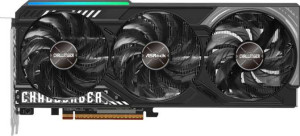
ASRock Radeon RX 9070 Challenger
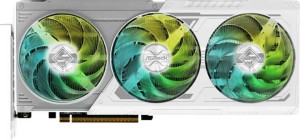
ASRock Radeon RX 9070 XT Steel Legend

ASRock Radeon RX 9070 Challenger ASRock Radeon RX 9070 XT Steel Legend

Overview

Welcome to our in-depth spec comparison of the ASRock Radeon RX 9070 Challenger and the ASRock Radeon RX 9070 XT Steel Legend, two RDNA 4.0-based graphics cards sharing the same 16GB GDDR6 memory foundation yet diverging significantly in raw compute power and physical design. Both cards support ray tracing, FSR4, and DirectX 12 Ultimate, but key battlegrounds like shader count, floating-point performance, and thermal envelope set them apart in meaningful ways for different types of buyers.

Common Features

  • GPU memory speed is 2518 MHz on both products.
  • Both products have 128 render output units (ROPs).
  • Double Precision Floating Point (DPFP) is supported on both products.
  • Effective memory speed is 20000 MHz on both products.
  • Maximum memory bandwidth is 644.6 GB/s on both products.
  • Both products feature 16GB of VRAM.
  • Both products use GDDR6 memory.
  • Memory bus width is 256-bit on both products.
  • ECC memory is supported on both products.
  • Both products support DirectX 12 Ultimate.
  • OpenGL version 4.6 is available on both products.
  • OpenCL version 2.2 is available on both products.
  • Multi-display technology is supported on both products.
  • Ray tracing is supported on both products.
  • 3D support is available on both products.
  • DLSS is not supported on either product.
  • FSR4 is available on both products.
  • Both products have one HDMI output running HDMI 2.1b.
  • Both products feature three DisplayPort outputs.
  • Neither product has USB-C, DVI, or mini DisplayPort outputs.
  • Both products are built on the RDNA 4.0 GPU architecture.
  • Both products use PCIe version 5.
  • Both products feature 53,900 million transistors.
  • Air-water cooling is not available on either product.

Main Differences

  • GPU base clock speed is 1330 MHz on the ASRock Radeon RX 9070 Challenger and 1660 MHz on the ASRock Radeon RX 9070 XT Steel Legend.
  • GPU turbo clock speed is 2520 MHz on the ASRock Radeon RX 9070 Challenger and 2970 MHz on the ASRock Radeon RX 9070 XT Steel Legend.
  • Pixel rate is 322.6 GPixel/s on the ASRock Radeon RX 9070 Challenger and 380.2 GPixel/s on the ASRock Radeon RX 9070 XT Steel Legend.
  • Floating-point performance is 36.13 TFLOPS on the ASRock Radeon RX 9070 Challenger and 48.66 TFLOPS on the ASRock Radeon RX 9070 XT Steel Legend.
  • Texture rate is 564.5 GTexels/s on the ASRock Radeon RX 9070 Challenger and 760.3 GTexels/s on the ASRock Radeon RX 9070 XT Steel Legend.
  • Shading units number 3584 on the ASRock Radeon RX 9070 Challenger and 4096 on the ASRock Radeon RX 9070 XT Steel Legend.
  • Texture mapping units (TMUs) total 224 on the ASRock Radeon RX 9070 Challenger and 256 on the ASRock Radeon RX 9070 XT Steel Legend.
  • Thermal Design Power (TDP) is 220W on the ASRock Radeon RX 9070 Challenger and 304W on the ASRock Radeon RX 9070 XT Steel Legend.
  • Semiconductor size is 5 nm on the ASRock Radeon RX 9070 Challenger and 4 nm on the ASRock Radeon RX 9070 XT Steel Legend.
  • Card width is 290 mm on the ASRock Radeon RX 9070 Challenger and 298 mm on the ASRock Radeon RX 9070 XT Steel Legend.
  • Card height is 123 mm on the ASRock Radeon RX 9070 Challenger and 131 mm on the ASRock Radeon RX 9070 XT Steel Legend.
Specs Comparison
ASRock Radeon RX 9070 Challenger

ASRock Radeon RX 9070 Challenger

ASRock Radeon RX 9070 XT Steel Legend

ASRock Radeon RX 9070 XT Steel Legend

Performance:
GPU clock speed 1330 MHz 1660 MHz
GPU turbo 2520 MHz 2970 MHz
pixel rate 322.6 GPixel/s 380.2 GPixel/s
floating-point performance 36.13 TFLOPS 48.66 TFLOPS
texture rate 564.5 GTexels/s 760.3 GTexels/s
GPU memory speed 2518 MHz 2518 MHz
shading units 3584 4096
texture mapping units (TMUs) 224 256
render output units (ROPs) 128 128
Has Double Precision Floating Point (DPFP)

The most telling performance gap between the ASRock Radeon RX 9070 Challenger and the ASRock Radeon RX 9070 XT Steel Legend lies in their raw compute throughput. The XT Steel Legend delivers 48.66 TFLOPS of floating-point performance against the Challenger's 36.13 TFLOPS — a roughly 35% advantage. In practice, this translates to a noticeably higher ceiling for GPU-bound workloads: expect meaningfully better frame rates at higher resolutions and quality settings, as well as faster GPU-accelerated compute tasks such as AI inference or video encoding.

This gap is driven by two compounding factors: more execution resources and higher clocks. The Steel Legend fields 4096 shading units and 256 TMUs versus the Challenger's 3584 and 224, meaning it can process more geometry, shading, and texture operations per clock cycle. On top of that, its boost clock reaches 2970 MHz compared to 2520 MHz on the Challenger — a ~18% clock advantage that multiplies the benefit of the wider shader array. Both cards share an identical 128 ROPs count and the same 2518 MHz memory speed, which means pixel output capacity and memory bandwidth are on equal footing — a potential bottleneck that slightly narrows the XT's lead in pixel-fill-rate-sensitive scenarios.

Overall, the Steel Legend XT holds a clear and substantial performance edge across virtually every measured dimension. The Challenger is not a weak card, but buyers prioritizing peak gaming or compute performance should favour the Steel Legend XT; the Challenger's relevance is likely tied to a lower price point that these specs alone do not reflect.

Memory:
effective memory speed 20000 MHz 20000 MHz
maximum memory bandwidth 644.6 GB/s 644.6 GB/s
VRAM 16GB 16GB
GDDR version GDDR6 GDDR6
memory bus width 256-bit 256-bit
Supports ECC memory

When it comes to memory, the ASRock Radeon RX 9070 Challenger and the ASRock Radeon RX 9070 XT Steel Legend are, in every measurable way, identical. Both carry 16GB of GDDR6 VRAM across a 256-bit memory bus, running at an effective 20000 MHz and delivering 644.6 GB/s of peak memory bandwidth. Neither card will have any advantage over the other when it comes to loading textures, handling large frame buffers at high resolutions, or managing VRAM-heavy workloads like modern open-world titles at 4K or AI-assisted rendering pipelines.

The shared 256-bit bus paired with that bandwidth figure is a competitive configuration for this GPU tier — wide enough to keep the shader arrays fed without becoming a bottleneck in most gaming and professional scenarios. The inclusion of ECC memory support on both cards is a practical bonus for users doing GPU compute or workstation tasks where memory reliability matters, though it is rarely a factor for gaming.

This is a definitive tie: memory configuration offers absolutely no basis for choosing one card over the other. Any performance difference between these two products — as seen in the processing specs — will not be amplified or offset by memory in any meaningful way.

Features:
DirectX version DirectX 12 Ultimate DirectX 12 Ultimate
OpenGL version 4.6 4.6
OpenCL version 2.2 2.2
Supports multi-display technology
supports ray tracing
Supports 3D
supports DLSS
has FSR4
has XeSS (XMX)
AMD SAM / Intel Resizable BAR AMD SAM AMD SAM
has LHR
has RGB lighting
supported displays 4 4

Feature parity is total here — the ASRock Radeon RX 9070 Challenger and the ASRock Radeon RX 9070 XT Steel Legend share an identical feature set with no exceptions. Both support DirectX 12 Ultimate, which is the current gold standard for gaming APIs, unlocking hardware-accelerated ray tracing, variable rate shading, and mesh shaders in supported titles. Ray tracing support is confirmed on both cards, meaning neither buyer is locked out of modern lighting and shadow effects in DXR-enabled games.

On the upscaling front, both cards support FSR4 — AMD's latest spatial and machine-learning-based upscaling technology — while neither supports DLSS or XeSS. For buyers invested in the AMD ecosystem this is a non-issue, but those coming from NVIDIA hardware should be aware that DLSS titles will fall back to FSR4 or native rendering. AMD SAM (Smart Access Memory) is present on both, which can improve CPU-to-GPU data throughput when paired with a compatible AMD platform. Multi-display capability tops out at 4 simultaneous outputs on each card, suitable for most productivity and gaming multi-monitor setups.

With no differentiating feature on either side, this category is an unambiguous tie. A buyer's decision between these two cards cannot rest on features — it will come down to performance headroom and price.

Ports:
has an HDMI output
HDMI ports 1 1
HDMI version HDMI 2.1b HDMI 2.1b
DisplayPort outputs 3 3
USB-C ports 0 0
DVI outputs 0 0
mini DisplayPort outputs 0 0

Port configuration is identical across both cards. The ASRock Radeon RX 9070 Challenger and the ASRock Radeon RX 9070 XT Steel Legend each offer a 1x HDMI 2.1b and 3x DisplayPort outputs — a practical, modern layout that covers the vast majority of monitor and TV connectivity needs. The total of four outputs also aligns with both cards' four-display limit noted in the features group, meaning every port can be driven simultaneously.

HDMI 2.1b is the headline here: it supports up to 4K at high refresh rates and 8K output, making either card a capable choice for large-format displays and living-room setups. The triple DisplayPort layout is equally well-suited for multi-monitor desktop or productivity configurations. The absence of USB-C is worth noting for users who rely on USB-C-to-DisplayPort adapters or who connect to USB-C monitors directly, though this is a common omission at this product tier.

No differentiation exists between the two cards on connectivity — this is a straight tie. Display setup flexibility and monitor compatibility will be identical regardless of which card a buyer chooses.

General info:
GPU architecture RDNA 4.0 RDNA 4.0
release date March 2025 March 2025
Thermal Design Power (TDP) 220W 304W
PCI Express (PCIe) version 5 5
semiconductor size 5 nm 4 nm
number of transistors 53900 million 53900 million
Has air-water cooling
width 290 mm 298 mm
height 123 mm 131 mm

Both cards are built on AMD's RDNA 4.0 architecture and connect via PCIe 5.0, so the generational foundation is identical. The transistor count is also the same at 53,900 million, which is notable — it means the XT Steel Legend's higher performance is achieved through a combination of higher clocks and a wider active shader configuration on the same physical die, not a fundamentally larger chip. The one process node difference — 4 nm on the Steel Legend versus 5 nm on the Challenger — could partially explain how the XT variant sustains higher clock speeds, as a tighter node generally allows for more efficient power delivery at elevated frequencies.

The most consequential difference here is TDP: the Steel Legend draws 304W against the Challenger's 220W. That 84W gap is significant in practice — it places greater demands on the PSU, requires better case airflow, and will produce meaningfully more heat under sustained load. Builders working with compact cases or modest power supplies should weigh this carefully. Physical dimensions also differ slightly, with the Steel Legend being marginally larger at 298 × 131 mm versus 290 × 123 mm, though both fall within standard dual-slot card territory.

For this group, the Challenger holds a practical advantage for system builders prioritizing efficiency, lower heat output, and PSU headroom. The Steel Legend's higher TDP is the direct cost of its performance lead — buyers must decide whether that trade-off is worthwhile for their specific build constraints.
Comparison Summary & Verdict

After examining every specification, a clear picture emerges for each card. The ASRock Radeon RX 9070 Challenger is the more compact and power-efficient option, drawing just 220W TDP from a 5nm chip and fitting into tighter cases at 290 x 123mm, making it ideal for builders who prioritize energy efficiency or have space constraints without wanting to sacrifice the modern RDNA 4.0 feature set. The ASRock Radeon RX 9070 XT Steel Legend, on the other hand, delivers meaningfully higher throughput across the board, with 48.66 TFLOPS of floating-point performance, a 2970 MHz boost clock, and 4096 shading units, targeting enthusiasts who want maximum performance and are willing to accommodate a larger card and a 304W power budget. Both share identical memory specs, port configurations, and feature support, so the decision comes down purely to performance headroom versus efficiency.

ASRock Radeon RX 9070 Challenger
Buy ASRock Radeon RX 9070 Challenger if...

Buy the ASRock Radeon RX 9070 Challenger if you want a power-efficient RDNA 4.0 card with a lower 220W TDP and a more compact footprint that still delivers the full modern feature set including ray tracing and FSR4.

ASRock Radeon RX 9070 XT Steel Legend
Buy ASRock Radeon RX 9070 XT Steel Legend if...

Buy the ASRock Radeon RX 9070 XT Steel Legend if you want the highest possible performance, with significantly more shading units, a 2970 MHz boost clock, and 48.66 TFLOPS of floating-point throughput, and can accommodate its larger size and 304W power draw.