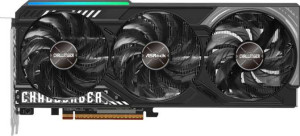
ASRock Radeon RX 9070 Challenger
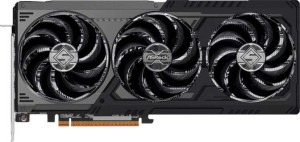
ASRock Radeon RX 9070 XT Steel Legend Dark

ASRock Radeon RX 9070 Challenger ASRock Radeon RX 9070 XT Steel Legend Dark

Overview

When choosing between the ASRock Radeon RX 9070 Challenger and the ASRock Radeon RX 9070 XT Steel Legend Dark, shoppers will encounter two RDNA 4.0-based graphics cards that share the same 16GB GDDR6 memory configuration yet diverge considerably in raw compute power, clock speeds, and thermal footprint. This head-to-head comparison examines the key battlegrounds between these two GPUs to help you determine which card is the right fit for your system and priorities.

Common Features

  • GPU memory speed is 2518 MHz on both products.
  • Both products have 128 render output units (ROPs).
  • Double Precision Floating Point (DPFP) is supported on both products.
  • Effective memory speed is 20000 MHz on both products.
  • Maximum memory bandwidth is 644.6 GB/s on both products.
  • Both products feature 16GB of VRAM.
  • Both products use GDDR6 memory.
  • Memory bus width is 256-bit on both products.
  • ECC memory is supported on both products.
  • Both products support DirectX 12 Ultimate.
  • OpenGL version 4.6 is available on both products.
  • OpenCL version 2.2 is available on both products.
  • Multi-display technology is supported on both products.
  • Ray tracing is supported on both products.
  • 3D support is available on both products.
  • DLSS is not supported on either product.
  • FSR4 is available on both products.
  • Both products feature one HDMI 2.1b output.
  • Both products have three DisplayPort outputs and no USB-C, DVI, or mini DisplayPort outputs.
  • Both products are built on the RDNA 4.0 GPU architecture.
  • Both products use PCIe version 5.
  • Both products feature 53900 million transistors.
  • Neither product includes air-water cooling.

Main Differences

  • GPU base clock speed is 1330 MHz on the ASRock Radeon RX 9070 Challenger and 1660 MHz on the ASRock Radeon RX 9070 XT Steel Legend Dark.
  • GPU turbo clock speed is 2520 MHz on the ASRock Radeon RX 9070 Challenger and 2970 MHz on the ASRock Radeon RX 9070 XT Steel Legend Dark.
  • Pixel rate is 322.6 GPixel/s on the ASRock Radeon RX 9070 Challenger and 380.2 GPixel/s on the ASRock Radeon RX 9070 XT Steel Legend Dark.
  • Floating-point performance is 36.13 TFLOPS on the ASRock Radeon RX 9070 Challenger and 48.6 TFLOPS on the ASRock Radeon RX 9070 XT Steel Legend Dark.
  • Texture rate is 564.5 GTexels/s on the ASRock Radeon RX 9070 Challenger and 760.3 GTexels/s on the ASRock Radeon RX 9070 XT Steel Legend Dark.
  • Shading units total 3584 on the ASRock Radeon RX 9070 Challenger and 4096 on the ASRock Radeon RX 9070 XT Steel Legend Dark.
  • Texture mapping units (TMUs) number 224 on the ASRock Radeon RX 9070 Challenger and 256 on the ASRock Radeon RX 9070 XT Steel Legend Dark.
  • Thermal Design Power (TDP) is 220W on the ASRock Radeon RX 9070 Challenger and 304W on the ASRock Radeon RX 9070 XT Steel Legend Dark.
  • Semiconductor size is 5 nm on the ASRock Radeon RX 9070 Challenger and 4 nm on the ASRock Radeon RX 9070 XT Steel Legend Dark.
  • Card width is 290 mm on the ASRock Radeon RX 9070 Challenger and 298 mm on the ASRock Radeon RX 9070 XT Steel Legend Dark.
  • Card height is 123 mm on the ASRock Radeon RX 9070 Challenger and 131 mm on the ASRock Radeon RX 9070 XT Steel Legend Dark.
Specs Comparison
ASRock Radeon RX 9070 Challenger

ASRock Radeon RX 9070 Challenger

ASRock Radeon RX 9070 XT Steel Legend Dark

ASRock Radeon RX 9070 XT Steel Legend Dark

Performance:
GPU clock speed 1330 MHz 1660 MHz
GPU turbo 2520 MHz 2970 MHz
pixel rate 322.6 GPixel/s 380.2 GPixel/s
floating-point performance 36.13 TFLOPS 48.6 TFLOPS
texture rate 564.5 GTexels/s 760.3 GTexels/s
GPU memory speed 2518 MHz 2518 MHz
shading units 3584 4096
texture mapping units (TMUs) 224 256
render output units (ROPs) 128 128
Has Double Precision Floating Point (DPFP)

The performance gap between these two cards is significant and consistent across every compute metric. The ASRock Radeon RX 9070 XT Steel Legend Dark leads with a GPU turbo clock of 2970 MHz versus 2520 MHz on the Challenger — a roughly 18% higher peak frequency. Since GPU turbo speed directly governs how fast shader instructions are executed under sustained load, this translates into a meaningful real-world advantage in both gaming and compute workloads, not merely a spec-sheet number.

That clock speed advantage compounds across the rest of the pipeline. The Steel Legend Dark fields 4096 shading units and 256 TMUs compared to 3584 and 224 on the Challenger, reflecting a wider execution architecture. The result is a floating-point throughput of 48.6 TFLOPS versus 36.13 TFLOPS — a 34% lead that directly impacts frame rates in GPU-bound scenarios and accelerates any task relying on parallel computation. Texture throughput follows the same pattern at 760.3 vs 564.5 GTexels/s, meaning the Steel Legend Dark can handle more complex surface detail and higher resolutions without a proportional performance penalty. The one area where both cards are identical is their 128 ROPs and 2518 MHz memory speed, meaning pixel write bandwidth and memory throughput are evenly matched — a shared floor that prevents the Challenger from falling too far behind in resolution-limited situations.

Overall, the Steel Legend Dark holds a clear and substantial performance advantage in this group. The Challenger is not weak, but across every throughput metric — compute, texture, and peak clocks — the XT variant consistently outperforms it by margins large enough to matter at higher resolutions and detail settings. If raw GPU performance is the primary decision factor, the Steel Legend Dark is the stronger choice based strictly on these specs.

Memory:
effective memory speed 20000 MHz 20000 MHz
maximum memory bandwidth 644.6 GB/s 644.6 GB/s
VRAM 16GB 16GB
GDDR version GDDR6 GDDR6
memory bus width 256-bit 256-bit
Supports ECC memory

When it comes to memory, these two cards are in complete lockstep. Both carry 16GB of GDDR6 running at an effective speed of 20000 MHz across a 256-bit bus, yielding identical maximum bandwidth of 644.6 GB/s. There is no distinguishing factor here regardless of which metric you examine.

That shared memory configuration is nonetheless a strong foundation. A 256-bit bus paired with 16GB of VRAM positions both cards well for demanding workloads — 16GB is enough headroom to handle high-resolution textures, large asset streaming, and memory-intensive compute tasks without frequent evictions to system RAM. The 644.6 GB/s bandwidth ceiling also ensures neither card will be starved of data even when the GPU is running at full tilt. Both cards also support ECC memory, which enables error-correcting functionality useful in professional or mixed-use workloads where data integrity matters.

This group is an unambiguous tie. Every memory specification is identical across both products, meaning memory subsystem performance will not be a differentiating factor in any real-world scenario. The choice between the Challenger and the Steel Legend Dark must rest entirely on other specification groups.

Features:
DirectX version DirectX 12 Ultimate DirectX 12 Ultimate
OpenGL version 4.6 4.6
OpenCL version 2.2 2.2
Supports multi-display technology
supports ray tracing
Supports 3D
supports DLSS
has FSR4
has XeSS (XMX)
AMD SAM / Intel Resizable BAR AMD SAM AMD SAM
has LHR
has RGB lighting
supported displays 4 4

Feature parity is total here — every capability listed for the Challenger applies equally to the Steel Legend Dark. The most consequential shared features are DirectX 12 Ultimate support and ray tracing, which together ensure both cards are fully compatible with modern rendering pipelines, including hardware-accelerated lighting, shadows, and reflections in supported titles. Neither card is left behind by evolving API requirements.

On the upscaling front, both support FSR4 while lacking DLSS and XeSS (XMX). FSR4 is AMD's latest upscaling generation, and its presence on both cards means users can recover significant frame rates in supported titles without a meaningful image quality penalty. The absence of DLSS is worth noting for users in mixed ecosystems, but since both cards are identically positioned here, it does not create any differentiation between them. Both also support AMD SAM (Smart Access Memory), which allows a compatible AMD CPU to access the full GPU frame buffer, offering a performance uplift in SAM-aware titles. Again, this benefit applies equally to both.

With 4 supported displays, RGB lighting, and identical API version support across the board, this group produces another clear tie. No feature present on one card is absent from the other, and no spec here gives either product a meaningful advantage. Buyers who prioritize software features and ecosystem compatibility will find both cards equally equipped.
Ports:
has an HDMI output
HDMI ports 1 1
HDMI version HDMI 2.1b HDMI 2.1b
DisplayPort outputs 3 3
USB-C ports 0 0
DVI outputs 0 0
mini DisplayPort outputs 0 0

Both cards offer an identical port configuration: one HDMI 2.1b output and three DisplayPort outputs, totaling four display connections — which aligns with the four-display limit noted in the Features group. HDMI 2.1b is the latest HDMI specification, supporting high refresh rates at 4K and beyond, making it well-suited for modern gaming monitors and high-end TVs alike. The three DisplayPort outputs further expand multi-monitor flexibility without requiring adapters.

Neither card includes USB-C, DVI, or mini DisplayPort outputs. The absence of USB-C is worth flagging for users who rely on that connector for display output to certain ultrawide or portable monitors, though it does not create any difference between the two products since both omit it equally.

This is a straightforward tie. The port layout is a mirror image across both cards, and no connectivity advantage exists on either side. Users can make their display setup decisions independently of which card they choose, as both will support the same range of monitors and configurations.

General info:
GPU architecture RDNA 4.0 RDNA 4.0
release date March 2025 March 2025
Thermal Design Power (TDP) 220W 304W
PCI Express (PCIe) version 5 5
semiconductor size 5 nm 4 nm
number of transistors 53900 million 53900 million
Has air-water cooling
width 290 mm 298 mm
height 123 mm 131 mm

Both cards are built on AMD's RDNA 4.0 architecture and share the same transistor count of 53,900 million, which confirms they are closely related silicon designs. However, a notable difference emerges at the process node level: the Challenger is fabbed on a 5 nm process while the Steel Legend Dark steps down to 4 nm. A smaller node generally enables higher clock speeds or improved power efficiency at equivalent performance levels — which aligns with the Steel Legend Dark's significantly higher GPU clocks observed in the Performance group.

The most consequential practical difference here is TDP. The Challenger draws 220W at its thermal design ceiling, while the Steel Legend Dark requires 304W — a 38% increase in peak power demand. For system builders, this gap matters: it affects PSU headroom requirements, case airflow planning, and long-term energy costs. Users with tighter power budgets or compact builds will find the Challenger considerably easier to accommodate. Both cards rely on air cooling exclusively, so thermal management falls entirely on the card's heatsink and fan design in either case.

On physical dimensions, the Steel Legend Dark is marginally larger at 298 × 131 mm versus the Challenger's 290 × 123 mm, a modest difference unlikely to cause case compatibility issues in most mid-tower and full-tower builds, but worth verifying in smaller enclosures. For this group, neither card holds an unambiguous overall edge — the Steel Legend Dark benefits from a more advanced process node, but the Challenger's lower TDP gives it a clear advantage for power-constrained or thermally sensitive builds.

Comparison Summary & Verdict

Both the ASRock Radeon RX 9070 Challenger and the ASRock Radeon RX 9070 XT Steel Legend Dark are built on the RDNA 4.0 architecture and share an impressive common foundation: 16GB GDDR6 memory on a 256-bit bus with 644.6 GB/s of bandwidth, FSR4 support, ray tracing, and full DirectX 12 Ultimate compatibility. Where they diverge is significant. The RX 9070 XT Steel Legend Dark pulls ahead with a 2970 MHz turbo clock, 48.6 TFLOPS of floating-point performance, 4096 shading units, and a refined 4nm process node, making it the stronger pick for users who demand top-tier gaming or GPU compute throughput. The ASRock Radeon RX 9070 Challenger, however, operates at a more modest 220W TDP and features a smaller physical footprint, offering a compelling balance of capability and efficiency for builds where power draw and case clearance are genuine concerns.

ASRock Radeon RX 9070 Challenger
Buy ASRock Radeon RX 9070 Challenger if...

Buy the ASRock Radeon RX 9070 Challenger if you prioritize a lower power draw and a more compact card, as its 220W TDP and smaller dimensions make it well suited for efficiency-focused or space-constrained builds.

ASRock Radeon RX 9070 XT Steel Legend Dark
Buy ASRock Radeon RX 9070 XT Steel Legend Dark if...

Buy the ASRock Radeon RX 9070 XT Steel Legend Dark if maximum raw performance is your goal, as its 2970 MHz turbo clock, 48.6 TFLOPS of floating-point output, and 4096 shading units make it the clear choice for demanding gaming and compute workloads.