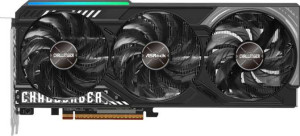
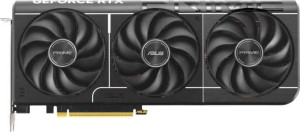
At first glance, the clock speed story appears contradictory: the ASRock Radeon RX 9070 Challenger starts at a much lower base clock of 1330 MHz versus the Asus Prime RTX 5070's 2325 MHz, yet both cards boost to virtually the same ceiling — 2520 MHz vs 2512 MHz. In practice, GPUs spend the vast majority of their time at or near boost clocks under load, so this wide base-clock gap is largely a paper difference and has little bearing on sustained gaming performance.
Where the comparison becomes more decisive is in raw throughput metrics. The RX 9070 Challenger holds a meaningful lead in pixel fill rate (322.6 GPixel/s vs 201 GPixel/s), texture rate (564.5 GTexels/s vs 482.3 GTexels/s), and overall floating-point performance (36.13 TFLOPS vs 30.87 TFLOPS). Higher pixel and texture throughput translates directly into the GPU's ability to render more geometry and apply more texture detail per second — tangible advantages at higher resolutions and in texture-heavy scenes. The RX 9070 also pairs these advantages with a significantly faster memory bus speed (2518 MHz vs 1750 MHz), which reduces the risk of memory bandwidth becoming a bottleneck. The RTX 5070 counters with a considerably higher shading unit count (6144 vs 3584), which matters for parallel compute workloads and certain rendering pipelines, but the RTX 5070's fewer ROPs (80 vs 128) limit how quickly it can actually write those pixels to the framebuffer — partially explaining the lower pixel rate despite more shaders.
Based strictly on the provided specs, the ASRock Radeon RX 9070 Challenger holds the performance edge in this group. It leads in every throughput metric — floating-point performance, pixel rate, texture rate, and memory speed — while matching the RTX 5070 at boost clocks. The RTX 5070's shading unit advantage is real but does not overcome the RX 9070's broader throughput superiority as reflected in the aggregate numbers. Both cards support Double Precision Floating Point, making neither distinctly better for DPFP-dependent workloads.