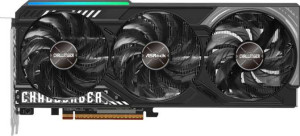
ASRock Radeon RX 9070 Challenger
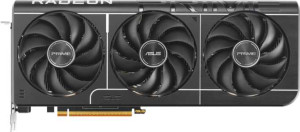
Asus Prime Radeon RX 9070 OC Edition

ASRock Radeon RX 9070 Challenger Asus Prime Radeon RX 9070 OC Edition

Overview

Welcome to our in-depth specification comparison between the ASRock Radeon RX 9070 Challenger and the Asus Prime Radeon RX 9070 OC Edition. Both cards are built on the same RDNA 4.0 architecture and share an identical memory configuration, yet they differ in key areas such as boost clock speeds, raw compute performance, physical dimensions, and aesthetic features like RGB lighting. Read on to see how these two RX 9070 cards stack up across every specification.

Common Features

  • Both cards have a base GPU clock speed of 1330 MHz.
  • Both cards have a GPU memory speed of 2518 MHz.
  • Both cards feature 3584 shading units.
  • Both cards have 224 texture mapping units (TMUs).
  • Both cards have 128 render output units (ROPs).
  • Double Precision Floating Point (DPFP) is supported on both cards.
  • Both cards have an effective memory speed of 20000 MHz.
  • Both cards offer a maximum memory bandwidth of 644.6 GB/s.
  • Both cards come with 16GB of VRAM.
  • Both cards use GDDR6 memory.
  • Both cards have a 256-bit memory bus width.
  • ECC memory is supported on both cards.
  • Both cards support DirectX 12 Ultimate.
  • Both cards have an OpenGL version of 4.6.
  • Both cards have an OpenCL version of 2.2.
  • Multi-display technology is supported on both cards.
  • Ray tracing is supported on both cards.
  • 3D support is available on both cards.
  • DLSS is not supported on either card.
  • FSR4 is supported on both cards.
  • Both cards have one HDMI 2.1b output and three DisplayPort outputs, with no USB-C, DVI, or mini DisplayPort outputs.
  • Both cards are built on the RDNA 4.0 GPU architecture.
  • Both cards have a Thermal Design Power (TDP) of 220W.
  • Both cards use PCIe version 5.
  • Both cards are manufactured on a 5 nm semiconductor process.
  • Both cards feature 53900 million transistors.
  • Neither card uses air-water cooling.

Main Differences

  • GPU turbo clock speed is 2520 MHz on ASRock Radeon RX 9070 Challenger and 2590 MHz on Asus Prime Radeon RX 9070 OC Edition.
  • Pixel rate is 322.6 GPixel/s on ASRock Radeon RX 9070 Challenger and 331.5 GPixel/s on Asus Prime Radeon RX 9070 OC Edition.
  • Floating-point performance is 36.13 TFLOPS on ASRock Radeon RX 9070 Challenger and 37.13 TFLOPS on Asus Prime Radeon RX 9070 OC Edition.
  • Texture rate is 564.5 GTexels/s on ASRock Radeon RX 9070 Challenger and 580.2 GTexels/s on Asus Prime Radeon RX 9070 OC Edition.
  • RGB lighting is present on ASRock Radeon RX 9070 Challenger but not available on Asus Prime Radeon RX 9070 OC Edition.
  • Card width is 290 mm on ASRock Radeon RX 9070 Challenger and 312 mm on Asus Prime Radeon RX 9070 OC Edition.
  • Card height is 123 mm on ASRock Radeon RX 9070 Challenger and 130 mm on Asus Prime Radeon RX 9070 OC Edition.
Specs Comparison
ASRock Radeon RX 9070 Challenger

ASRock Radeon RX 9070 Challenger

Asus Prime Radeon RX 9070 OC Edition

Asus Prime Radeon RX 9070 OC Edition

Performance:
GPU clock speed 1330 MHz 1330 MHz
GPU turbo 2520 MHz 2590 MHz
pixel rate 322.6 GPixel/s 331.5 GPixel/s
floating-point performance 36.13 TFLOPS 37.13 TFLOPS
texture rate 564.5 GTexels/s 580.2 GTexels/s
GPU memory speed 2518 MHz 2518 MHz
shading units 3584 3584
texture mapping units (TMUs) 224 224
render output units (ROPs) 128 128
Has Double Precision Floating Point (DPFP)

Both cards share an identical foundation: the same 1330 MHz base clock, 3584 shading units, 224 TMUs, 128 ROPs, and 2518 MHz memory speed. This means their theoretical throughput ceilings are defined almost entirely by one differentiator — the boost clock. The ASRock Challenger tops out at 2520 MHz, while the Asus Prime OC Edition reaches 2590 MHz, a 70 MHz advantage that cascades directly into every derived performance metric.

That 70 MHz gap translates to the Asus delivering a 37.13 TFLOPS floating-point throughput versus 36.13 TFLOPS on the ASRock — roughly a 2.8% compute advantage. The same proportional lift appears in texture fill rate (580.2 GTexels/s vs 564.5 GTexels/s) and pixel fill rate (331.5 GPixel/s vs 322.6 GPixel/s). In practice, this margin is unlikely to produce a perceptible frame-rate difference in most gaming workloads, but it does give the Asus a consistent, measurable edge in compute-heavy or fill-rate-bound scenarios such as high-resolution rendering or GPU compute tasks.

On balance, the Asus Prime RX 9070 OC Edition holds a clear, if modest, performance advantage in this group, driven entirely by its higher factory boost clock. The ASRock Challenger is not meaningfully slower for everyday use, but if peak theoretical throughput is the deciding factor, the Asus wins this category outright.

Memory:
effective memory speed 20000 MHz 20000 MHz
maximum memory bandwidth 644.6 GB/s 644.6 GB/s
VRAM 16GB 16GB
GDDR version GDDR6 GDDR6
memory bus width 256-bit 256-bit
Supports ECC memory

Memory is one area where there is nothing to separate these two cards — every single spec is identical. Both carry 16GB of GDDR6 running at an effective 20000 MHz across a 256-bit bus, yielding the same 644.6 GB/s of peak memory bandwidth. That bandwidth figure is substantial for this class of GPU, providing enough headroom to handle high-resolution textures, large frame buffers at 4K, and memory-intensive workloads without becoming a bottleneck.

The shared support for ECC (Error-Correcting Code) memory is worth noting. While rarely relevant in pure gaming, ECC capability adds a layer of data integrity that matters in professional or prosumer compute workloads — scientific simulations, machine learning inference, or any task where silent data corruption would be costly. Its presence on both cards hints at the platform's versatility beyond gaming.

This group is a definitive tie. Regardless of which card a buyer chooses, they receive an identical memory subsystem in every measurable dimension. Any performance difference between the two products will originate entirely from other spec groups — memory plays no role in differentiating them.

Features:
DirectX version DirectX 12 Ultimate DirectX 12 Ultimate
OpenGL version 4.6 4.6
OpenCL version 2.2 2.2
Supports multi-display technology
supports ray tracing
Supports 3D
supports DLSS
has FSR4
has XeSS (XMX)
AMD SAM / Intel Resizable BAR AMD SAM AMD SAM
has LHR
has RGB lighting
supported displays 4 4

At the platform and API level, these two cards are indistinguishable. Both support DirectX 12 Ultimate and ray tracing, confirming full compatibility with modern rendering pipelines. Equally important for AMD users, both include FSR4 — AMD's latest upscaling generation — and AMD SAM (Smart Access Memory), which allows a compatible CPU to access the full GPU frame buffer directly, reducing latency and improving throughput in supported titles. Neither card supports DLSS, which is expected given these are AMD products, and XeSS (XMX) is also absent on both.

The sole differentiator in this group is RGB lighting: the ASRock Challenger includes it, while the Asus Prime OC Edition does not. This has zero bearing on functional performance, but it is a meaningful aesthetic consideration. Builders investing in a themed or illuminated system will find the ASRock more accommodating out of the box, whereas the Asus presents a cleaner, understated look that some users actively prefer.

Functionally, this group is essentially a tie — every capability that affects gaming performance, compute compatibility, or display output is shared between both cards. The ASRock Challenger earns a narrow edge for users who value RGB integration, but buyers indifferent to aesthetics will find nothing here to separate them.

Ports:
has an HDMI output
HDMI ports 1 1
HDMI version HDMI 2.1b HDMI 2.1b
DisplayPort outputs 3 3
USB-C ports 0 0
DVI outputs 0 0
mini DisplayPort outputs 0 0

Port configuration is another area of complete parity. Both cards offer the same layout: one HDMI 2.1b output and three DisplayPort outputs, supporting up to four simultaneous displays. HDMI 2.1b is the most capable consumer HDMI standard available, supporting high refresh rates at 4K and beyond, making it well-suited for modern gaming monitors and high-end TVs alike.

The three DisplayPort outputs are a practical advantage for multi-monitor users, allowing a varied mix of displays without requiring adapters. Neither card includes USB-C, mini DisplayPort, or DVI — the latter being an expected omission given how thoroughly that standard has been phased out on modern GPUs.

This group is a clean tie. Connectivity options are identical across both cards in every detail, so display setup, monitor compatibility, and multi-display potential are equally matched regardless of which card a buyer chooses.

General info:
GPU architecture RDNA 4.0 RDNA 4.0
release date March 2025 March 2025
Thermal Design Power (TDP) 220W 220W
PCI Express (PCIe) version 5 5
semiconductor size 5 nm 5 nm
number of transistors 53900 million 53900 million
Has air-water cooling
width 290 mm 312 mm
height 123 mm 130 mm

Underneath, both cards are built on exactly the same silicon: the RDNA 4.0 architecture, manufactured on a 5nm process with 53,900 million transistors, drawing a identical 220W TDP over a PCIe 5.0 interface. This shared foundation means power delivery requirements, motherboard compatibility, and thermal load are identical — buyers can plan their PSU and airflow configurations without differentiating between the two.

Where these cards diverge is physical footprint. The ASRock Challenger measures 290 × 123 mm, while the Asus Prime OC Edition is noticeably larger at 312 × 130 mm — 22mm longer and 7mm taller. That difference is not trivial in compact or mid-tower builds where GPU clearance is limited. The ASRock's smaller body makes it the more case-friendly option, potentially fitting in enclosures that would reject the Asus outright.

For general and physical considerations, the ASRock Challenger holds a practical edge due to its more compact dimensions, which broadens build compatibility without sacrificing anything at the platform level. Users with full-tower cases and ample clearance will find this distinction irrelevant, but for anyone working within tighter spatial constraints, the ASRock is the easier card to accommodate.

Comparison Summary & Verdict

After a thorough comparison, both cards prove to be closely matched siblings sharing the same RDNA 4.0 architecture, 16GB GDDR6 memory, and identical port layouts. The Asus Prime Radeon RX 9070 OC Edition holds a clear edge in pure performance metrics, delivering a higher GPU turbo clock of 2590 MHz, 37.13 TFLOPS of floating-point performance, and a better texture rate, making it the stronger choice for users who demand every last frame. The ASRock Radeon RX 9070 Challenger, on the other hand, is more compact at 290 x 123 mm and adds RGB lighting to its feature set, appealing to builders who value a smaller footprint and a more personalized aesthetic without sacrificing the core RX 9070 experience.

ASRock Radeon RX 9070 Challenger
Buy ASRock Radeon RX 9070 Challenger if...

Buy the ASRock Radeon RX 9070 Challenger if you want a more compact card with RGB lighting that still delivers the full RX 9070 experience in a smaller chassis.

Asus Prime Radeon RX 9070 OC Edition
Buy Asus Prime Radeon RX 9070 OC Edition if...

Buy the Asus Prime Radeon RX 9070 OC Edition if you want the highest possible boost clock and compute performance from the RX 9070 platform.