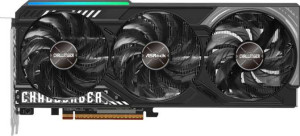
ASRock Radeon RX 9070 Challenger
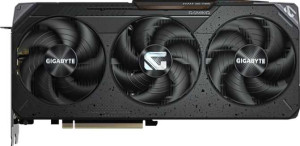
Gigabyte Radeon RX 9070 XT Gaming OC

ASRock Radeon RX 9070 Challenger Gigabyte Radeon RX 9070 XT Gaming OC

Overview

Welcome to our in-depth specification face-off between the ASRock Radeon RX 9070 Challenger and the Gigabyte Radeon RX 9070 XT Gaming OC. Both cards are built on AMD's RDNA 4.0 architecture and share a generous 16GB GDDR6 memory pool, but they diverge significantly when it comes to raw computational power and thermal envelope. Read on to see how their clock speeds, shading units, and port configurations stack up against each other.

Common Features

  • GPU memory speed is 2518 MHz on both products.
  • Both products have 128 render output units (ROPs).
  • Double Precision Floating Point (DPFP) is supported on both products.
  • Effective memory speed is 20000 MHz on both products.
  • Maximum memory bandwidth is 644.6 GB/s on both products.
  • Both products feature 16GB of VRAM.
  • Both products use GDDR6 memory.
  • Memory bus width is 256-bit on both products.
  • ECC memory is supported on both products.
  • Both products support DirectX 12 Ultimate.
  • OpenGL version is 4.6 on both products.
  • OpenCL version is 2.2 on both products.
  • Multi-display technology is supported on both products.
  • Ray tracing is supported on both products.
  • 3D support is available on both products.
  • DLSS is not supported on either product.
  • FSR4 is available on both products.
  • Both products have an HDMI 2.1b output.
  • Neither product has USB-C ports, DVI outputs, or mini DisplayPort outputs.
  • Both products use the RDNA 4.0 GPU architecture.
  • Both products use PCIe version 5.
  • Both products feature 53,900 million transistors.
  • Neither product has air-water cooling.

Main Differences

  • GPU base clock speed is 1330 MHz on ASRock Radeon RX 9070 Challenger and 1660 MHz on Gigabyte Radeon RX 9070 XT Gaming OC.
  • GPU turbo clock is 2520 MHz on ASRock Radeon RX 9070 Challenger and 3060 MHz on Gigabyte Radeon RX 9070 XT Gaming OC.
  • Pixel rate is 322.6 GPixel/s on ASRock Radeon RX 9070 Challenger and 391.7 GPixel/s on Gigabyte Radeon RX 9070 XT Gaming OC.
  • Floating-point performance is 36.13 TFLOPS on ASRock Radeon RX 9070 Challenger and 50.14 TFLOPS on Gigabyte Radeon RX 9070 XT Gaming OC.
  • Texture rate is 564.5 GTexels/s on ASRock Radeon RX 9070 Challenger and 783.4 GTexels/s on Gigabyte Radeon RX 9070 XT Gaming OC.
  • Shading units number 3584 on ASRock Radeon RX 9070 Challenger and 4096 on Gigabyte Radeon RX 9070 XT Gaming OC.
  • Texture mapping units (TMUs) total 224 on ASRock Radeon RX 9070 Challenger and 256 on Gigabyte Radeon RX 9070 XT Gaming OC.
  • HDMI port count is 1 on ASRock Radeon RX 9070 Challenger and 2 on Gigabyte Radeon RX 9070 XT Gaming OC.
  • DisplayPort outputs number 3 on ASRock Radeon RX 9070 Challenger and 2 on Gigabyte Radeon RX 9070 XT Gaming OC.
  • Thermal Design Power (TDP) is 220W on ASRock Radeon RX 9070 Challenger and 304W on Gigabyte Radeon RX 9070 XT Gaming OC.
  • Semiconductor size is 5 nm on ASRock Radeon RX 9070 Challenger and 4 nm on Gigabyte Radeon RX 9070 XT Gaming OC.
  • Width is 290 mm on ASRock Radeon RX 9070 Challenger and 288 mm on Gigabyte Radeon RX 9070 XT Gaming OC.
  • Height is 123 mm on ASRock Radeon RX 9070 Challenger and 132 mm on Gigabyte Radeon RX 9070 XT Gaming OC.
Specs Comparison
ASRock Radeon RX 9070 Challenger

ASRock Radeon RX 9070 Challenger

Gigabyte Radeon RX 9070 XT Gaming OC

Gigabyte Radeon RX 9070 XT Gaming OC

Performance:
GPU clock speed 1330 MHz 1660 MHz
GPU turbo 2520 MHz 3060 MHz
pixel rate 322.6 GPixel/s 391.7 GPixel/s
floating-point performance 36.13 TFLOPS 50.14 TFLOPS
texture rate 564.5 GTexels/s 783.4 GTexels/s
GPU memory speed 2518 MHz 2518 MHz
shading units 3584 4096
texture mapping units (TMUs) 224 256
render output units (ROPs) 128 128
Has Double Precision Floating Point (DPFP)

The most telling gap between these two cards lies in their raw compute muscle. The Gigabyte RX 9070 XT Gaming OC delivers 50.14 TFLOPS of floating-point performance against the ASRock RX 9070 Challenger's 36.13 TFLOPS — a difference of roughly 39%. This advantage flows directly from the XT's larger shader array (4096 vs. 3584 shading units) and its significantly higher clock speeds: a base of 1660 MHz vs. 1330 MHz and a turbo ceiling of 3060 MHz vs. 2520 MHz. In practice, more TFLOPS translate to faster geometry processing, heavier shader workloads, and greater headroom for demanding titles at higher resolutions or with ray tracing enabled.

The texture throughput story reinforces this divide. The XT's 783.4 GTexels/s texture rate — backed by 256 TMUs — is nearly 39% ahead of the Challenger's 564.5 GTexels/s across 224 TMUs. This means the XT can resolve and filter textured surfaces far faster, which matters in open-world environments and texture-heavy scenes. Pixel output, however, tells a slightly different story: both cards share 128 ROPs, so their rasterization pipeline width is identical at the hardware level; the XT's higher pixel rate of 391.7 GPixel/s vs. 322.6 GPixel/s comes purely from its clock speed advantage rather than any architectural difference in output units. Memory subsystem parity — both run at 2518 MHz — means neither card has a bandwidth edge feeding those pipelines.

On balance, the Gigabyte RX 9070 XT Gaming OC holds a clear and consistent performance advantage across every compute and throughput metric in this group. The ASRock RX 9070 Challenger is not a slow card, but it is categorically outgunned in shader count, clock speed, and resulting throughput. Both support double-precision floating point, which is a useful capability for prosumer workloads, but offers no differentiation here since it is present on both. Users prioritizing maximum performance should favor the XT; those for whom the Challenger's lower spec tier is acceptable likely do so because of cost or power considerations not reflected in this group's data.

Memory:
effective memory speed 20000 MHz 20000 MHz
maximum memory bandwidth 644.6 GB/s 644.6 GB/s
VRAM 16GB 16GB
GDDR version GDDR6 GDDR6
memory bus width 256-bit 256-bit
Supports ECC memory

Memory is the one arena where these two cards are entirely indistinguishable. Both carry 16GB of GDDR6 across a 256-bit bus, running at an effective 20000 MHz to deliver 644.6 GB/s of peak bandwidth. That bandwidth figure is meaningful in practice: it determines how quickly the GPU can feed its shader array with texture data, frame buffer contents, and intermediate rendering results. At 1440p and even 4K, 644.6 GB/s provides a comfortable ceiling for most gaming workloads, and 16GB of VRAM ensures neither card will be caught short by texture-heavy titles or high-resolution asset packs in the near term.

Both cards also support ECC (Error-Correcting Code) memory, which detects and corrects single-bit memory errors on the fly. While this feature is primarily valued in professional and compute environments where data integrity is critical, its presence on both cards confirms they share the same memory silicon foundation — there is no hidden tier difference in the memory hardware itself.

This group is a clean tie. Every metric — capacity, speed, bandwidth, bus width, and error correction — is identical. Buyers should not factor memory specifications into their decision between these two cards; the differentiators lie entirely in other specification groups.

Features:
DirectX version DirectX 12 Ultimate DirectX 12 Ultimate
OpenGL version 4.6 4.6
OpenCL version 2.2 2.2
Supports multi-display technology
supports ray tracing
Supports 3D
supports DLSS
has FSR4
has XeSS (XMX)
AMD SAM / Intel Resizable BAR AMD SAM AMD SAM
has LHR
has RGB lighting
supported displays 4 4

Feature parity is total here. Both cards launch from the same AMD software platform, which means identical support for DirectX 12 Ultimate, OpenGL 4.6, and OpenCL 2.2 — the full complement of modern graphics and compute APIs. More consequentially for gamers, both support ray tracing and FSR4 (AMD's latest upscaling generation), while neither supports DLSS or XeSS, as expected for AMD hardware. FSR4 is a meaningful feature to share: it allows compatible titles to render at a lower internal resolution and reconstruct a higher-quality image, effectively extending performance headroom without sacrificing visual fidelity.

Both cards also carry AMD SAM (Smart Access Memory), which enables a compatible AMD CPU to access the full VRAM pool rather than a limited 256MB window — a tangible performance uplift in SAM-optimized titles when paired with a Ryzen platform. The absence of LHR (Lite Hash Rate limiting) on both cards is a neutral data point with no real-world gaming impact. RGB lighting is present on both, which will matter to builders focused on aesthetics. Multi-display support caps out at 4 displays on each card, sufficient for virtually all multi-monitor gaming and productivity setups.

This group is an unambiguous tie — not a single feature separates the ASRock RX 9070 Challenger from the Gigabyte RX 9070 XT Gaming OC. Both cards deliver the same software ecosystem, the same API support, and the same upscaling and display capabilities. Any decision between them must rest on performance, memory, connectivity, or physical characteristics covered in other groups.
Ports:
has an HDMI output
HDMI ports 1 2
HDMI version HDMI 2.1b HDMI 2.1b
DisplayPort outputs 3 2
USB-C ports 0 0
DVI outputs 0 0
mini DisplayPort outputs 0 0

Both cards offer a total of four display outputs and share the same HDMI 2.1b standard, which supports 4K at high refresh rates and 8K output — so the quality ceiling per port is identical. Where they diverge is in how that port budget is divided. The ASRock RX 9070 Challenger allocates three of its four slots to DisplayPort and one to HDMI, while the Gigabyte RX 9070 XT Gaming OC flips the balance toward HDMI with 2 HDMI ports and 2 DisplayPort outputs.

This distinction is more practical than it might appear. DisplayPort is generally the preferred interface for high-refresh-rate gaming monitors, particularly at 1440p and 4K, making the Challenger's three-DisplayPort layout well-suited to multi-monitor gaming rigs where all screens are desktop displays. The Gigabyte XT's dual-HDMI configuration, on the other hand, is a natural fit for users who mix a gaming monitor with a television or a capture device — both of which almost universally rely on HDMI. Neither layout is universally superior; the better choice depends entirely on the user's peripheral mix.

Across this group, the two cards are effectively tied in capability — same port count, same HDMI version, same absence of USB-C or DVI. The edge goes to whichever card's port distribution matches the buyer's existing display setup: the ASRock Challenger for DisplayPort-heavy environments, the Gigabyte RX 9070 XT for those needing two simultaneous HDMI connections.

General info:
GPU architecture RDNA 4.0 RDNA 4.0
release date March 2025 March 2025
Thermal Design Power (TDP) 220W 304W
PCI Express (PCIe) version 5 5
semiconductor size 5 nm 4 nm
number of transistors 53900 million 53900 million
Has air-water cooling
width 290 mm 288 mm
height 123 mm 132 mm

Sharing the same RDNA 4.0 architecture, PCIe 5.0 interface, and an identical transistor count of 53,900 million, these two cards are built from closely related silicon — yet they diverge in two meaningful ways. The Gigabyte RX 9070 XT Gaming OC is manufactured on a 4nm process node versus the ASRock RX 9070 Challenger's 5nm, a difference that typically enables higher clock speeds at comparable or improved power efficiency per transistor. This lines up with what the Performance group already revealed: the XT sustains significantly higher clocks from the same transistor budget.

The trade-off surfaces sharply in Thermal Design Power. The XT Gaming OC carries a 304W TDP against the Challenger's notably lower 220W — a gap of 84 watts, or roughly 38% more peak power draw. In practical terms, this means the XT demands a more capable PSU, generates more heat that the system and case airflow must manage, and will contribute more to electricity costs over time. The Challenger's 220W envelope makes it a substantially easier card to house in compact or thermally constrained builds, and a more forgiving choice for systems with modest power supplies.

Physical footprint is nearly identical — both cards measure around 288–290mm in length, with the Gigabyte XT sitting 9mm taller at 132mm versus the Challenger's 123mm. Neither difference is likely to affect case compatibility in practice. On balance, the Challenger holds a clear advantage here for power-conscious or thermally limited builds, while the XT's 4nm process and higher TDP reflect the cost of its performance ambitions.

Comparison Summary & Verdict

After examining the full spec sheet, a clear picture emerges for each card. The ASRock Radeon RX 9070 Challenger is the more power-efficient choice, drawing just 220W TDP while still delivering solid RDNA 4.0 performance with 36.13 TFLOPS and three DisplayPort outputs, making it ideal for users who value a quieter, lower-consumption build with flexible multi-monitor connectivity. The Gigabyte Radeon RX 9070 XT Gaming OC, on the other hand, steps up with a 3060 MHz turbo clock, 4096 shading units, and 50.14 TFLOPS of floating-point performance, targeting enthusiasts who demand the highest frame rates and can accommodate a 304W power draw. Both cards support FSR4, ray tracing, and PCIe 5, so the shared feature set is strong across the board. Your choice ultimately comes down to whether you prioritize power efficiency and port variety or outright peak GPU performance.

ASRock Radeon RX 9070 Challenger
Buy ASRock Radeon RX 9070 Challenger if...

Buy the ASRock Radeon RX 9070 Challenger if you want a power-efficient RDNA 4.0 card with a lower 220W TDP and three DisplayPort outputs for versatile multi-monitor setups.

Gigabyte Radeon RX 9070 XT Gaming OC
Buy Gigabyte Radeon RX 9070 XT Gaming OC if...

Buy the Gigabyte Radeon RX 9070 XT Gaming OC if you prioritize maximum performance, with its higher turbo clock of 3060 MHz, 50.14 TFLOPS, and 4096 shading units for demanding workloads and gaming.