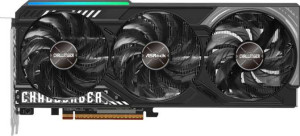
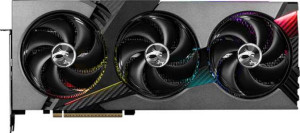
The raw throughput numbers tell a clear story here. The ASRock Radeon RX 9070 Challenger delivers 36.13 TFLOPS of floating-point performance against the MSI RTX 5060 Ti Vanguard OC's 24.39 TFLOPS — a roughly 48% advantage that translates directly into more computational headroom for complex rendering workloads. This gap is reinforced by the texture rate (564.5 GTexels/s vs 381.2 GTexels/s) and, most strikingly, the pixel fill rate: the RX 9070's 322.6 GPixel/s dwarfs the RTX 5060 Ti's 127.1 GPixel/s — a 2.5× lead. The ROP count is the root cause: 128 ROPs on the RX 9070 versus only 48 ROPs on the RTX 5060 Ti. ROPs are the final stage in the rendering pipeline responsible for writing pixels to the framebuffer, so a severe ROP deficit can become a bottleneck at high resolutions and in scenes with heavy overdraw, even if other parts of the chip are fast.
The RTX 5060 Ti does push back in two areas. It carries more shading units (4608 vs 3584), which benefit highly parallelized compute and shader-heavy effects, and it runs a higher base clock (2407 MHz vs 1330 MHz), meaning it reaches near-peak performance more consistently without relying on boost behavior. The RX 9070's turbo of 2520 MHz versus the RTX 5060 Ti's 2647 MHz makes the peak clock gap modest, but the RX 9070 starts from a much lower base, implying wider variability in sustained clocks under load. Additionally, the RX 9070 holds a notable edge in GPU memory speed (2518 MHz vs 1750 MHz), which benefits memory-bandwidth-sensitive workloads like high-resolution texturing and large frame buffers.
Overall, the RX 9070 Challenger holds a clear performance advantage in this group. Its leads in TFLOPS, texture throughput, pixel fill rate, ROP count, and memory speed are substantial and span the most critical rendering metrics. The RTX 5060 Ti's higher shading unit count and steadier clock behavior are real strengths, but they are not sufficient to offset the RX 9070's dominance across the broader set of throughput and rasterization specs provided.