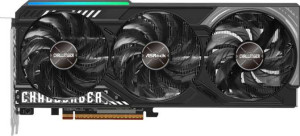
ASRock Radeon RX 9070 Challenger
PowerColor Hellhound Radeon RX 9070

ASRock Radeon RX 9070 Challenger PowerColor Hellhound Radeon RX 9070

Overview

Welcome to our detailed spec comparison between the ASRock Radeon RX 9070 Challenger and the PowerColor Hellhound Radeon RX 9070 — two RDNA 4.0-based graphics cards that share the same GPU foundation yet diverge in meaningful ways. In this head-to-head, we examine their performance ceilings, feature set differences, and physical dimensions to help you decide which card best fits your build and budget.

Common Features

  • Both cards share the same base GPU clock speed of 1330 MHz.
  • Both cards have the same GPU memory speed of 2518 MHz.
  • Both cards feature 3584 shading units.
  • Both cards include 224 texture mapping units (TMUs).
  • Both cards have 128 render output units (ROPs).
  • Double Precision Floating Point (DPFP) is supported on both cards.
  • Both cards have an effective memory speed of 20000 MHz.
  • Both cards offer a maximum memory bandwidth of 644.6 GB/s.
  • Both cards come with 16GB of VRAM.
  • Both cards use GDDR6 memory.
  • Both cards have a 256-bit memory bus width.
  • ECC memory is supported on both cards.
  • Both cards support OpenGL version 4.6.
  • Both cards support OpenCL version 2.2.
  • Multi-display technology is supported on both cards.
  • Ray tracing is supported on both cards.
  • 3D support is available on both cards.
  • DLSS is not supported on either card.
  • FSR4 is supported on both cards.
  • XeSS (XMX) is not supported on either card.
  • Both cards include 1 HDMI port using HDMI version 2.1b.
  • Both cards offer 3 DisplayPort outputs.
  • Neither card includes USB-C ports, DVI outputs, or mini DisplayPort outputs.
  • Both cards are built on the RDNA 4.0 GPU architecture.
  • Both cards have a Thermal Design Power (TDP) of 220W.
  • Both cards use PCIe version 5.
  • Both cards are manufactured on a 5 nm semiconductor process.
  • Both cards contain 53900 million transistors.
  • Neither card features air-water cooling.

Main Differences

  • GPU turbo clock speed is 2520 MHz on ASRock Radeon RX 9070 Challenger and 2590 MHz on PowerColor Hellhound Radeon RX 9070.
  • Pixel rate is 322.6 GPixel/s on ASRock Radeon RX 9070 Challenger and 331.5 GPixel/s on PowerColor Hellhound Radeon RX 9070.
  • Floating-point performance is 36.13 TFLOPS on ASRock Radeon RX 9070 Challenger and 37.13 TFLOPS on PowerColor Hellhound Radeon RX 9070.
  • Texture rate is 564.5 GTexels/s on ASRock Radeon RX 9070 Challenger and 580.2 GTexels/s on PowerColor Hellhound Radeon RX 9070.
  • DirectX 12 Ultimate is supported on ASRock Radeon RX 9070 Challenger, while PowerColor Hellhound Radeon RX 9070 supports DirectX 12.
  • Card width is 290 mm on ASRock Radeon RX 9070 Challenger and 340 mm on PowerColor Hellhound Radeon RX 9070.
  • Card height is 123 mm on ASRock Radeon RX 9070 Challenger and 142 mm on PowerColor Hellhound Radeon RX 9070.
Specs Comparison
ASRock Radeon RX 9070 Challenger

ASRock Radeon RX 9070 Challenger

PowerColor Hellhound Radeon RX 9070

PowerColor Hellhound Radeon RX 9070

Performance:
GPU clock speed 1330 MHz 1330 MHz
GPU turbo 2520 MHz 2590 MHz
pixel rate 322.6 GPixel/s 331.5 GPixel/s
floating-point performance 36.13 TFLOPS 37.13 TFLOPS
texture rate 564.5 GTexels/s 580.2 GTexels/s
GPU memory speed 2518 MHz 2518 MHz
shading units 3584 3584
texture mapping units (TMUs) 224 224
render output units (ROPs) 128 128
Has Double Precision Floating Point (DPFP)

At their core, both the ASRock Challenger and the PowerColor Hellhound are built on the same fundamental silicon: identical 3584 shading units, 224 TMUs, 128 ROPs, and a matching base clock of 1330 MHz with memory running at 2518 MHz. This means the two cards are architecturally equivalent and will behave identically when the GPU is under light or thermally constrained loads.

The meaningful separation emerges at peak boost. The Hellhound reaches a turbo clock of 2590 MHz versus the Challenger's 2520 MHz — a difference of 70 MHz, or roughly 2.8% higher. That gap propagates directly and proportionally into every throughput metric: floating-point performance lands at 37.13 TFLOPS on the Hellhound versus 36.13 TFLOPS on the Challenger, while texture rate follows suit at 580.2 vs. 564.5 GTexels/s and pixel fill rate at 331.5 vs. 322.6 GPixel/s. In practice, a ~2.8% clock advantage translates to differences that are measurable in benchmarks but essentially imperceptible in real-world gaming framerates.

Overall, the PowerColor Hellhound holds a narrow but consistent performance edge in this group, driven entirely by its higher boost clock. However, the margin is slim enough that real-world gaming outcomes will be virtually identical. If sustained peak clock frequency matters — for content creation workloads or benchmark runs — the Hellhound has the objective lead; for everyday gaming, both cards are functionally tied.

Memory:
effective memory speed 20000 MHz 20000 MHz
maximum memory bandwidth 644.6 GB/s 644.6 GB/s
VRAM 16GB 16GB
GDDR version GDDR6 GDDR6
memory bus width 256-bit 256-bit
Supports ECC memory

The memory configurations of the ASRock Challenger and the PowerColor Hellhound are a perfect mirror of each other. Both cards deploy 16GB of GDDR6 across a 256-bit bus, running at an effective speed of 20000 MHz for a peak bandwidth of 644.6 GB/s. There is not a single distinguishing figure anywhere in this category.

That said, the specs themselves tell an important story for prospective buyers. A 256-bit bus paired with 16GB is a well-balanced configuration for this GPU tier — wide enough to avoid memory bottlenecks at 1440p and even capable 4K gaming, while 16GB of VRAM provides comfortable headroom for modern titles with high-resolution texture packs and emerging AI-driven rendering workloads. The inclusion of ECC memory support on both cards is also noteworthy; while rarely relevant for gaming, it signals suitability for lightweight professional or compute workloads where data integrity matters.

This group is a complete tie. Memory performance, capacity, and capability are identical on both cards, and no buying decision should hinge on this specification category.

Features:
DirectX version DirectX 12 Ultimate DirectX 12
OpenGL version 4.6 4.6
OpenCL version 2.2 2.2
Supports multi-display technology
supports ray tracing
Supports 3D
supports DLSS
has FSR4
has XeSS (XMX)
AMD SAM / Intel Resizable BAR AMD SAM AMD SAM
has LHR
has RGB lighting
supported displays 4 4

Across the vast majority of this feature set, the two cards are indistinguishable — both support ray tracing, FSR4, AMD SAM, OpenCL 2.2, OpenGL 4.6, and up to 4 simultaneous displays. The absence of DLSS on both is expected for AMD hardware, and FSR4 serves as the ecosystem-native upscaling answer. None of these shared features create any differentiation worth deliberating over.

The one concrete difference is the DirectX version. The ASRock Challenger lists DirectX 12 Ultimate, while the PowerColor Hellhound lists only DirectX 12. DirectX 12 Ultimate is Microsoft's superset of DX12, formally certifying support for features like hardware-accelerated ray tracing, variable rate shading, mesh shaders, and sampler feedback. In practice, games targeting these advanced rendering features will officially recognize and leverage the Challenger's certification, while the Hellhound's listing leaves that compliance formally unstated based solely on the provided data.

The ASRock Challenger takes a narrow but meaningful edge in this group based on its DirectX 12 Ultimate certification. For users targeting modern titles that explicitly use DX12 Ultimate rendering features, this distinction matters. That said, buyers should note this difference may reflect a reporting inconsistency rather than a true hardware gap — but judging strictly by the data provided, the Challenger has the stronger feature declaration.

Ports:
has an HDMI output
HDMI ports 1 1
HDMI version HDMI 2.1b HDMI 2.1b
DisplayPort outputs 3 3
USB-C ports 0 0
DVI outputs 0 0
mini DisplayPort outputs 0 0

Connectivity is identical on both cards: each offers 1 HDMI 2.1b port and 3 DisplayPort outputs, for a total of four display connections — matching the maximum supported display count noted in the Features group. Neither card includes USB-C, DVI, or mini DisplayPort outputs.

The port selection itself is well-suited for a modern gaming setup. HDMI 2.1b supports 4K at high refresh rates and 8K output, covering virtually every current display and TV use case. The three DisplayPort outputs meanwhile make these cards practical for multi-monitor configurations without adapters. The absence of USB-C is worth noting for users who own USB-C or Thunderbolt-connected displays, as those will require an adapter — but this is a common omission at this product tier.

This category is a complete tie. Port selection, versions, and count are perfectly matched between the ASRock Challenger and the PowerColor Hellhound, and connectivity should play no role in choosing between them.

General info:
GPU architecture RDNA 4.0 RDNA 4.0
release date March 2025 March 2025
Thermal Design Power (TDP) 220W 220W
PCI Express (PCIe) version 5 5
semiconductor size 5 nm 5 nm
number of transistors 53900 million 53900 million
Has air-water cooling
width 290 mm 340 mm
height 123 mm 142 mm

Foundationally, these two cards are cut from the same cloth: identical RDNA 4.0 architecture, the same 5nm process node, the same 53,900 million transistors, and a matching 220W TDP over PCIe 5.0. Same silicon, same power envelope — meaning thermal output and system power requirements are equivalent between them.

Where this group does produce a tangible difference is physical dimensions. The ASRock Challenger measures 290 × 123 mm, while the PowerColor Hellhound is considerably larger at 340 × 142 mm — roughly 17% longer and 15% taller. That gap is not trivial. The Hellhound's larger footprint likely accommodates a more expansive cooling solution, which could support quieter fan operation or better sustained thermal headroom, though neither of those outcomes is directly stated in the provided data. What is directly stated is the size itself, which has immediate relevance for case compatibility — compact or mid-tower builds with tight GPU clearances may simply not fit the Hellhound, while the Challenger offers meaningfully more flexibility.

For this group, the ASRock Challenger holds a practical advantage for anyone with space constraints, being the notably more compact card at the same TDP. The Hellhound's larger chassis is neither an advantage nor a disadvantage in isolation — but buyers should measure their case clearance carefully before committing to it.

Comparison Summary & Verdict

Both cards are built on the same RDNA 4.0 architecture with identical memory configurations — 16GB GDDR6 on a 256-bit bus — and share a 220W TDP, making them closely matched at their core. However, the PowerColor Hellhound pulls ahead with a higher GPU turbo of 2590 MHz, delivering a greater pixel rate, texture rate, and floating-point throughput of 37.13 TFLOPS. On the other hand, the ASRock Radeon RX 9070 Challenger stands out with its support for DirectX 12 Ultimate and its noticeably more compact footprint at 290 x 123 mm. Choose the Hellhound if raw performance headroom is your priority; opt for the Challenger if case clearance or DirectX 12 Ultimate compatibility matters to your setup.

ASRock Radeon RX 9070 Challenger
Buy ASRock Radeon RX 9070 Challenger if...

Buy the ASRock Radeon RX 9070 Challenger if you have a compact case with limited GPU clearance or if DirectX 12 Ultimate support is important for your use case.

PowerColor Hellhound Radeon RX 9070
Buy PowerColor Hellhound Radeon RX 9070 if...

Buy the PowerColor Hellhound Radeon RX 9070 if you want the higher GPU turbo clock and greater raw performance figures, and your case can accommodate its larger dimensions.