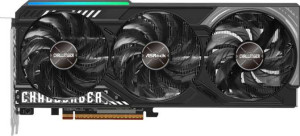
ASRock Radeon RX 9070 Challenger
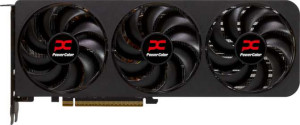
PowerColor Reaper Radeon RX 9070 XT

ASRock Radeon RX 9070 Challenger PowerColor Reaper Radeon RX 9070 XT

Overview

Welcome to our detailed spec comparison between the ASRock Radeon RX 9070 Challenger and the PowerColor Reaper Radeon RX 9070 XT. Both cards share the same RDNA 4.0 architecture and 16GB of GDDR6 memory, but they diverge sharply when it comes to raw compute performance and power consumption. Whether you are chasing maximum frame rates or hunting for a more efficient build, this side-by-side breakdown will help you decide which card fits your needs.

Common Features

  • GPU memory speed is 2518 MHz on both products.
  • Both products have 128 render output units (ROPs).
  • Double Precision Floating Point (DPFP) is supported on both products.
  • Effective memory speed is 20000 MHz on both products.
  • Maximum memory bandwidth is 644.6 GB/s on both products.
  • Both products feature 16GB of VRAM.
  • Both products use GDDR6 memory.
  • Memory bus width is 256-bit on both products.
  • ECC memory is supported on both products.
  • OpenGL version 4.6 is supported on both products.
  • OpenCL version 2.2 is supported on both products.
  • Multi-display technology is supported on both products.
  • Ray tracing is supported on both products.
  • 3D support is available on both products.
  • DLSS is not supported on either product.
  • FSR4 is available on both products.
  • XeSS (XMX) is not supported on either product.
  • Both products have one HDMI output running HDMI version 2.1b.
  • Both products offer 3 DisplayPort outputs, no USB-C ports, no DVI outputs, and no mini DisplayPort outputs.
  • Both products use the RDNA 4.0 GPU architecture with PCIe version 5 and 53900 million transistors, and neither uses air-water cooling.

Main Differences

  • GPU base clock speed is 1330 MHz on ASRock Radeon RX 9070 Challenger and 1660 MHz on PowerColor Reaper Radeon RX 9070 XT.
  • GPU turbo clock is 2520 MHz on ASRock Radeon RX 9070 Challenger and 2970 MHz on PowerColor Reaper Radeon RX 9070 XT.
  • Pixel rate is 322.6 GPixel/s on ASRock Radeon RX 9070 Challenger and 380.2 GPixel/s on PowerColor Reaper Radeon RX 9070 XT.
  • Floating-point performance is 36.13 TFLOPS on ASRock Radeon RX 9070 Challenger and 48.66 TFLOPS on PowerColor Reaper Radeon RX 9070 XT.
  • Texture rate is 564.5 GTexels/s on ASRock Radeon RX 9070 Challenger and 760.3 GTexels/s on PowerColor Reaper Radeon RX 9070 XT.
  • Shading units number 3584 on ASRock Radeon RX 9070 Challenger and 4096 on PowerColor Reaper Radeon RX 9070 XT.
  • Texture mapping units (TMUs) total 224 on ASRock Radeon RX 9070 Challenger and 256 on PowerColor Reaper Radeon RX 9070 XT.
  • DirectX version is DirectX 12 Ultimate on ASRock Radeon RX 9070 Challenger and DirectX 12 on PowerColor Reaper Radeon RX 9070 XT.
  • RGB lighting is present on ASRock Radeon RX 9070 Challenger but not available on PowerColor Reaper Radeon RX 9070 XT.
  • Thermal Design Power (TDP) is 220W on ASRock Radeon RX 9070 Challenger and 304W on PowerColor Reaper Radeon RX 9070 XT.
  • Semiconductor size is 5 nm on ASRock Radeon RX 9070 Challenger and 4 nm on PowerColor Reaper Radeon RX 9070 XT.
  • Card width is 290 mm on ASRock Radeon RX 9070 Challenger and 304 mm on PowerColor Reaper Radeon RX 9070 XT.
  • Card height is 123 mm on ASRock Radeon RX 9070 Challenger and 127 mm on PowerColor Reaper Radeon RX 9070 XT.
Specs Comparison
ASRock Radeon RX 9070 Challenger

ASRock Radeon RX 9070 Challenger

PowerColor Reaper Radeon RX 9070 XT

PowerColor Reaper Radeon RX 9070 XT

Performance:
GPU clock speed 1330 MHz 1660 MHz
GPU turbo 2520 MHz 2970 MHz
pixel rate 322.6 GPixel/s 380.2 GPixel/s
floating-point performance 36.13 TFLOPS 48.66 TFLOPS
texture rate 564.5 GTexels/s 760.3 GTexels/s
GPU memory speed 2518 MHz 2518 MHz
shading units 3584 4096
texture mapping units (TMUs) 224 256
render output units (ROPs) 128 128
Has Double Precision Floating Point (DPFP)

At the core of this comparison is a fundamental architectural difference: the PowerColor Reaper RX 9070 XT ships with 4096 shading units and 256 TMUs, versus 3584 shading units and 224 TMUs on the ASRock Challenger RX 9070. That 14% advantage in raw shader count, compounded by a significantly higher turbo clock of 2970 MHz versus 2520 MHz, is what drives the XT's headline figures: 48.66 TFLOPS of floating-point performance compared to 36.13 TFLOPS — a gap of roughly 35%. In practical terms, this translates directly into higher sustained frame rates, more headroom for demanding rasterization workloads, and greater resilience when resolution or detail settings are pushed upward.

The texture throughput delta reinforces this picture: 760.3 GTexels/s on the XT versus 564.5 GTexels/s on the Challenger means the XT processes texture-heavy scenes — think open-world games with dense foliage, high-res texture packs, or complex materials — notably faster. Both cards share an identical 128 ROPs count, meaning pixel fill-rate differences are driven purely by clock speed rather than hardware width, and both run their VRAM at the same 2518 MHz memory speed, so memory bandwidth is not a differentiating factor here. Double Precision Floating Point support is present on both, though this matters primarily for compute and professional workloads rather than gaming.

The verdict for this spec group is clear: the PowerColor Reaper RX 9070 XT holds a decisive performance advantage across every meaningful compute and throughput metric. The ASRock Challenger RX 9070 is not a slow card — its specs are solid — but buyers prioritizing raw GPU horsepower should recognize the XT's ~35% TFLOPS lead as a substantial real-world gap, not a marginal one.

Memory:
effective memory speed 20000 MHz 20000 MHz
maximum memory bandwidth 644.6 GB/s 644.6 GB/s
VRAM 16GB 16GB
GDDR version GDDR6 GDDR6
memory bus width 256-bit 256-bit
Supports ECC memory

Memory is one area where neither card holds any advantage whatsoever — every single spec in this group is identical. Both the ASRock Challenger RX 9070 and the PowerColor Reaper RX 9070 XT carry 16GB of GDDR6 across a 256-bit bus, running at an effective speed of 20000 MHz and delivering 644.6 GB/s of peak memory bandwidth.

That bandwidth figure is worth contextualizing: 644.6 GB/s is substantial for a mid-to-high-end GPU, providing enough throughput to comfortably feed high-resolution texture data and large frame buffers at 1440p and 4K. The 16GB allocation also future-proofs both cards against increasingly VRAM-hungry titles and workloads. ECC memory support on both means error-correcting capability is available for compute and professional use cases, though this has no bearing on typical gaming performance.

This group is a definitive tie. Buyers should not factor memory specifications into their decision between these two cards — the choice comes down entirely to other spec groups, particularly compute performance and physical design.

Features:
DirectX version DirectX 12 Ultimate DirectX 12
OpenGL version 4.6 4.6
OpenCL version 2.2 2.2
Supports multi-display technology
supports ray tracing
Supports 3D
supports DLSS
has FSR4
has XeSS (XMX)
AMD SAM / Intel Resizable BAR AMD SAM AMD SAM
has LHR
has RGB lighting
supported displays 4 4

Feature parity between these two cards is high, but two differences stand out. The more technically significant one is the DirectX 12 Ultimate support on the ASRock Challenger RX 9070, versus plain DirectX 12 on the PowerColor Reaper RX 9070 XT. DirectX 12 Ultimate is a superset that formally certifies support for hardware ray tracing, mesh shaders, variable rate shading, and sampler feedback — features that are increasingly leveraged by modern game engines. While both cards list ray tracing support separately, the Ultimate certification on the Challenger signals a more complete and formally validated implementation of the full DX12 feature tier.

Shared capabilities are substantial: both cards support FSR4 (AMD's latest upscaling generation), AMD SAM for CPU-to-GPU bandwidth optimization, ray tracing, and up to 4 simultaneous displays. Neither supports DLSS, which is expected given these are AMD GPUs, and neither carries LHR restrictions. The absence of XeSS (XMX) on both is similarly unsurprising for this platform.

The secondary differentiator is purely aesthetic: the Challenger includes RGB lighting, while the Reaper does not. This has zero performance relevance but may matter to users building themed systems. Overall, the ASRock Challenger RX 9070 takes a narrow edge in this group, primarily on the strength of its DirectX 12 Ultimate designation — a meaningful distinction for users who want the broadest compatibility with current and upcoming titles that leverage the full DX12U feature set.
Ports:
has an HDMI output
HDMI ports 1 1
HDMI version HDMI 2.1b HDMI 2.1b
DisplayPort outputs 3 3
USB-C ports 0 0
DVI outputs 0 0
mini DisplayPort outputs 0 0

Port configuration is identical on both cards, leaving no room for differentiation here. Each offers 1 HDMI 2.1b output and 3 DisplayPort outputs, for a total of four simultaneous display connections — consistent with the 4-display limit noted in the features group. No USB-C, DVI, or mini DisplayPort outputs are present on either card.

The HDMI 2.1b standard is worth noting for context: it supports up to 10K resolution, high frame rate output at 4K and beyond, and Variable Refresh Rate (VRR), making it well-suited for modern high-end displays and living room TV setups alike. The three DisplayPort outputs similarly accommodate high-refresh, high-resolution monitors without compromise. For multi-monitor users, four total outputs provides practical flexibility for most desktop configurations.

This is a clean tie — neither card offers any connectivity advantage over the other. Buyers with specific port requirements (such as USB-C display output) will find both cards equally limited, and those satisfied with the HDMI plus DisplayPort mix will find both equally capable.

General info:
GPU architecture RDNA 4.0 RDNA 4.0
release date March 2025 March 2025
Thermal Design Power (TDP) 220W 304W
PCI Express (PCIe) version 5 5
semiconductor size 5 nm 4 nm
number of transistors 53900 million 53900 million
Has air-water cooling
width 290 mm 304 mm
height 123 mm 127 mm

Both cards are built on the same RDNA 4.0 architecture and share an identical transistor count of 53,900 million, confirming they draw from the same fundamental silicon family. The key divergence here is the process node: the ASRock Challenger RX 9070 is manufactured on a 5 nm process while the PowerColor Reaper RX 9070 XT uses a 4 nm node. A smaller process node generally enables better power efficiency and higher clock potential from the same transistor budget — which aligns with the XT's higher turbo clocks observed in the performance group.

The most practically significant difference in this group is TDP: 220W for the Challenger versus 304W for the Reaper XT — a gap of 84W, or roughly 38%. This has real consequences for system builders: the XT demands a more robust power supply, generates more heat under sustained load, and will require better case airflow to maintain stable thermals. Neither card offers liquid cooling, so both rely entirely on their air-cooler solutions to manage these thermal envelopes. The Challenger's lower TDP also makes it a friendlier fit for smaller or thermally constrained builds.

Physically, the Reaper XT is marginally larger at 304 × 127 mm versus 290 × 123 mm — a modest but potentially relevant difference for compact cases with tight GPU clearance. Both use PCIe 5.0, ensuring neither is bottlenecked by interface bandwidth on modern platforms. For this group, the Challenger holds a meaningful advantage in power efficiency and build compatibility, while the XT's 4 nm node is a slight point in its favor from a silicon standpoint.

Comparison Summary & Verdict

After examining every specification, a clear picture emerges for each card. The ASRock Radeon RX 9070 Challenger is the smarter pick for builders who value efficiency, running at just 220W TDP while still delivering solid performance through its 2520 MHz turbo clock and DirectX 12 Ultimate support — a bonus that adds future API flexibility. Its smaller footprint and included RGB lighting also make it a natural fit for compact or windowed cases. The PowerColor Reaper Radeon RX 9070 XT, on the other hand, is built for those who demand the highest throughput, with 48.66 TFLOPS of floating-point performance, 4096 shading units, and a 2970 MHz turbo clock that outpaces the competition on every compute metric. Its 304W TDP demands a capable PSU, but the performance gains in texture rate and pixel throughput are substantial. Both share identical memory bandwidth and port configurations, so the decision ultimately comes down to performance versus efficiency.

ASRock Radeon RX 9070 Challenger
Buy ASRock Radeon RX 9070 Challenger if...

Buy the ASRock Radeon RX 9070 Challenger if you want a power-efficient card with a lower 220W TDP, DirectX 12 Ultimate support, and RGB lighting for a compact or windowed build.

PowerColor Reaper Radeon RX 9070 XT
Buy PowerColor Reaper Radeon RX 9070 XT if...

Buy the PowerColor Reaper Radeon RX 9070 XT if you prioritize maximum raw performance, with significantly higher floating-point throughput, more shading units, and a faster 2970 MHz turbo clock for demanding workloads.