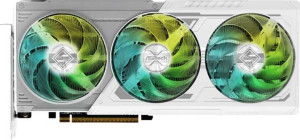
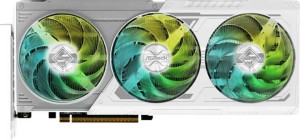
Sharing the same RDNA 4.0 architecture and PCIe 5.0 interface, both cards are built on the same generational foundation — but a closer look reveals meaningful differences beneath the surface. The most striking divergence is in Thermal Design Power: the Steel Legend OC operates at 220W while the XT Steel Legend is rated at 304W, a gap of 84W or roughly 38% more power demand. In practical terms, this means the XT requires a more capable PSU, produces more heat under load, and will likely run louder as its cooler works harder to dissipate that additional thermal output.
Interestingly, the two cards are listed with different process nodes — 5 nm for the Steel Legend OC and 4 nm for the XT — yet both carry an identical transistor count of 53,900 million. A smaller node generally allows for greater efficiency or higher clock headroom at a given power envelope, which is consistent with the XT's higher turbo clocks seen in the Performance group. Despite this process advantage, the XT's significantly higher TDP shows that the extra shader count and clock speed come at a real power cost. Physical dimensions are exactly the same — 298 mm × 131 mm — so both cards will fit identically in any compatible chassis, with no installation trade-offs between them.
For this group, the Steel Legend OC holds a clear practical edge in power efficiency: it draws substantially less power while fitting in the same physical footprint, making it the more suitable choice for builds with tighter PSU headroom, smaller cases with restricted airflow, or users prioritizing lower running costs. The XT's higher TDP is the price of its performance uplift, and buyers should factor in both PSU capacity and thermal management before committing.