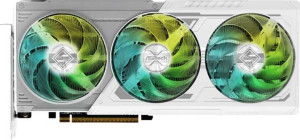
ASRock Radeon RX 9070 Steel Legend OC
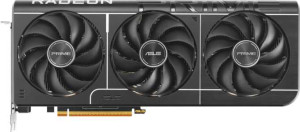
Asus Prime Radeon RX 9070 XT OC Edition

ASRock Radeon RX 9070 Steel Legend OC Asus Prime Radeon RX 9070 XT OC Edition

Overview

Choosing between the ASRock Radeon RX 9070 Steel Legend OC and the Asus Prime Radeon RX 9070 XT OC Edition means weighing some genuinely interesting trade-offs. Both cards are built on the same RDNA 4.0 architecture, pack 16GB of GDDR6 memory, and support modern features like ray tracing and FSR4. Yet they differ noticeably in clock speeds and shader counts, power consumption, and a handful of design details that may tip the scales depending on your specific priorities.

Common Features

  • GPU memory speed is 2518 MHz on both products.
  • Both products have 128 render output units (ROPs).
  • Double Precision Floating Point (DPFP) is supported on both products.
  • Effective memory speed is 20000 MHz on both products.
  • Maximum memory bandwidth is 644.6 GB/s on both products.
  • Both products have 16GB of VRAM.
  • Both products use GDDR6 memory.
  • Memory bus width is 256-bit on both products.
  • ECC memory is supported on both products.
  • Both products support DirectX 12 Ultimate.
  • OpenGL version is 4.6 on both products.
  • OpenCL version is 2.2 on both products.
  • Multi-display technology is supported on both products.
  • Ray tracing is supported on both products.
  • 3D support is available on both products.
  • DLSS is not supported on either product.
  • FSR4 is available on both products.
  • Both products have one HDMI output running HDMI 2.1b.
  • Both products have 3 DisplayPort outputs and no USB-C, DVI, or mini DisplayPort outputs.
  • Both products are built on the RDNA 4.0 GPU architecture.
  • Both products use PCIe version 5.
  • Both products have 53,900 million transistors.
  • Neither product uses air-water cooling.

Main Differences

  • GPU clock speed is 1440 MHz on ASRock Radeon RX 9070 Steel Legend OC and 1660 MHz on Asus Prime Radeon RX 9070 XT OC Edition.
  • GPU turbo clock is 2700 MHz on ASRock Radeon RX 9070 Steel Legend OC and 3010 MHz on Asus Prime Radeon RX 9070 XT OC Edition.
  • Pixel rate is 345.6 GPixel/s on ASRock Radeon RX 9070 Steel Legend OC and 385.3 GPixel/s on Asus Prime Radeon RX 9070 XT OC Edition.
  • Floating-point performance is 77.41 TFLOPS on ASRock Radeon RX 9070 Steel Legend OC and 49.32 TFLOPS on Asus Prime Radeon RX 9070 XT OC Edition.
  • Texture rate is 604.8 GTexels/s on ASRock Radeon RX 9070 Steel Legend OC and 770.6 GTexels/s on Asus Prime Radeon RX 9070 XT OC Edition.
  • Shading units number 3584 on ASRock Radeon RX 9070 Steel Legend OC and 4096 on Asus Prime Radeon RX 9070 XT OC Edition.
  • Texture mapping units (TMUs) total 224 on ASRock Radeon RX 9070 Steel Legend OC and 256 on Asus Prime Radeon RX 9070 XT OC Edition.
  • RGB lighting is present on ASRock Radeon RX 9070 Steel Legend OC but not available on Asus Prime Radeon RX 9070 XT OC Edition.
  • Thermal Design Power (TDP) is 220W on ASRock Radeon RX 9070 Steel Legend OC and 304W on Asus Prime Radeon RX 9070 XT OC Edition.
  • Semiconductor size is 5 nm on ASRock Radeon RX 9070 Steel Legend OC and 4 nm on Asus Prime Radeon RX 9070 XT OC Edition.
  • Width is 298 mm on ASRock Radeon RX 9070 Steel Legend OC and 312 mm on Asus Prime Radeon RX 9070 XT OC Edition.
  • Height is 131 mm on ASRock Radeon RX 9070 Steel Legend OC and 130 mm on Asus Prime Radeon RX 9070 XT OC Edition.
Specs Comparison
ASRock Radeon RX 9070 Steel Legend OC

ASRock Radeon RX 9070 Steel Legend OC

Asus Prime Radeon RX 9070 XT OC Edition

Asus Prime Radeon RX 9070 XT OC Edition

Performance:
GPU clock speed 1440 MHz 1660 MHz
GPU turbo 2700 MHz 3010 MHz
pixel rate 345.6 GPixel/s 385.3 GPixel/s
floating-point performance 77.41 TFLOPS 49.32 TFLOPS
texture rate 604.8 GTexels/s 770.6 GTexels/s
GPU memory speed 2518 MHz 2518 MHz
shading units 3584 4096
texture mapping units (TMUs) 224 256
render output units (ROPs) 128 128
Has Double Precision Floating Point (DPFP)

These two cards share the same memory subsystem — identical 2518 MHz memory speed and 128 ROPs — but diverge meaningfully everywhere else. The Asus Prime RX 9070 XT OC fields a larger GPU die with 4096 shading units and 256 TMUs versus the ASRock Steel Legend OC's 3584 / 224, and it pairs that with significantly higher clock speeds: a 3010 MHz turbo against 2700 MHz. The combined effect shows up in texture throughput, where the 9070 XT reaches 770.6 GTexels/s — roughly 27% ahead — and in pixel fill rate at 385.3 GPixel/s versus 345.6. In practice, higher texture and pixel rates translate directly to sharper, more complex scene rendering at high resolutions and enable smoother performance in texture-heavy workloads like open-world games or demanding rasterized environments.

The one counterintuitive figure is floating-point performance: the ASRock RX 9070 is listed at 77.41 TFLOPS, well above the 9070 XT's 49.32 TFLOPS, despite having fewer shading units. This is an unusual inversion that likely reflects differences in how the two architectures report or calculate this metric, so it should not be taken at face value as a straightforward compute advantage. Both cards support Double Precision Floating Point (DPFP), which matters primarily in professional compute and simulation tasks rather than gaming.

On balance, the Asus Prime RX 9070 XT OC holds a clear performance edge in the metrics most relevant to gaming and graphics workloads — higher shader count, faster clocks, superior texture throughput, and better pixel fill rate. The ASRock Steel Legend OC is competitive at its tier, but the 9070 XT is the stronger card across the majority of these specs.

Memory:
effective memory speed 20000 MHz 20000 MHz
maximum memory bandwidth 644.6 GB/s 644.6 GB/s
VRAM 16GB 16GB
GDDR version GDDR6 GDDR6
memory bus width 256-bit 256-bit
Supports ECC memory

Memory is the one area where these two cards are in complete lockstep. Both carry 16GB of GDDR6 across a 256-bit bus, running at an effective 20000 MHz for a peak bandwidth of 644.6 GB/s. That bandwidth figure is substantial — it means the GPU can move large volumes of texture data, frame buffers, and shader resources quickly enough to avoid bottlenecking even demanding 4K workloads or high-resolution texture packs.

The 256-bit bus width is a key architectural choice worth noting: it strikes a balance between cost and throughput, delivering competitive bandwidth without the die area and power overhead of wider configurations. The 16GB VRAM capacity is equally relevant — at this tier, it provides comfortable headroom for 4K gaming, AI-assisted rendering features, and content creation tasks that are increasingly memory-hungry. Both cards also support ECC memory, a feature typically associated with workstation hardware that adds error-correction capability — a minor but meaningful bonus for users running compute or professional workloads alongside gaming.

There is no winner to declare here: every single memory specification is identical. Whichever card a buyer chooses, they get the same memory subsystem, the same bandwidth, and the same capacity. Any performance difference between these two products will come entirely from other hardware variables, not from memory.

Features:
DirectX version DirectX 12 Ultimate DirectX 12 Ultimate
OpenGL version 4.6 4.6
OpenCL version 2.2 2.2
Supports multi-display technology
supports ray tracing
Supports 3D
supports DLSS
has FSR4
has XeSS (XMX)
AMD SAM / Intel Resizable BAR AMD SAM AMD SAM
has LHR
has RGB lighting
supported displays 4 4

From a software and API standpoint, these two cards are functionally identical. Both support DirectX 12 Ultimate, OpenGL 4.6, and OpenCL 2.2 — the full modern stack for gaming and compute compatibility. Ray tracing, multi-display output across up to 4 screens, and AMD SAM (Smart Access Memory, AMD's implementation of Resizable BAR for improved CPU-to-GPU data throughput) are present on both. Neither card supports DLSS — that is exclusive to Nvidia hardware — but both carry FSR4, AMD's latest upscaling technology, which allows games to render at lower resolutions and reconstruct a higher-quality image, boosting frame rates with minimal visual compromise.

The sole differentiator in this group is aesthetic: the ASRock Steel Legend OC includes RGB lighting, while the Asus Prime does not. For builders who care about a lit-up system with coordinated lighting across components, this is a tangible distinction. For those indifferent to aesthetics, it carries no functional weight whatsoever.

On meaningful features, this is effectively a draw — both cards bring the same API support, the same upscaling toolkit, and the same display capabilities. The RGB lighting on the ASRock gives it a cosmetic edge for aesthetics-focused buyers, but it does not translate into any performance or compatibility advantage.

Ports:
has an HDMI output
HDMI ports 1 1
HDMI version HDMI 2.1b HDMI 2.1b
DisplayPort outputs 3 3
USB-C ports 0 0
DVI outputs 0 0
mini DisplayPort outputs 0 0

Port configuration is another area where these two cards offer no grounds for differentiation. Both feature the same layout: 1 HDMI 2.1b output and 3 DisplayPort outputs, for a total of four simultaneous display connections — which aligns with the four-display limit noted in their features specs. HDMI 2.1b is the latest revision of the standard, capable of handling 4K at high refresh rates and 8K output, making it well-suited for modern high-end monitors and TVs alike.

Neither card includes a USB-C port, which means users looking to connect certain ultra-high-bandwidth displays or use a direct USB-C-to-monitor cable will need an adapter. That said, the combination of three full-size DisplayPort outputs and one HDMI 2.1b port is a practical and widely compatible arrangement for the vast majority of multi-monitor setups.

With every port specification matching exactly, this category is a complete tie. Connectivity choices will not factor into any decision between these two cards.

General info:
GPU architecture RDNA 4.0 RDNA 4.0
release date March 2025 March 2025
Thermal Design Power (TDP) 220W 304W
PCI Express (PCIe) version 5 5
semiconductor size 5 nm 4 nm
number of transistors 53900 million 53900 million
Has air-water cooling
width 298 mm 312 mm
height 131 mm 130 mm

Both cards are built on AMD's RDNA 4.0 architecture and connect via PCIe 5.0, placing them on equal footing in terms of generational platform. They also share an identical transistor count of 53,900 million, which makes the 4 nm process node on the Asus Prime RX 9070 XT versus 5 nm on the ASRock Steel Legend OC a noteworthy divergence — a finer process node generally allows for improved power efficiency or higher clock headroom at the same transistor density, which aligns with the 9070 XT's higher turbo speeds seen in its performance specs.

The most practically significant difference here is thermal design power. The ASRock Steel Legend OC has a 220W TDP, while the Asus Prime 9070 XT is rated at 304W — a gap of 84 watts. That difference has real consequences: the 9070 XT will demand a more robust power supply, generate more heat requiring better case airflow, and draw meaningfully higher electricity over time. For builders working within a compact case or with a modestly rated PSU, the Steel Legend OC's lower thermal envelope is a genuine advantage.

Physical dimensions are nearly identical — the Asus is marginally longer at 312 mm versus 298 mm — so case fitment is unlikely to differ in practice for most builds. On balance, the ASRock Steel Legend OC has a clear edge in power efficiency and thermal demands, while the Asus Prime 9070 XT trades that efficiency for the process node and performance headroom its higher TDP enables.

Comparison Summary & Verdict

Both cards share a strong common foundation: identical 16GB GDDR6 memory configurations, the same RDNA 4.0 architecture, and a full modern feature set including ray tracing and FSR4. However, their differences are meaningful. The Asus Prime Radeon RX 9070 XT OC Edition leads in raw throughput with a higher boost clock of 3010 MHz, 4096 shading units, and a texture rate of 770.6 GTexels/s, making it the stronger pick for enthusiasts chasing maximum gaming performance. The ASRock Radeon RX 9070 Steel Legend OC, by contrast, operates at a considerably lower TDP of 220W compared to 304W, which is a real advantage in builds with tighter power budgets or constrained airflow. It also includes RGB lighting, adding aesthetic appeal the Asus lacks. Choose the Asus for peak performance headroom; choose the ASRock for power efficiency and visual customization.

ASRock Radeon RX 9070 Steel Legend OC
Buy ASRock Radeon RX 9070 Steel Legend OC if...

Buy the ASRock Radeon RX 9070 Steel Legend OC if you want a power-efficient card with a lower 220W TDP and RGB lighting for a more customizable, efficiency-focused build.

Asus Prime Radeon RX 9070 XT OC Edition
Buy Asus Prime Radeon RX 9070 XT OC Edition if...

Buy the Asus Prime Radeon RX 9070 XT OC Edition if you prioritize peak raw performance, with higher boost clocks of 3010 MHz, more shading units, and a faster texture rate for demanding gaming.