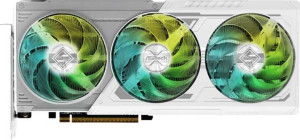
ASRock Radeon RX 9070 Steel Legend OC
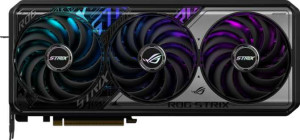
Asus ROG Strix GeForce RTX 5070 Ti

ASRock Radeon RX 9070 Steel Legend OC Asus ROG Strix GeForce RTX 5070 Ti

Overview

Welcome to our in-depth specification face-off between the ASRock Radeon RX 9070 Steel Legend OC and the Asus ROG Strix GeForce RTX 5070 Ti. These two powerful GPUs share common ground in areas like VRAM capacity and API support, yet diverge significantly when it comes to architecture, memory technology, and raw computational metrics. Whether you care about pixel throughput, memory bandwidth, or power efficiency, this comparison covers every angle to help you make an informed decision.

Common Features

  • Both cards support Double Precision Floating Point (DPFP).
  • Both cards come with 16GB of VRAM.
  • Both cards use a 256-bit memory bus width.
  • Both cards support ECC memory.
  • Both cards support DirectX 12 Ultimate.
  • Both cards support OpenGL version 4.6.
  • Both cards support multi-display technology.
  • Both cards support ray tracing.
  • Both cards support 3D output.
  • XeSS (XMX) support is not available on either card.
  • LHR (Lite Hash Rate) is not present on either card.
  • Both cards feature RGB lighting.
  • Both cards have an HDMI output.
  • Both cards use HDMI version 2.1b.
  • Both cards include 3 DisplayPort outputs.
  • Neither card has USB-C ports, DVI outputs, or mini DisplayPort outputs.
  • Both cards use PCIe version 5.
  • Both cards are manufactured on a 5 nm semiconductor process.
  • Neither card uses air-water cooling.

Main Differences

  • GPU base clock speed is 1440 MHz on ASRock Radeon RX 9070 Steel Legend OC and 2295 MHz on Asus ROG Strix GeForce RTX 5070 Ti.
  • GPU turbo clock speed is 2700 MHz on ASRock Radeon RX 9070 Steel Legend OC and 2452 MHz on Asus ROG Strix GeForce RTX 5070 Ti.
  • Pixel rate is 345.6 GPixel/s on ASRock Radeon RX 9070 Steel Legend OC and 235.4 GPixel/s on Asus ROG Strix GeForce RTX 5070 Ti.
  • Floating-point performance is 77.41 TFLOPS on ASRock Radeon RX 9070 Steel Legend OC and 43.94 TFLOPS on Asus ROG Strix GeForce RTX 5070 Ti.
  • Texture rate is 604.8 GTexels/s on ASRock Radeon RX 9070 Steel Legend OC and 686.6 GTexels/s on Asus ROG Strix GeForce RTX 5070 Ti.
  • GPU memory speed is 2518 MHz on ASRock Radeon RX 9070 Steel Legend OC and 1750 MHz on Asus ROG Strix GeForce RTX 5070 Ti.
  • Shading units number 3584 on ASRock Radeon RX 9070 Steel Legend OC and 8960 on Asus ROG Strix GeForce RTX 5070 Ti.
  • Texture mapping units (TMUs) total 224 on ASRock Radeon RX 9070 Steel Legend OC and 280 on Asus ROG Strix GeForce RTX 5070 Ti.
  • Render output units (ROPs) total 128 on ASRock Radeon RX 9070 Steel Legend OC and 96 on Asus ROG Strix GeForce RTX 5070 Ti.
  • Effective memory speed is 20000 MHz on ASRock Radeon RX 9070 Steel Legend OC and 28000 MHz on Asus ROG Strix GeForce RTX 5070 Ti.
  • Maximum memory bandwidth is 644.6 GB/s on ASRock Radeon RX 9070 Steel Legend OC and 896 GB/s on Asus ROG Strix GeForce RTX 5070 Ti.
  • ASRock Radeon RX 9070 Steel Legend OC uses GDDR6 memory, while Asus ROG Strix GeForce RTX 5070 Ti uses GDDR7 memory.
  • OpenCL version is 2.2 on ASRock Radeon RX 9070 Steel Legend OC and 3 on Asus ROG Strix GeForce RTX 5070 Ti.
  • DLSS support is present on Asus ROG Strix GeForce RTX 5070 Ti but not available on ASRock Radeon RX 9070 Steel Legend OC.
  • ASRock Radeon RX 9070 Steel Legend OC uses AMD SAM, while Asus ROG Strix GeForce RTX 5070 Ti uses Intel Resizable BAR.
  • HDMI port count is 1 on ASRock Radeon RX 9070 Steel Legend OC and 2 on Asus ROG Strix GeForce RTX 5070 Ti.
  • GPU architecture is RDNA 4.0 on ASRock Radeon RX 9070 Steel Legend OC and Blackwell on Asus ROG Strix GeForce RTX 5070 Ti.
  • Thermal Design Power (TDP) is 220W on ASRock Radeon RX 9070 Steel Legend OC and 300W on Asus ROG Strix GeForce RTX 5070 Ti.
  • Transistor count is 53900 million on ASRock Radeon RX 9070 Steel Legend OC and 45600 million on Asus ROG Strix GeForce RTX 5070 Ti.
  • Card width is 298 mm on ASRock Radeon RX 9070 Steel Legend OC and 332 mm on Asus ROG Strix GeForce RTX 5070 Ti, and height is 131 mm on ASRock Radeon RX 9070 Steel Legend OC and 147.3 mm on Asus ROG Strix GeForce RTX 5070 Ti.
Specs Comparison
ASRock Radeon RX 9070 Steel Legend OC

ASRock Radeon RX 9070 Steel Legend OC

Asus ROG Strix GeForce RTX 5070 Ti

Asus ROG Strix GeForce RTX 5070 Ti

Performance:
GPU clock speed 1440 MHz 2295 MHz
GPU turbo 2700 MHz 2452 MHz
pixel rate 345.6 GPixel/s 235.4 GPixel/s
floating-point performance 77.41 TFLOPS 43.94 TFLOPS
texture rate 604.8 GTexels/s 686.6 GTexels/s
GPU memory speed 2518 MHz 1750 MHz
shading units 3584 8960
texture mapping units (TMUs) 224 280
render output units (ROPs) 128 96
Has Double Precision Floating Point (DPFP)

At first glance, the clock speed story here is split: the RTX 5070 Ti runs a higher base clock at 2295 MHz, suggesting a more consistently elevated operating frequency, while the RX 9070 Steel Legend OC swings far harder at peak with a turbo of 2700 MHz versus the 5070 Ti's 2452 MHz. In practice, base clock matters for sustained workloads like compute tasks and long renders, while turbo headroom determines burst performance in shorter gaming scenarios. Neither card dominates this metric outright, but the RX 9070's wider gap between base and boost hints at a more aggressive dynamic frequency scaling strategy.

Where the comparison becomes striking is in raw compute throughput. The RX 9070 delivers 77.41 TFLOPS of floating-point performance — nearly 76% more than the 5070 Ti's 43.94 TFLOPS — despite having far fewer shading units (3584 vs. 8960). This apparent paradox is architectural: AMD's RDNA 4 design extracts significantly more compute per clock cycle from each unit. The RX 9070 also holds a commanding lead in pixel fill rate (345.6 vs. 235.4 GPixel/s) and memory speed (2518 vs. 1750 MHz), both of which translate directly to sharper rasterization throughput and faster texture data delivery in high-resolution gaming. The 5070 Ti counters with a higher texture rate (686.6 vs. 604.8 GTexels/s) owing to its larger TMU count (280 vs. 224), which can benefit texture-heavy scenes, though the RX 9070's overall bandwidth advantage partially offsets this edge.

On balance, the ASRock Radeon RX 9070 Steel Legend OC holds a clear performance edge within this spec group. Its lead in floating-point compute, pixel throughput, and memory speed are not marginal — they represent substantial real-world advantages in rasterized rendering workloads. The RTX 5070 Ti's superior texture rate and higher shading unit count are notable, but do not overcome the RX 9070's aggregate compute advantage as reflected in these figures. Both cards support Double Precision Floating Point, making neither uniquely suited for professional compute on that criterion alone.
Memory:
effective memory speed 20000 MHz 28000 MHz
maximum memory bandwidth 644.6 GB/s 896 GB/s
VRAM 16GB 16GB
GDDR version GDDR6 GDDR7
memory bus width 256-bit 256-bit
Supports ECC memory

The ASRock Radeon RX 9070 Steel Legend OC features an effective memory speed of 20000 MHz, while the Asus ROG Strix GeForce RTX 5070 Ti has a faster effective memory speed of 28000 MHz. The maximum memory bandwidth of the RX 9070 is 644.6 GB/s, which is lower than the RTX 5070 Ti's higher bandwidth of 896 GB/s.

Both graphics cards are equipped with 16GB of VRAM, so they share the same memory size. They also both use a 256-bit memory bus width, which is identical for both models. Additionally, both cards support ECC memory, confirming that they are capable of error correction.

In terms of GDDR version, the RX 9070 uses GDDR6, while the RTX 5070 Ti is equipped with the newer GDDR7, which typically offers improved performance and efficiency.

Features:
DirectX version DirectX 12 Ultimate DirectX 12 Ultimate
OpenGL version 4.6 4.6
OpenCL version 2.2 3
Supports multi-display technology
supports ray tracing
Supports 3D
supports DLSS
has XeSS (XMX)
AMD SAM / Intel Resizable BAR AMD SAM Intel Resizable BAR
has LHR
has RGB lighting
supported displays 4 4

Both the ASRock Radeon RX 9070 Steel Legend OC and the Asus ROG Strix GeForce RTX 5070 Ti support DirectX 12 Ultimate and OpenGL 4.6, ensuring compatibility with modern gaming and rendering technologies. However, the RX 9070 supports OpenCL version 2.2, while the RTX 5070 Ti is equipped with OpenCL version 3, offering a slightly newer specification.

Both cards support multi-display technology, ray tracing, and 3D rendering, making them suitable for high-end gaming and professional workloads. The RX 9070 does not support DLSS or XeSS (XMX), whereas the RTX 5070 Ti supports DLSS, which could be advantageous for performance in supported games.

Regarding other features, the RX 9070 uses AMD SAM (Smart Access Memory) for optimized performance with compatible AMD platforms, while the RTX 5070 Ti supports Intel's Resizable BAR technology. Both cards lack LHR (Lite Hash Rate) limitations, feature RGB lighting, and support up to four displays.

Ports:
has an HDMI output
HDMI ports 1 2
HDMI version HDMI 2.1b HDMI 2.1b
DisplayPort outputs 3 3
USB-C ports 0 0
DVI outputs 0 0
mini DisplayPort outputs 0 0

Both the ASRock Radeon RX 9070 Steel Legend OC and the Asus ROG Strix GeForce RTX 5070 Ti feature an HDMI output with HDMI 2.1b support. However, the RX 9070 has 1 HDMI port, while the RTX 5070 Ti includes 2 HDMI ports, providing slightly more flexibility in multi-display setups.

Both cards are equipped with 3 DisplayPort outputs, and neither card includes USB-C ports, DVI outputs, or mini DisplayPort outputs.

General info:
GPU architecture RDNA 4.0 Blackwell
release date March 2025 January 2025
Thermal Design Power (TDP) 220W 300W
PCI Express (PCIe) version 5 5
semiconductor size 5 nm 5 nm
number of transistors 53900 million 45600 million
Has air-water cooling
width 298 mm 332 mm
height 131 mm 147.3 mm

The ASRock Radeon RX 9070 Steel Legend OC is built on the RDNA 4.0 architecture, while the Asus ROG Strix GeForce RTX 5070 Ti utilizes the Blackwell architecture. Both cards use a 5 nm semiconductor size, ensuring modern manufacturing processes.

In terms of power consumption, the RX 9070 has a Thermal Design Power (TDP) of 220W, which is lower than the RTX 5070 Ti’s 300W TDP. Both cards support PCIe version 5, ensuring high bandwidth for data transfer.

For physical dimensions, the RX 9070 is 298 mm in width and 131 mm in height, while the RTX 5070 Ti is larger at 332 mm in width and 147.3 mm in height. Neither card includes air-water cooling systems, and both are equipped with a large number of transistors, with the RX 9070 featuring 53900 million transistors, and the RTX 5070 Ti featuring 45600 million.

Comparison Summary & Verdict

After examining the full specification breakdown, both cards are capable high-end GPUs, but they suit different priorities. The ASRock Radeon RX 9070 Steel Legend OC stands out with a higher pixel rate, superior floating-point performance at 77.41 TFLOPS, a lower TDP of 220W, and a more compact physical footprint — making it an appealing option for efficiency-conscious builders who want strong rasterization output without excessive power draw. On the other hand, the Asus ROG Strix GeForce RTX 5070 Ti leads in shading units, memory bandwidth at 896 GB/s, GDDR7 memory speed, and texture rate, while also offering exclusive DLSS support and a higher OpenCL version — advantages that will resonate with users focused on AI-accelerated rendering and future-facing workloads.

ASRock Radeon RX 9070 Steel Legend OC
Buy ASRock Radeon RX 9070 Steel Legend OC if...

Buy the ASRock Radeon RX 9070 Steel Legend OC if you want stronger pixel throughput and higher floating-point performance while keeping power consumption lower at 220W and fitting a more compact build.

Asus ROG Strix GeForce RTX 5070 Ti
Buy Asus ROG Strix GeForce RTX 5070 Ti if...

Buy the Asus ROG Strix GeForce RTX 5070 Ti if you prioritize higher memory bandwidth, faster GDDR7 memory, a greater number of shading units, and exclusive DLSS support for AI-enhanced rendering.