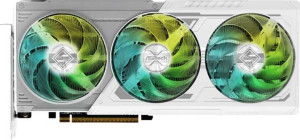
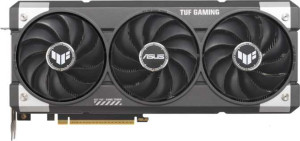
At first glance, the RTX 5060 Ti's higher base clock of 2407 MHz versus the RX 9070's 1440 MHz might suggest a performance edge, but clock speed alone is meaningless without accounting for architecture width. The RX 9070 more than compensates with a significantly higher turbo ceiling of 2700 MHz and a much wider execution pipeline, translating into 77.41 TFLOPS of floating-point throughput — over three times the RTX 5060 Ti's 23.7 TFLOPS. In practice, this gap directly affects compute-heavy workloads like ray tracing calculations, physics simulations, and shader-intensive scenes.
The rasterization story is equally one-sided. The RX 9070's 128 ROPs versus the RTX 5060 Ti's 48 ROPs is the key driver behind its 345.6 GPixel/s pixel fill rate — nearly three times higher. More ROPs means the GPU can resolve and output far more pixels per second, which matters most at higher resolutions and in scenarios with heavy anti-aliasing. Similarly, the RX 9070's 224 TMUs and 604.8 GTexels/s texture rate dwarf the 5060 Ti's 144 TMUs and 370.4 GTexels/s, giving it a substantial advantage in texture-heavy rendering. The faster 2518 MHz memory speed on the RX 9070 further supports feeding this wider pipeline without bottlenecks.
The RTX 5060 Ti does field more shading units (4608 vs. 3584), which can matter in specific parallel compute tasks, but this advantage is decisively overshadowed across every other metric. Both cards support Double Precision Floating Point, so neither holds an exclusive advantage there. Overall, the ASRock Radeon RX 9070 Steel Legend OC holds a commanding performance edge in this group, with superior throughput, fill rate, and memory bandwidth that should translate into meaningfully better raw rendering performance.