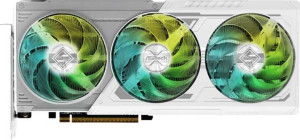
ASRock Radeon RX 9070 Steel Legend OC
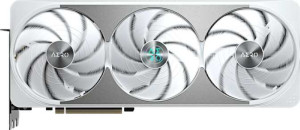
Gigabyte GeForce RTX 5070 Ti Aero OC

ASRock Radeon RX 9070 Steel Legend OC Gigabyte GeForce RTX 5070 Ti Aero OC

Overview

Welcome to this in-depth specification face-off between the ASRock Radeon RX 9070 Steel Legend OC and the Gigabyte GeForce RTX 5070 Ti Aero OC. These two mid-to-high-end graphics cards represent the latest GPU architectures from AMD and NVIDIA respectively, and their differences go far beyond brand loyalty. From memory technology and bandwidth to power consumption and physical dimensions, this comparison digs into every spec that matters for your next build.

Common Features

  • Both products support Double Precision Floating Point (DPFP).
  • Both cards come with 16GB of VRAM.
  • Both cards use a 256-bit memory bus width.
  • ECC memory support is available on both products.
  • Both products support DirectX 12 Ultimate.
  • Both cards support OpenGL version 4.6.
  • Multi-display technology is supported on both products.
  • Ray tracing support is available on both products.
  • 3D support is present on both products.
  • XeSS (XMX) support is not available on either product.
  • LHR (Lite Hash Rate) is not present on either product.
  • RGB lighting is featured on both products.
  • Both cards include one HDMI output port.
  • Both cards use HDMI version 2.1b.
  • Both products feature three DisplayPort outputs.
  • Neither card includes any USB-C ports.
  • Neither card includes any DVI outputs.
  • Neither card includes any mini DisplayPort outputs.
  • Both products use PCI Express version 5.
  • Both cards are manufactured on a 5 nm semiconductor process.
  • Air-water cooling is not available on either product.

Main Differences

  • GPU base clock speed is 1440 MHz on ASRock Radeon RX 9070 Steel Legend OC and 2295 MHz on Gigabyte GeForce RTX 5070 Ti Aero OC.
  • GPU turbo clock speed is 2700 MHz on ASRock Radeon RX 9070 Steel Legend OC and 2588 MHz on Gigabyte GeForce RTX 5070 Ti Aero OC.
  • Pixel rate is 345.6 GPixel/s on ASRock Radeon RX 9070 Steel Legend OC and 248.4 GPixel/s on Gigabyte GeForce RTX 5070 Ti Aero OC.
  • Floating-point performance is 77.41 TFLOPS on ASRock Radeon RX 9070 Steel Legend OC and 46.38 TFLOPS on Gigabyte GeForce RTX 5070 Ti Aero OC.
  • Texture rate is 604.8 GTexels/s on ASRock Radeon RX 9070 Steel Legend OC and 724.6 GTexels/s on Gigabyte GeForce RTX 5070 Ti Aero OC.
  • GPU memory speed is 2518 MHz on ASRock Radeon RX 9070 Steel Legend OC and 1750 MHz on Gigabyte GeForce RTX 5070 Ti Aero OC.
  • Shading units number 3584 on ASRock Radeon RX 9070 Steel Legend OC and 8960 on Gigabyte GeForce RTX 5070 Ti Aero OC.
  • Texture mapping units (TMUs) total 224 on ASRock Radeon RX 9070 Steel Legend OC and 280 on Gigabyte GeForce RTX 5070 Ti Aero OC.
  • Render output units (ROPs) number 128 on ASRock Radeon RX 9070 Steel Legend OC and 96 on Gigabyte GeForce RTX 5070 Ti Aero OC.
  • Effective memory speed is 20000 MHz on ASRock Radeon RX 9070 Steel Legend OC and 28000 MHz on Gigabyte GeForce RTX 5070 Ti Aero OC.
  • Maximum memory bandwidth is 644.6 GB/s on ASRock Radeon RX 9070 Steel Legend OC and 896 GB/s on Gigabyte GeForce RTX 5070 Ti Aero OC.
  • Memory type is GDDR6 on ASRock Radeon RX 9070 Steel Legend OC and GDDR7 on Gigabyte GeForce RTX 5070 Ti Aero OC.
  • OpenCL version is 2.2 on ASRock Radeon RX 9070 Steel Legend OC and 3 on Gigabyte GeForce RTX 5070 Ti Aero OC.
  • DLSS support is present on Gigabyte GeForce RTX 5070 Ti Aero OC but not available on ASRock Radeon RX 9070 Steel Legend OC.
  • The resizable BAR implementation is AMD SAM on ASRock Radeon RX 9070 Steel Legend OC and Intel Resizable BAR on Gigabyte GeForce RTX 5070 Ti Aero OC.
  • GPU architecture is RDNA 4.0 on ASRock Radeon RX 9070 Steel Legend OC and Blackwell on Gigabyte GeForce RTX 5070 Ti Aero OC.
  • Thermal Design Power (TDP) is 220W on ASRock Radeon RX 9070 Steel Legend OC and 300W on Gigabyte GeForce RTX 5070 Ti Aero OC.
  • Transistor count is 53900 million on ASRock Radeon RX 9070 Steel Legend OC and 45600 million on Gigabyte GeForce RTX 5070 Ti Aero OC.
  • Card width is 298 mm on ASRock Radeon RX 9070 Steel Legend OC and 340 mm on Gigabyte GeForce RTX 5070 Ti Aero OC.
  • Card height is 131 mm on ASRock Radeon RX 9070 Steel Legend OC and 140 mm on Gigabyte GeForce RTX 5070 Ti Aero OC.
Specs Comparison
ASRock Radeon RX 9070 Steel Legend OC

ASRock Radeon RX 9070 Steel Legend OC

Gigabyte GeForce RTX 5070 Ti Aero OC

Gigabyte GeForce RTX 5070 Ti Aero OC

Performance:
GPU clock speed 1440 MHz 2295 MHz
GPU turbo 2700 MHz 2588 MHz
pixel rate 345.6 GPixel/s 248.4 GPixel/s
floating-point performance 77.41 TFLOPS 46.38 TFLOPS
texture rate 604.8 GTexels/s 724.6 GTexels/s
GPU memory speed 2518 MHz 1750 MHz
shading units 3584 8960
texture mapping units (TMUs) 224 280
render output units (ROPs) 128 96
Has Double Precision Floating Point (DPFP)

At first glance, the clock speed comparison tells an interesting story. The ASRock RX 9070 Steel Legend OC boosts to a higher turbo of 2700 MHz versus the Gigabyte RTX 5070 Ti Aero OC's 2588 MHz, despite starting from a much lower base clock. This wider boost range on the RX 9070 reflects AMD RDNA 4's aggressive dynamic frequency scaling. The RTX 5070 Ti, by contrast, operates within a narrower and more consistent clock window, which can translate to more predictable frame pacing in practice.

In raw throughput metrics, the picture becomes more nuanced. The RX 9070 leads decisively in floating-point performance at 77.41 TFLOPS versus the RTX 5070 Ti's 46.38 TFLOPS — a gap that reflects RDNA 4's architectural efficiency gains. It also wins on pixel fill rate (345.6 GPixel/s vs. 248.4 GPixel/s), backed by more render output units (128 ROPs vs. 96), which benefits high-resolution rendering and anti-aliasing workloads. The RTX 5070 Ti counters with a higher texture rate of 724.6 GTexels/s thanks to its larger TMU count (280 vs. 224), an advantage in texture-heavy scenes. Memory speed also favors the RX 9070 at 2518 MHz vs. 1750 MHz, which improves bandwidth efficiency in memory-constrained workloads.

Overall, the ASRock RX 9070 Steel Legend OC holds a clear edge in compute throughput, pixel output, and memory speed based strictly on these specs. The Gigabyte RTX 5070 Ti Aero OC carves out an advantage only in texture throughput. Both cards support Double Precision Floating Point, making neither a standout for that specific criterion. For users prioritizing raw compute and fill rate performance as shown by these figures, the RX 9070 is the stronger performer in this group.
Memory:
effective memory speed 20000 MHz 28000 MHz
maximum memory bandwidth 644.6 GB/s 896 GB/s
VRAM 16GB 16GB
GDDR version GDDR6 GDDR7
memory bus width 256-bit 256-bit
Supports ECC memory

The ASRock Radeon RX 9070 Steel Legend OC and the Gigabyte GeForce RTX 5070 Ti Aero OC both come with 16GB of VRAM, ensuring substantial memory capacity. The ASRock card uses GDDR6 memory, while the Gigabyte card upgrades to the newer GDDR7. In terms of memory speed, the ASRock card operates at an effective memory speed of 20000 MHz, while the Gigabyte card achieves a faster 28000 MHz. The maximum memory bandwidth of the ASRock is 644.6 GB/s, which is lower than the Gigabyte’s 896 GB/s.

Both products have a memory bus width of 256-bit, ensuring similar data transfer capabilities in terms of bus width. Additionally, both cards support ECC (Error-Correcting Code) memory, providing enhanced reliability.

Features:
DirectX version DirectX 12 Ultimate DirectX 12 Ultimate
OpenGL version 4.6 4.6
OpenCL version 2.2 3
Supports multi-display technology
supports ray tracing
Supports 3D
supports DLSS
has XeSS (XMX)
AMD SAM / Intel Resizable BAR AMD SAM Intel Resizable BAR
has LHR
has RGB lighting

Both the ASRock Radeon RX 9070 Steel Legend OC and the Gigabyte GeForce RTX 5070 Ti Aero OC support DirectX 12 Ultimate, OpenGL 4.6, and ray tracing, offering similar capabilities for modern gaming and graphical workloads. The ASRock card supports OpenCL version 2.2, while the Gigabyte card features the newer OpenCL version 3.0. Both cards support multi-display technology and 3D, but the Gigabyte card has the added benefit of supporting DLSS (Deep Learning Super Sampling), whereas the ASRock card does not.

For memory and system optimization features, the ASRock card supports AMD SAM (Smart Access Memory), while the Gigabyte card supports Intel Resizable BAR. Neither card has XeSS (XMX) support. Both cards are equipped with RGB lighting for aesthetic customization.

Neither product includes LHR (Lite Hash Rate) technology, which may appeal to users focused on cryptocurrency mining.

Ports:
has an HDMI output
HDMI ports 1 1
HDMI version HDMI 2.1b HDMI 2.1b
DisplayPort outputs 3 3
USB-C ports 0 0
DVI outputs 0 0
mini DisplayPort outputs 0 0

Both the ASRock Radeon RX 9070 Steel Legend OC and the Gigabyte GeForce RTX 5070 Ti Aero OC feature 1 HDMI output with HDMI 2.1b support, ensuring compatibility with high-resolution displays and advanced features. Each card also includes 3 DisplayPort outputs, providing ample display connectivity options. Neither card includes USB-C ports, DVI outputs, or mini DisplayPort outputs, offering similar port configurations for both models.

General info:
GPU architecture RDNA 4.0 Blackwell
release date March 2025 January 2025
Thermal Design Power (TDP) 220W 300W
PCI Express (PCIe) version 5 5
semiconductor size 5 nm 5 nm
number of transistors 53900 million 45600 million
Has air-water cooling
width 298 mm 340 mm
height 131 mm 140 mm

The ASRock Radeon RX 9070 Steel Legend OC features the RDNA 4.0 GPU architecture, while the Gigabyte GeForce RTX 5070 Ti Aero OC uses the Blackwell architecture. In terms of power consumption, the ASRock card has a Thermal Design Power (TDP) of 220W, which is lower than the Gigabyte's 300W TDP. Both cards use the PCI Express 5.0 interface and are built on a 5 nm semiconductor size. The ASRock card contains 53,900 million transistors, while the Gigabyte card has slightly fewer transistors at 45,600 million.

Neither card has air-water cooling support, both relying on traditional cooling methods. The physical dimensions of the cards also differ slightly, with the ASRock card being 298 mm in width and 131 mm in height, while the Gigabyte card is larger at 340 mm in width and 140 mm in height.

Comparison Summary & Verdict

After examining all available specifications, both cards occupy the same broad market tier yet serve notably different buyer profiles. The ASRock Radeon RX 9070 Steel Legend OC stands out with a lower 220W TDP, a more compact footprint, a higher raw pixel rate of 345.6 GPixel/s, and an impressive 77.41 TFLOPS of floating-point performance, making it an attractive option for efficiency-focused builds and AMD ecosystem users who value AMD SAM support. The Gigabyte GeForce RTX 5070 Ti Aero OC, on the other hand, counters with a massive 8960 shading units, faster GDDR7 memory delivering up to 896 GB/s of bandwidth, a superior texture rate of 724.6 GTexels/s, and exclusive DLSS support, making it the stronger pick for content creators and gamers who rely on NVIDIA-specific upscaling and AI-driven features. Both share 16GB VRAM, PCIe 5.0, and DirectX 12 Ultimate support, so neither leaves you short on modern feature compatibility.

ASRock Radeon RX 9070 Steel Legend OC
Buy ASRock Radeon RX 9070 Steel Legend OC if...

Buy the ASRock Radeon RX 9070 Steel Legend OC if you want a more power-efficient card with a smaller physical size, higher pixel rate, and strong floating-point performance without relying on NVIDIA-exclusive features.

Gigabyte GeForce RTX 5070 Ti Aero OC
Buy Gigabyte GeForce RTX 5070 Ti Aero OC if...

Buy the Gigabyte GeForce RTX 5070 Ti Aero OC if you prioritize higher memory bandwidth with GDDR7, a significantly larger shading unit count, and access to DLSS support for AI-accelerated upscaling in games and creative workloads.