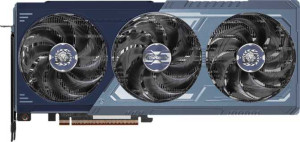
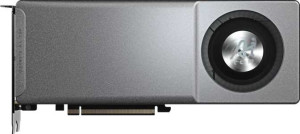
ASRock Radeon RX 9070 XT Monster Hunter Wilds Edition
Gigabyte Radeon AI Pro R9700 AI Top

ASRock Radeon RX 9070 XT Monster Hunter Wilds Edition Gigabyte Radeon AI Pro R9700 AI Top

Common Features

  • Both products have a GPU clock speed of 1660 MHz.
  • Both products have a GPU memory speed of 2518 MHz.
  • Both products have 4096 shading units.
  • Both products have 256 texture mapping units (TMUs).
  • Both products have 128 render output units (ROPs).
  • Both products support Double Precision Floating Point (DPFP).
  • Both products support DirectX 12 Ultimate.
  • Both products support OpenGL 4.6.
  • Both products support OpenCL 2.2.
  • Both products support multi-display technology.
  • Both products support ray tracing.
  • Both products support 3D.
  • Both products support AMD SAM.
  • Both products have an HDMI output.
  • Both products have one HDMI port.
  • Both products have HDMI 2.1b.
  • Both products have three DisplayPort outputs.
  • Both products have a 256-bit memory bus width.
  • Both products use GDDR6 memory.

Main Differences

  • GPU turbo is 2970 MHz on ASRock Radeon RX 9070 XT Monster Hunter Wilds Edition and 2920 MHz on Gigabyte Radeon AI Pro R9700 AI Top.
  • Pixel rate is 380.2 GPixel/s on ASRock Radeon RX 9070 XT Monster Hunter Wilds Edition and 373.8 GPixel/s on Gigabyte Radeon AI Pro R9700 AI Top.
  • Floating-point performance is 48.66 TFLOPS on ASRock Radeon RX 9070 XT Monster Hunter Wilds Edition and 47.84 TFLOPS on Gigabyte Radeon AI Pro R9700 AI Top.
  • Texture rate is 760.3 GTexels/s on ASRock Radeon RX 9070 XT Monster Hunter Wilds Edition and 747.5 GTexels/s on Gigabyte Radeon AI Pro R9700 AI Top.
  • Maximum memory bandwidth is 644 GB/s on ASRock Radeon RX 9070 XT Monster Hunter Wilds Edition and 640 GB/s on Gigabyte Radeon AI Pro R9700 AI Top.
  • VRAM is 16GB on ASRock Radeon RX 9070 XT Monster Hunter Wilds Edition and 32GB on Gigabyte Radeon AI Pro R9700 AI Top.
  • RGB lighting is available on ASRock Radeon RX 9070 XT Monster Hunter Wilds Edition but not available on Gigabyte Radeon AI Pro R9700 AI Top.
  • Thermal Design Power (TDP) is 304W on ASRock Radeon RX 9070 XT Monster Hunter Wilds Edition and 300W on Gigabyte Radeon AI Pro R9700 AI Top.
  • The width is 298 mm on ASRock Radeon RX 9070 XT Monster Hunter Wilds Edition and 267 mm on Gigabyte Radeon AI Pro R9700 AI Top.
  • The height is 131 mm on ASRock Radeon RX 9070 XT Monster Hunter Wilds Edition and 111 mm on Gigabyte Radeon AI Pro R9700 AI Top.
Specs Comparison
ASRock Radeon RX 9070 XT Monster Hunter Wilds Edition

ASRock Radeon RX 9070 XT Monster Hunter Wilds Edition

Gigabyte Radeon AI Pro R9700 AI Top

Gigabyte Radeon AI Pro R9700 AI Top

Performance:
GPU clock speed 1660 MHz 1660 MHz
GPU turbo 2970 MHz 2920 MHz
pixel rate 380.2 GPixel/s 373.8 GPixel/s
floating-point performance 48.66 TFLOPS 47.84 TFLOPS
texture rate 760.3 GTexels/s 747.5 GTexels/s
GPU memory speed 2518 MHz 2518 MHz
shading units 4096 4096
texture mapping units (TMUs) 256 256
render output units (ROPs) 128 128
Has Double Precision Floating Point (DPFP)

Both the ASRock Radeon RX 9070 XT Monster Hunter Wilds Edition and the Gigabyte Radeon AI Pro R9700 AI Top share similar specifications in many key areas of performance. Both products have a GPU clock speed of 1660 MHz and a GPU memory speed of 2518 MHz. They also both feature 4096 shading units, 256 texture mapping units (TMUs), and 128 render output units (ROPs), meaning their core structure in these areas is identical.

However, there are a few differences. The ASRock model has a higher GPU turbo speed of 2970 MHz, compared to 2920 MHz on the Gigabyte model. It also boasts a higher pixel rate at 380.2 GPixel/s, while the Gigabyte card comes in slightly lower at 373.8 GPixel/s. Additionally, the ASRock card delivers a floating-point performance of 48.66 TFLOPS, while the Gigabyte card has a slightly lower rating of 47.84 TFLOPS.

Both products support Double Precision Floating Point (DPFP), ensuring strong precision for tasks that require high computational accuracy. Overall, while the ASRock Radeon RX 9070 XT has slight performance advantages in GPU turbo speed, pixel rate, and floating-point performance, both cards are closely matched in terms of overall core specs.

Memory:
effective memory speed 20100 MHz 20100 MHz
maximum memory bandwidth 644 GB/s 640 GB/s
VRAM 16GB 32GB
GDDR version GDDR6 GDDR6
memory bus width 256-bit 256-bit
Supports ECC memory

The ASRock Radeon RX 9070 XT Monster Hunter Wilds Edition and the Gigabyte Radeon AI Pro R9700 AI Top share several similarities in their memory specifications. Both feature an effective memory speed of 20100 MHz, GDDR6 memory, and a memory bus width of 256-bit. They also both support ECC memory, ensuring data integrity during operations.

There are some key differences between the two products in terms of memory capacity and bandwidth. The ASRock model comes with 16GB of VRAM, while the Gigabyte model has a much larger 32GB of VRAM. This gives the Gigabyte card a significant advantage for tasks that require larger memory buffers. Additionally, while both cards offer high memory bandwidth, the ASRock card provides a slightly higher maximum memory bandwidth of 644 GB/s, compared to the Gigabyte card's 640 GB/s.

In summary, while both cards share many memory features, the Gigabyte card offers more VRAM, which could be beneficial for demanding workloads, while the ASRock card delivers a marginally higher memory bandwidth.

Features:
DirectX version DirectX 12 Ultimate DirectX 12 Ultimate
OpenGL version 4.6 4.6
OpenCL version 2.2 2.2
Supports multi-display technology
supports ray tracing
Supports 3D
has XeSS (XMX)
AMD SAM / Intel Resizable BAR AMD SAM AMD SAM
has LHR
has RGB lighting
supported displays 4 4

The ASRock Radeon RX 9070 XT Monster Hunter Wilds Edition and the Gigabyte Radeon AI Pro R9700 AI Top are quite similar when it comes to features. Both cards support DirectX 12 Ultimate, OpenGL 4.6, and OpenCL 2.2, offering a solid foundation for modern gaming and computing workloads. They also both support multi-display technology, ray tracing, and 3D rendering, ensuring high-quality graphics and immersive experiences.

In terms of additional features, both cards share some common traits. Neither supports XeSS (XMX), and both have AMD SAM (Smart Access Memory) support, which enhances performance when paired with compatible processors. Neither product includes LHR (Lite Hash Rate) capabilities, making them suitable for a broader range of users beyond just cryptocurrency mining. The ASRock card, however, stands out with its RGB lighting, while the Gigabyte model does not have RGB lighting support.

Finally, both cards support up to four displays, offering flexibility for multi-monitor setups. Overall, while both cards have almost identical core feature sets, the ASRock model offers the added visual appeal of RGB lighting, which the Gigabyte model lacks.

Ports:
has an HDMI output
HDMI ports 1 1
HDMI version HDMI 2.1b HDMI 2.1b
DisplayPort outputs 3 3
USB-C ports 0 0
DVI outputs 0 0
mini DisplayPort outputs 0 0

The ASRock Radeon RX 9070 XT Monster Hunter Wilds Edition and the Gigabyte Radeon AI Pro R9700 AI Top have identical port configurations. Both cards feature 1 HDMI output with HDMI 2.1b support, and they each provide 3 DisplayPort outputs. Neither product includes USB-C ports, DVI outputs, or mini DisplayPort outputs, so their connectivity options in these areas are exactly the same.

Overall, the port setups on both cards are closely matched, offering a solid selection for modern displays and multimedia needs, but neither has a standout port feature beyond their shared HDMI and DisplayPort capabilities.

General info:
GPU architecture RDNA 4.0 RDNA 4.0
release date September 2025 July 2025
Thermal Design Power (TDP) 304W 300W
PCI Express (PCIe) version 5 5
semiconductor size 4 nm 4 nm
number of transistors 53900 million 53900 million
Has air-water cooling
width 298 mm 267 mm
height 131 mm 111 mm

The ASRock Radeon RX 9070 XT Monster Hunter Wilds Edition and the Gigabyte Radeon AI Pro R9700 AI Top share several similarities in their general specifications. Both cards use the RDNA 4.0 GPU architecture, are built on a 4 nm semiconductor process, and feature the same number of transistors, with 53,900 million. Both cards also support PCI Express 5.0, ensuring compatibility with the latest motherboard standards.

In terms of power consumption, the ASRock card has a slightly higher Thermal Design Power (TDP) at 304W, while the Gigabyte model is rated at 300W. Both products lack air-water cooling solutions. When it comes to physical dimensions, the ASRock card is slightly larger, measuring 298 mm in width and 131 mm in height, compared to the Gigabyte model, which is 267 mm wide and 111 mm tall.

Overall, the two cards are quite similar, with only minor differences in TDP and size, with the ASRock model being a bit larger and consuming slightly more power.

Comparison Summary

This is a specification comparison between ASRock Radeon RX 9070 XT Monster Hunter Wilds Edition and Gigabyte Radeon AI Pro R9700 AI Top. Both products share a GPU clock speed of 1660 MHz, support for DirectX 12 Ultimate, and three DisplayPort outputs. The ASRock Radeon RX 9070 XT Monster Hunter Wilds Edition has a higher GPU turbo speed at 2970 MHz, while the Gigabyte Radeon AI Pro R9700 AI Top features 32GB of VRAM compared to the ASRock's 16GB. Additionally, the ASRock model has RGB lighting, which is not present on the Gigabyte model. The thermal design power (TDP) is 304W for the ASRock, while the Gigabyte model has a slightly lower TDP of 300W.