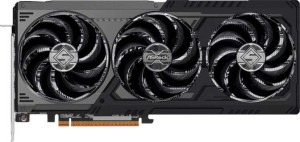
ASRock Radeon RX 9070 XT Steel Legend Dark
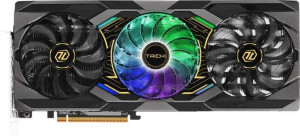
ASRock Radeon RX 9070 XT Taichi OC

ASRock Radeon RX 9070 XT Steel Legend Dark ASRock Radeon RX 9070 XT Taichi OC

Overview

Welcome to our in-depth specification comparison between the ASRock Radeon RX 9070 XT Steel Legend Dark and the ASRock Radeon RX 9070 XT Taichi OC. Both cards share the same RDNA 4.0 architecture and 16GB GDDR6 memory, yet they diverge in key areas such as GPU clock speeds and physical dimensions. Read on to discover which card best suits your build and performance needs.

Common Features

  • Both cards share a GPU memory speed of 2518 MHz.
  • Both cards feature 4096 shading units.
  • Both cards have 256 texture mapping units (TMUs).
  • Both cards have 128 render output units (ROPs).
  • Double Precision Floating Point (DPFP) is supported on both cards.
  • Both cards have an effective memory speed of 20000 MHz.
  • Both cards offer a maximum memory bandwidth of 644.6 GB/s.
  • Both cards come with 16GB of VRAM.
  • Both cards use GDDR6 memory.
  • Both cards feature a 256-bit memory bus width.
  • ECC memory is supported on both cards.
  • Both cards support DirectX 12 Ultimate.
  • Both cards support OpenGL version 4.6.
  • Both cards support OpenCL version 2.2.
  • Multi-display technology is supported on both cards.
  • Ray tracing is supported on both cards.
  • 3D support is available on both cards.
  • DLSS is not supported on either card.
  • FSR4 is available on both cards.
  • Both cards feature one HDMI 2.1b output and three DisplayPort outputs, with no USB-C or DVI outputs.
  • Both cards are built on the RDNA 4.0 GPU architecture.
  • Both cards have a Thermal Design Power (TDP) of 304W.
  • Both cards use PCIe version 5.
  • Both cards are manufactured on a 4 nm semiconductor process.
  • Both cards feature 53900 million transistors.
  • Air-water cooling is not available on either card.

Main Differences

  • GPU base clock speed is 1660 MHz on ASRock Radeon RX 9070 XT Steel Legend Dark and 1870 MHz on ASRock Radeon RX 9070 XT Taichi OC.
  • GPU turbo clock speed is 2970 MHz on ASRock Radeon RX 9070 XT Steel Legend Dark and 3100 MHz on ASRock Radeon RX 9070 XT Taichi OC.
  • Pixel rate is 380.2 GPixel/s on ASRock Radeon RX 9070 XT Steel Legend Dark and 396.8 GPixel/s on ASRock Radeon RX 9070 XT Taichi OC.
  • Floating-point performance is 48.6 TFLOPS on ASRock Radeon RX 9070 XT Steel Legend Dark and 50.79 TFLOPS on ASRock Radeon RX 9070 XT Taichi OC.
  • Texture rate is 760.3 GTexels/s on ASRock Radeon RX 9070 XT Steel Legend Dark and 793.6 GTexels/s on ASRock Radeon RX 9070 XT Taichi OC.
  • Card width is 298 mm on ASRock Radeon RX 9070 XT Steel Legend Dark and 330 mm on ASRock Radeon RX 9070 XT Taichi OC.
  • Card height is 131 mm on ASRock Radeon RX 9070 XT Steel Legend Dark and 140 mm on ASRock Radeon RX 9070 XT Taichi OC.
Specs Comparison
ASRock Radeon RX 9070 XT Steel Legend Dark

ASRock Radeon RX 9070 XT Steel Legend Dark

ASRock Radeon RX 9070 XT Taichi OC

ASRock Radeon RX 9070 XT Taichi OC

Performance:
GPU clock speed 1660 MHz 1870 MHz
GPU turbo 2970 MHz 3100 MHz
pixel rate 380.2 GPixel/s 396.8 GPixel/s
floating-point performance 48.6 TFLOPS 50.79 TFLOPS
texture rate 760.3 GTexels/s 793.6 GTexels/s
GPU memory speed 2518 MHz 2518 MHz
shading units 4096 4096
texture mapping units (TMUs) 256 256
render output units (ROPs) 128 128
Has Double Precision Floating Point (DPFP)

Both cards are built on the same underlying GPU silicon, sharing identical 4096 shading units, 256 TMUs, 128 ROPs, and 2518 MHz memory speed — meaning any performance difference between them comes down entirely to clock speed tuning, not hardware configuration. This makes the comparison unusually clean: it is purely a factory overclock story.

And the Taichi OC does clock meaningfully higher. Its 1870 MHz base / 3100 MHz boost versus the Steel Legend Dark's 1660 MHz base / 2970 MHz boost translates directly into higher derived throughput across every compute metric: 50.79 TFLOPS of floating-point performance versus 48.6 TFLOPS, and a texture rate of 793.6 GTexels/s against 760.3 GTexels/s. In practical terms, this roughly 4–5% clock advantage can matter in GPU-bound scenarios — particularly at high resolutions or with ray tracing loads — where the Taichi OC would sustain slightly higher average frame rates or complete compute tasks faster.

The Taichi OC holds a clear, if modest, performance edge in this group. It is not a transformative gap — the Steel Legend Dark is by no means slow — but the Taichi OC's factory overclock delivers measurably higher throughput across all performance metrics, with no trade-offs visible in the provided specs. Buyers who prioritize peak out-of-the-box performance should favor the Taichi OC; those indifferent to a ~5% difference may find the Steel Legend Dark the better value depending on pricing.
Memory:
effective memory speed 20000 MHz 20000 MHz
maximum memory bandwidth 644.6 GB/s 644.6 GB/s
VRAM 16GB 16GB
GDDR version GDDR6 GDDR6
memory bus width 256-bit 256-bit
Supports ECC memory

Memory is the one area where any distinction between these two cards completely disappears. The Steel Legend Dark and the Taichi OC share an absolutely identical memory configuration: 16GB of GDDR6 across a 256-bit bus, running at an effective 20000 MHz and delivering 644.6 GB/s of bandwidth. There is no tiebreaker anywhere in this spec group.

The practical significance of this shared setup is worth appreciating. A 256-bit GDDR6 interface at this speed places both cards in a strong position for 4K gaming and content creation workloads, where memory bandwidth is often the limiting factor. The 16GB frame buffer is also generous enough to handle large texture assets and high-resolution rendering without the pressure that tighter 8GB or 12GB configurations face in modern titles. ECC memory support on both cards is a minor bonus for compute-adjacent use cases, adding a layer of data integrity for professional workloads.

This group is a complete tie. No matter which of these two cards a buyer chooses, they get the exact same memory subsystem — same capacity, same speed, same bandwidth, same bus width. Memory should play no role whatsoever in the decision between them.

Features:
DirectX version DirectX 12 Ultimate DirectX 12 Ultimate
OpenGL version 4.6 4.6
OpenCL version 2.2 2.2
Supports multi-display technology
supports ray tracing
Supports 3D
supports DLSS
has FSR4
has XeSS (XMX)
AMD SAM / Intel Resizable BAR AMD SAM AMD SAM
has LHR
has RGB lighting
supported displays 4 4

Feature parity continues to define this matchup. Both cards carry the full modern AMD feature stack: DirectX 12 Ultimate and ray tracing support confirm readiness for current-generation rendering pipelines, while FSR4 — AMD's latest upscaling technology — gives owners a meaningful tool for boosting frame rates without a proportional hit to image quality. The absence of DLSS on both is simply a platform reality; these are AMD cards, and FSR4 is the comparable answer.

AMD SAM (Smart Access Memory) support on both cards is worth highlighting for AMD CPU users specifically. When paired with a compatible Ryzen platform, SAM allows the CPU to access the full GPU frame buffer, which can yield tangible performance gains in supported titles — a feature with real-world relevance that neither card holds exclusively over the other. The support for up to 4 simultaneous displays also makes both cards equally capable for multi-monitor productivity or gaming setups.

There is no differentiator to be found here — this group is a complete tie. Every feature, API version, and capability is shared identically between the Steel Legend Dark and the Taichi OC. A buyer's decision cannot and should not be influenced by features alone; performance and other considerations are where these two cards actually diverge.

Ports:
has an HDMI output
HDMI ports 1 1
HDMI version HDMI 2.1b HDMI 2.1b
DisplayPort outputs 3 3
USB-C ports 0 0
DVI outputs 0 0
mini DisplayPort outputs 0 0

Connectivity is another category where these two cards are indistinguishable. Both offer the same four-output layout: 1 HDMI 2.1b and 3 DisplayPort outputs, with no USB-C, DVI, or mini-DisplayPort in sight. This configuration directly supports the 4-display maximum noted in the features group, and the port selection is well-suited to the vast majority of modern monitor setups.

The HDMI 2.1b inclusion is meaningful in practice — it supports 4K at high refresh rates and 8K output, making either card a clean fit for high-end TV gaming or premium monitor configurations without needing an adapter. The triple DisplayPort outputs meanwhile cater to multi-monitor desktop users and are the natural choice for high-refresh-rate gaming displays, which predominantly use DisplayPort. The absence of USB-C is a minor note for those who use USB-C monitors, though adapters readily address this.

No differentiation exists between these two cards on ports — it is a full tie. Connectivity should have zero bearing on choosing between the Steel Legend Dark and the Taichi OC.

General info:
GPU architecture RDNA 4.0 RDNA 4.0
release date March 2025 March 2025
Thermal Design Power (TDP) 304W 304W
PCI Express (PCIe) version 5 5
semiconductor size 4 nm 4 nm
number of transistors 53900 million 53900 million
Has air-water cooling
width 298 mm 330 mm
height 131 mm 140 mm

At the architectural level, these two cards are identical twins. Both are built on RDNA 4.0 using a 4nm process with 53.9 billion transistors, share the same PCIe 5.0 interface, and carry an identical 304W TDP. That last point is particularly relevant given the Taichi OC's higher clock speeds noted in the performance group — ASRock has managed to extract more performance without budging the power envelope, which is a positive engineering outcome for either card's efficiency story.

Where this group does produce a real, practical difference is physical size. The Taichi OC is notably larger at 330 × 140 mm compared to the Steel Legend Dark's 298 × 131 mm. That 32mm length difference is not trivial — in smaller mid-tower or compact ATX cases, clearance for a 330mm card can become a genuine installation concern, and buyers should verify their case's maximum GPU length before committing. The Steel Legend Dark's more compact footprint gives it a meaningful compatibility advantage in tighter builds.

For case compatibility, the Steel Legend Dark has a clear edge — its smaller dimensions make it the safer choice for space-constrained systems. In a full-size tower where clearance is not an issue, this distinction evaporates and the two cards are otherwise equivalent on every other general specification in this group.

Comparison Summary & Verdict

After examining the full specification breakdown, these two cards share a remarkably strong foundation: identical 16GB GDDR6 memory, a 304W TDP, the same port configuration, and full support for FSR4 and ray tracing. The distinction lies in raw performance and physical size. The ASRock Radeon RX 9070 XT Taichi OC pulls ahead with a higher 3100 MHz turbo clock, 50.79 TFLOPS of floating-point performance, and a superior texture rate of 793.6 GTexels/s, making it the stronger choice for users who want every last frame. The ASRock Radeon RX 9070 XT Steel Legend Dark, meanwhile, offers a more compact footprint at 298x131mm versus the Taichi’s 330x140mm, which can be a decisive factor in smaller or mid-tower builds where clearance is tight.

ASRock Radeon RX 9070 XT Steel Legend Dark
Buy ASRock Radeon RX 9070 XT Steel Legend Dark if...

Buy the ASRock Radeon RX 9070 XT Steel Legend Dark if you are working with a compact or space-constrained PC build and need a smaller card that still delivers strong RX 9070 XT performance.

ASRock Radeon RX 9070 XT Taichi OC
Buy ASRock Radeon RX 9070 XT Taichi OC if...

Buy the ASRock Radeon RX 9070 XT Taichi OC if you want maximum out-of-the-box performance, with higher boost clocks, greater floating-point throughput, and a faster texture rate for demanding gaming workloads.