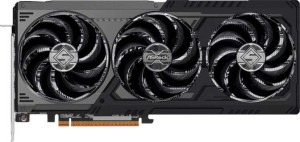
ASRock Radeon RX 9070 XT Steel Legend Dark
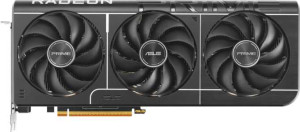
Asus Prime Radeon RX 9070 XT OC Edition

ASRock Radeon RX 9070 XT Steel Legend Dark Asus Prime Radeon RX 9070 XT OC Edition

Overview

In this head-to-head specification comparison between the ASRock Radeon RX 9070 XT Steel Legend Dark and the Asus Prime Radeon RX 9070 XT OC Edition, we examine two AMD RDNA 4.0-based cards that share the same foundation yet diverge in key areas. From boost clock speeds and raw throughput figures to physical dimensions and aesthetic features like RGB lighting, this comparison will help you decide which card better fits your needs and priorities.

Common Features

  • Both cards share a base GPU clock speed of 1660 MHz.
  • Both cards have a GPU memory speed of 2518 MHz.
  • Both cards feature 4096 shading units.
  • Both cards include 256 texture mapping units (TMUs).
  • Both cards have 128 render output units (ROPs).
  • Double Precision Floating Point (DPFP) support is available on both cards.
  • Both cards have an effective memory speed of 20000 MHz.
  • Both cards offer a maximum memory bandwidth of 644.6 GB/s.
  • Both cards come with 16GB of VRAM.
  • Both cards use GDDR6 memory.
  • Both cards have a 256-bit memory bus width.
  • ECC memory support is available on both cards.
  • Both cards support DirectX 12 Ultimate.
  • Both cards support OpenGL version 4.6.
  • Both cards support OpenCL version 2.2.
  • Multi-display technology is supported on both cards.
  • Ray tracing support is available on both cards.
  • 3D support is available on both cards.
  • DLSS is not supported on either card.
  • FSR4 support is available on both cards.
  • Both cards include one HDMI 2.1b port and three DisplayPort outputs, with no USB-C or DVI outputs.
  • Both cards are built on the RDNA 4.0 GPU architecture.
  • Both cards have a Thermal Design Power (TDP) of 304W.
  • Both cards use PCIe version 5.
  • Both cards are manufactured on a 4 nm semiconductor process.
  • Both cards contain 53,900 million transistors.
  • Neither card offers air-water cooling.

Main Differences

  • GPU turbo clock speed is 2970 MHz on the ASRock Radeon RX 9070 XT Steel Legend Dark and 3010 MHz on the Asus Prime Radeon RX 9070 XT OC Edition.
  • Pixel rate is 380.2 GPixel/s on the ASRock Radeon RX 9070 XT Steel Legend Dark and 385.3 GPixel/s on the Asus Prime Radeon RX 9070 XT OC Edition.
  • Floating-point performance is 48.6 TFLOPS on the ASRock Radeon RX 9070 XT Steel Legend Dark and 49.32 TFLOPS on the Asus Prime Radeon RX 9070 XT OC Edition.
  • Texture rate is 760.3 GTexels/s on the ASRock Radeon RX 9070 XT Steel Legend Dark and 770.6 GTexels/s on the Asus Prime Radeon RX 9070 XT OC Edition.
  • RGB lighting is present on the ASRock Radeon RX 9070 XT Steel Legend Dark but not available on the Asus Prime Radeon RX 9070 XT OC Edition.
  • Card width is 298 mm on the ASRock Radeon RX 9070 XT Steel Legend Dark and 312 mm on the Asus Prime Radeon RX 9070 XT OC Edition.
  • Card height is 131 mm on the ASRock Radeon RX 9070 XT Steel Legend Dark and 130 mm on the Asus Prime Radeon RX 9070 XT OC Edition.
Specs Comparison
ASRock Radeon RX 9070 XT Steel Legend Dark

ASRock Radeon RX 9070 XT Steel Legend Dark

Asus Prime Radeon RX 9070 XT OC Edition

Asus Prime Radeon RX 9070 XT OC Edition

Performance:
GPU clock speed 1660 MHz 1660 MHz
GPU turbo 2970 MHz 3010 MHz
pixel rate 380.2 GPixel/s 385.3 GPixel/s
floating-point performance 48.6 TFLOPS 49.32 TFLOPS
texture rate 760.3 GTexels/s 770.6 GTexels/s
GPU memory speed 2518 MHz 2518 MHz
shading units 4096 4096
texture mapping units (TMUs) 256 256
render output units (ROPs) 128 128
Has Double Precision Floating Point (DPFP)

Both the ASRock Steel Legend Dark and the Asus Prime OC Edition are built on identical silicon foundations: the same 1660 MHz base clock, 4096 shading units, 256 TMUs, 128 ROPs, and 2518 MHz memory speed. This means the two cards share the same theoretical throughput ceiling at stock conditions, and any real-world difference in performance comes down entirely to how aggressively each board partner has tuned the GPU boost behavior.

The single meaningful differentiator in this group is the GPU turbo clock: the Asus Prime OC Edition reaches 3010 MHz versus the ASRock's 2970 MHz — a 40 MHz gap. That modest but real advantage flows directly into every derived throughput metric: the Asus pulls ahead with 49.32 TFLOPS of floating-point performance versus 48.6 TFLOPS, a 770.6 GTexels/s texture fill rate versus 760.3 GTexels/s, and a 385.3 GPixel/s pixel rate versus 380.2 GPixel/s. In practice, a ~1.4% boost clock advantage rarely translates into a perceptible fps difference in most workloads, but it does represent a consistent, measurable edge across compute-heavy and texture-bound scenarios.

On pure performance specs, the Asus Prime OC Edition holds a narrow but clear edge over the ASRock Steel Legend Dark, driven entirely by its higher factory boost clock. Both cards support Double Precision Floating Point, so neither has an advantage in compute or professional workloads from that angle. For users who prioritize maximum out-of-box clock speed without manual overclocking, the Asus is the stronger choice in this category; the gap is small enough, however, that other factors — cooling, acoustics, price — will likely matter more to most buyers.
Memory:
effective memory speed 20000 MHz 20000 MHz
maximum memory bandwidth 644.6 GB/s 644.6 GB/s
VRAM 16GB 16GB
GDDR version GDDR6 GDDR6
memory bus width 256-bit 256-bit
Supports ECC memory

When it comes to memory, these two cards are carbon copies of each other. Both carry 16GB of GDDR6 on a 256-bit bus, running at an effective 20000 MHz to deliver 644.6 GB/s of peak bandwidth. That combination is well-suited for modern gaming at 4K and high-resolution texture workloads, where VRAM capacity and bandwidth are the primary bottlenecks rather than raw shader performance.

The 256-bit bus width is the architectural foundation that makes the 644.6 GB/s figure possible — a narrower bus would choke throughput regardless of clock speed. Meanwhile, 16GB of VRAM places both cards comfortably above the threshold where current AAA titles with high-resolution texture packs start running into capacity constraints, and it provides meaningful headroom as game asset sizes continue to grow. ECC memory support on both cards is a welcome addition, primarily benefiting compute and content creation workloads where data integrity matters more than in pure gaming.

This group is an unambiguous dead heat: every single memory specification is identical across the ASRock Steel Legend Dark and the Asus Prime OC Edition. Neither card holds any advantage here, and memory should play no role in choosing between them.

Features:
DirectX version DirectX 12 Ultimate DirectX 12 Ultimate
OpenGL version 4.6 4.6
OpenCL version 2.2 2.2
Supports multi-display technology
supports ray tracing
Supports 3D
supports DLSS
has FSR4
has XeSS (XMX)
AMD SAM / Intel Resizable BAR AMD SAM AMD SAM
has LHR
has RGB lighting
supported displays 4 4

At the software and API level, these two cards are functionally identical. Both support DirectX 12 Ultimate, ray tracing, and FSR4 — AMD's latest upscaling technology — while neither supports DLSS or XeSS, which is expected given their AMD architecture. AMD SAM (Smart Access Memory) is present on both, enabling compatible Ryzen-based systems to access the full VRAM pool for a measurable performance uplift in supported titles. The shared support for up to 4 simultaneous displays rounds out an otherwise equivalent feature set for multi-monitor users.

The sole differentiator in this group is purely aesthetic: the ASRock Steel Legend Dark includes RGB lighting, while the Asus Prime OC Edition does not. For builders who prioritize a coordinated, illuminated system build, the ASRock holds a tangible advantage. For those who prefer a cleaner, understated look — or who simply don't want the added complexity of RGB software — the Asus's lack of lighting is a neutral or even preferable trait.

From a functional standpoint, this group is essentially a tie. Every feature that affects gaming performance, compatibility, and display output is shared equally. The only deciding factor here is whether RGB lighting matters to the buyer, which makes this a purely personal preference rather than a technical one — and on that front, the ASRock Steel Legend Dark is the only option that delivers it.

Ports:
has an HDMI output
HDMI ports 1 1
HDMI version HDMI 2.1b HDMI 2.1b
DisplayPort outputs 3 3
USB-C ports 0 0
DVI outputs 0 0
mini DisplayPort outputs 0 0

Port selection is identical on both cards: one HDMI 2.1b output and three DisplayPorts, totaling four display connections — matching the four-display limit noted in the Features group. HDMI 2.1b is the latest revision of the standard, capable of driving 4K at high refresh rates and 8K output, making it well-suited for modern televisions and high-end monitors alike. The three DisplayPort outputs provide ample flexibility for multi-monitor desktop setups or daisy-chaining compatible displays.

The absence of USB-C, DVI, and mini DisplayPort on both cards is worth noting for users coming from older hardware. Anyone relying on a DVI monitor will need an active adapter, and there is no USB-C alternate mode available for displays or peripherals on either card. These are standard omissions for current-generation GPUs, but worth confirming before purchase if legacy connectivity is a factor.

Ports is another complete tie between the ASRock Steel Legend Dark and the Asus Prime OC Edition. The layout and version of every output is shared exactly, so display compatibility and multi-monitor capability will be indistinguishable between the two in real-world use.

General info:
GPU architecture RDNA 4.0 RDNA 4.0
release date March 2025 March 2025
Thermal Design Power (TDP) 304W 304W
PCI Express (PCIe) version 5 5
semiconductor size 4 nm 4 nm
number of transistors 53900 million 53900 million
Has air-water cooling
width 298 mm 312 mm
height 131 mm 130 mm

Sharing the same RDNA 4.0 architecture built on a 4nm process with 53.9 billion transistors, these two cards are fundamentally the same piece of silicon under the hood. The 304W TDP is identical across both, meaning power supply requirements and expected system heat output are the same regardless of which card you choose. PCIe 5.0 support on both ensures neither will face any interface-level bandwidth constraint on current or near-future platforms.

The only distinction this group surfaces is physical size. The Asus Prime OC Edition is slightly longer at 312 mm, compared to the ASRock Steel Legend Dark's 298 mm — a 14 mm difference that could matter in compact or mid-tower cases with tight GPU clearance. Heights are virtually identical at 131 mm and 130 mm respectively, so slot footprint is a non-issue. For builders working with smaller enclosures, the ASRock's shorter length offers a modest but real fitment advantage.

Broadly, this group is a near-tie on every specification that affects performance, power planning, and platform compatibility. The only meaningful takeaway is physical: if case clearance is tight, the ASRock Steel Legend Dark has a slight edge by virtue of its shorter length.

Comparison Summary & Verdict

Both the ASRock Radeon RX 9070 XT Steel Legend Dark and the Asus Prime Radeon RX 9070 XT OC Edition are built on the same RDNA 4.0 architecture, share identical 16GB GDDR6 memory configurations, and offer the same port layout and feature set including ray tracing and FSR4 support. The Asus card edges ahead with a higher boost clock of 3010 MHz, delivering marginally better pixel rate, texture rate, and floating-point performance at 49.32 TFLOPS. The ASRock card, however, counters with a more compact 298 mm width and includes RGB lighting, which the Asus lacks entirely. Choose the Asus Prime Radeon RX 9070 XT OC Edition if squeezing out every last drop of GPU performance is your top priority. Opt for the ASRock Radeon RX 9070 XT Steel Legend Dark if you value a slightly smaller footprint and want RGB aesthetics in your build.

ASRock Radeon RX 9070 XT Steel Legend Dark
Buy ASRock Radeon RX 9070 XT Steel Legend Dark if...

Buy the ASRock Radeon RX 9070 XT Steel Legend Dark if you want a more compact card with RGB lighting and are happy with near-identical performance at a slightly lower boost clock.

Asus Prime Radeon RX 9070 XT OC Edition
Buy Asus Prime Radeon RX 9070 XT OC Edition if...

Buy the Asus Prime Radeon RX 9070 XT OC Edition if you want the highest boost clock and marginally better raw performance figures, and do not require RGB lighting.