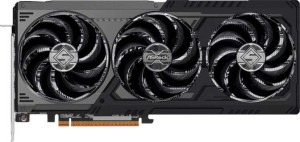
ASRock Radeon RX 9070 XT Steel Legend Dark
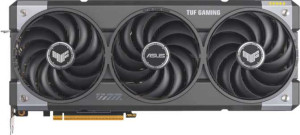
Asus TUF Gaming Radeon RX 9070 XT OC Edition

ASRock Radeon RX 9070 XT Steel Legend Dark Asus TUF Gaming Radeon RX 9070 XT OC Edition

Overview

When choosing between two high-end AMD graphics cards, the ASRock Radeon RX 9070 XT Steel Legend Dark and the Asus TUF Gaming Radeon RX 9070 XT OC Edition present an interesting challenge: both are built on the same RDNA 4.0 architecture and share an identical memory configuration, yet they diverge in meaningful ways. This comparison explores the key battlegrounds of boost clock performance and physical form factor to help you decide which card belongs in your next build.

Common Features

  • Both cards share a base GPU clock speed of 1660 MHz.
  • Both cards have a GPU memory speed of 2518 MHz.
  • Both cards feature 4096 shading units.
  • Both cards have 256 texture mapping units (TMUs).
  • Both cards have 128 render output units (ROPs).
  • Double Precision Floating Point (DPFP) is supported on both cards.
  • Both cards have an effective memory speed of 20000 MHz.
  • Both cards offer a maximum memory bandwidth of 644.6 GB/s.
  • Both cards come with 16GB of VRAM.
  • Both cards use GDDR6 memory.
  • Both cards have a 256-bit memory bus width.
  • ECC memory is supported on both cards.
  • Both cards support DirectX 12 Ultimate.
  • Both cards support OpenGL version 4.6.
  • Both cards support OpenCL version 2.2.
  • Multi-display technology is supported on both cards.
  • Ray tracing is supported on both cards.
  • 3D support is available on both cards.
  • DLSS is not supported on either card.
  • FSR4 is available on both cards.
  • Both cards have one HDMI 2.1b output and three DisplayPort outputs, with no USB-C, DVI, or mini DisplayPort outputs.
  • Both cards are built on the RDNA 4.0 GPU architecture.
  • Both cards have a Thermal Design Power (TDP) of 304W.
  • Both cards use PCIe version 5.
  • Both cards are manufactured on a 4 nm semiconductor process.
  • Both cards contain 53900 million transistors.
  • Neither card features air-water cooling.

Main Differences

  • GPU turbo clock speed is 2970 MHz on the ASRock Radeon RX 9070 XT Steel Legend Dark and 3060 MHz on the Asus TUF Gaming Radeon RX 9070 XT OC Edition.
  • Pixel rate is 380.2 GPixel/s on the ASRock Radeon RX 9070 XT Steel Legend Dark and 391.7 GPixel/s on the Asus TUF Gaming Radeon RX 9070 XT OC Edition.
  • Floating-point performance is 48.6 TFLOPS on the ASRock Radeon RX 9070 XT Steel Legend Dark and 50.14 TFLOPS on the Asus TUF Gaming Radeon RX 9070 XT OC Edition.
  • Texture rate is 760.3 GTexels/s on the ASRock Radeon RX 9070 XT Steel Legend Dark and 783.4 GTexels/s on the Asus TUF Gaming Radeon RX 9070 XT OC Edition.
  • Card width is 298 mm on the ASRock Radeon RX 9070 XT Steel Legend Dark and 330 mm on the Asus TUF Gaming Radeon RX 9070 XT OC Edition.
  • Card height is 131 mm on the ASRock Radeon RX 9070 XT Steel Legend Dark and 140 mm on the Asus TUF Gaming Radeon RX 9070 XT OC Edition.
Specs Comparison
ASRock Radeon RX 9070 XT Steel Legend Dark

ASRock Radeon RX 9070 XT Steel Legend Dark

Asus TUF Gaming Radeon RX 9070 XT OC Edition

Asus TUF Gaming Radeon RX 9070 XT OC Edition

Performance:
GPU clock speed 1660 MHz 1660 MHz
GPU turbo 2970 MHz 3060 MHz
pixel rate 380.2 GPixel/s 391.7 GPixel/s
floating-point performance 48.6 TFLOPS 50.14 TFLOPS
texture rate 760.3 GTexels/s 783.4 GTexels/s
GPU memory speed 2518 MHz 2518 MHz
shading units 4096 4096
texture mapping units (TMUs) 256 256
render output units (ROPs) 128 128
Has Double Precision Floating Point (DPFP)

Both cards share an identical foundation: the same 1660 MHz base clock, 4096 shading units, 256 TMUs, 128 ROPs, and 2518 MHz memory speed. This means the underlying GPU silicon and memory subsystem are equivalent, and any performance difference between them comes down entirely to how aggressively each manufacturer has tuned the boost behavior.

That difference centers on the GPU turbo clock. The Asus TUF Gaming RX 9070 XT OC Edition boosts to 3060 MHz, while the ASRock Steel Legend Dark peaks at 2970 MHz — a gap of 90 MHz, or roughly 3%. This directly flows through to every throughput metric: the TUF OC edges ahead with 50.14 TFLOPS of floating-point performance versus 48.6 TFLOPS, a 783.4 GTexels/s texture rate versus 760.3 GTexels/s, and a 391.7 GPixel/s pixel rate versus 380.2 GPixel/s. In practice, a ~3% compute advantage of this kind typically translates to single-digit frame rate gains in GPU-bound scenarios — noticeable in benchmarks but unlikely to be felt in most real-world gaming sessions.

Based strictly on the provided specs, the Asus TUF Gaming OC Edition holds a clear, if modest, performance edge in this group thanks to its higher turbo clock driving superior throughput across all compute metrics. The ASRock Steel Legend Dark is not far behind, but if raw peak performance is the priority, the TUF OC is the stronger choice here.

Memory:
effective memory speed 20000 MHz 20000 MHz
maximum memory bandwidth 644.6 GB/s 644.6 GB/s
VRAM 16GB 16GB
GDDR version GDDR6 GDDR6
memory bus width 256-bit 256-bit
Supports ECC memory

The memory configurations of these two cards are completely identical across every measurable dimension. Both feature 16GB of GDDR6 running on a 256-bit bus at an effective speed of 20000 MHz, delivering 644.6 GB/s of peak memory bandwidth. That bandwidth figure is substantial for this class of GPU — enough to comfortably feed the shader array at 4K and keep texture streaming smooth even in memory-intensive open-world titles.

The shared support for ECC memory is worth noting. Typically associated with workstation and compute hardware, ECC allows the GPU to detect and correct single-bit memory errors, which adds a layer of reliability relevant to content creators or anyone using the card for GPU compute workloads alongside gaming.

This group is an unambiguous tie. There is no differentiator to weigh — every spec is a perfect match. Memory performance will be indistinguishable between the two cards in any real-world scenario, so buyers should look to other specification groups to separate them.

Features:
DirectX version DirectX 12 Ultimate DirectX 12 Ultimate
OpenGL version 4.6 4.6
OpenCL version 2.2 2.2
Supports multi-display technology
supports ray tracing
Supports 3D
supports DLSS
has FSR4
has XeSS (XMX)
AMD SAM / Intel Resizable BAR AMD SAM AMD SAM
has LHR
has RGB lighting
supported displays 4 4

Feature parity is total here. Both cards run on DirectX 12 Ultimate, which unlocks the full suite of modern rendering features including hardware-accelerated ray tracing, mesh shaders, and variable rate shading — and both confirm ray tracing support explicitly. On the compute and compatibility side, OpenGL 4.6 and OpenCL 2.2 ensure broad support across creative and scientific workloads alike.

The upscaling picture is the same for both: no DLSS (expected, as that is Nvidia-exclusive), no XeSS with XMX acceleration, but full support for FSR4 — AMD's latest upscaling generation, which brings meaningful image quality improvements over its predecessors and is increasingly supported in new titles. Paired with AMD SAM (Smart Access Memory), both cards can benefit from reduced CPU bottlenecking on compatible AMD platforms. Neither carries an LHR limiter, which is a non-issue for gamers but worth knowing for compute users.

Once again, this group yields a definitive tie — every feature flag is identical, down to RGB lighting and support for up to 4 simultaneous displays. There is nothing in the feature set to differentiate these two cards; the choice between them must rest on performance, cooling, design, or price.

Ports:
has an HDMI output
HDMI ports 1 1
HDMI version HDMI 2.1b HDMI 2.1b
DisplayPort outputs 3 3
USB-C ports 0 0
DVI outputs 0 0
mini DisplayPort outputs 0 0

Port selection is identical on both cards: one HDMI 2.1b output and three DisplayPort outputs, totaling four display connections — which aligns with the four-display maximum noted in the Features group. HDMI 2.1b is the latest revision of the standard, capable of handling 4K at 144Hz or 8K at 60Hz without compression, making it well-suited for high-refresh gaming monitors and modern TVs alike.

The absence of USB-C is the one notable omission shared by both cards. For users who rely on USB-C for display output to ultrawide or portable monitors, an adapter will be required — but this is a limitation of both equally, not a differentiator.

No edge exists between these two cards in this category. The port layout is a perfect match, and the quality of those connections — anchored by HDMI 2.1b — is strong for both. Connectivity should not factor into the buying decision here.

General info:
GPU architecture RDNA 4.0 RDNA 4.0
release date March 2025 March 2025
Thermal Design Power (TDP) 304W 304W
PCI Express (PCIe) version 5 5
semiconductor size 4 nm 4 nm
number of transistors 53900 million 53900 million
Has air-water cooling
width 298 mm 330 mm
height 131 mm 140 mm

At their core, these two cards are built from the same silicon: identical RDNA 4.0 architecture, a 4nm process node, 53.9 billion transistors, and a shared 304W TDP. The 4nm fabrication is what enables this level of performance within that power envelope, and both cards draw on it equally. PCIe 5.0 support future-proofs the interface connection, though real-world bandwidth gains over PCIe 4.0 are negligible for current GPU workloads.

Where this group does produce a meaningful difference is physical size. The ASRock Steel Legend Dark measures 298 × 131 mm, while the Asus TUF Gaming OC Edition is noticeably larger at 330 × 140 mm — that is 32mm longer and 9mm taller. For builders working with compact mid-tower cases or those with tight clearance around the PCIe slot, the ASRock's smaller footprint is a genuine practical advantage. The TUF's larger dimensions likely accommodate a bigger heatsink and fan array, which may influence thermal and acoustic performance, but no cooling data is present in this group to confirm that.

On the specs provided here, the ASRock Steel Legend Dark has a tangible edge for space-constrained builds. Both cards are thermally equivalent on paper at 304W TDP, so the size difference is the only factor to weigh in this group — and it clearly favors the ASRock for smaller chassis compatibility.

Comparison Summary & Verdict

Both cards deliver the same strong foundation: 16GB of GDDR6 VRAM, a 256-bit memory bus, 644.6 GB/s of bandwidth, a 304W TDP, and a rich feature set including ray tracing and FSR4. The distinctions come down to outright performance and physical size. The Asus TUF Gaming Radeon RX 9070 XT OC Edition pulls ahead with a higher GPU turbo clock of 3060 MHz, resulting in better pixel rate, texture rate, and floating-point throughput. Meanwhile, the ASRock Radeon RX 9070 XT Steel Legend Dark is the more compact card at 298 mm wide and 131 mm tall, making it the smarter choice for tighter chassis. Choose the Asus if maximum performance is the priority; choose the ASRock if a smaller footprint matters most.

ASRock Radeon RX 9070 XT Steel Legend Dark
Buy ASRock Radeon RX 9070 XT Steel Legend Dark if...

Buy the ASRock Radeon RX 9070 XT Steel Legend Dark if you need a more compact card that still delivers strong RDNA 4.0 performance within a smaller PC build.

Asus TUF Gaming Radeon RX 9070 XT OC Edition
Buy Asus TUF Gaming Radeon RX 9070 XT OC Edition if...

Buy the Asus TUF Gaming Radeon RX 9070 XT OC Edition if you want the higher boost clock and top-tier pixel and texture throughput, and have the case space to accommodate it.