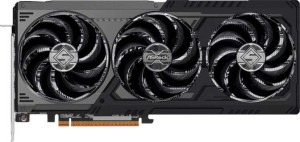
ASRock Radeon RX 9070 XT Steel Legend Dark
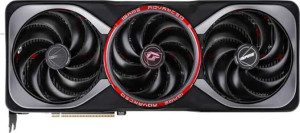
Colorful iGame GeForce RTX 5080 Advanced OC

ASRock Radeon RX 9070 XT Steel Legend Dark Colorful iGame GeForce RTX 5080 Advanced OC

Overview

Welcome to our in-depth specification comparison between the ASRock Radeon RX 9070 XT Steel Legend Dark and the Colorful iGame GeForce RTX 5080 Advanced OC. These two graphics cards represent distinct approaches to modern GPU design, pitting AMD's latest RDNA 4.0 architecture against NVIDIA's cutting-edge Blackwell platform. Key battlegrounds include raw compute performance, memory technology, power efficiency, and feature sets — making this a fascinating matchup for anyone building or upgrading a high-performance PC.

Common Features

  • Both products support Double Precision Floating Point (DPFP).
  • Both cards come with 16GB of VRAM.
  • Both cards use a 256-bit memory bus width.
  • ECC memory support is available on both products.
  • Both products support DirectX 12 Ultimate.
  • Both cards support OpenGL version 4.6.
  • Multi-display technology is supported on both products.
  • Ray tracing support is available on both products.
  • 3D support is present on both products.
  • XeSS (XMX) support is not available on either product.
  • LHR is not present on either product.
  • RGB lighting is featured on both products.
  • Both cards include one HDMI output port.
  • Both products use HDMI version 2.1b.
  • Both cards include 3 DisplayPort outputs.
  • Neither product has USB-C ports.
  • Neither product has DVI outputs.
  • Neither product has mini DisplayPort outputs.
  • Both products use PCI Express (PCIe) version 5.
  • Air-water cooling is not available on either product.

Main Differences

  • GPU clock speed is 1660 MHz on ASRock Radeon RX 9070 XT Steel Legend Dark and 2295 MHz on Colorful iGame GeForce RTX 5080 Advanced OC.
  • GPU turbo speed is 2970 MHz on ASRock Radeon RX 9070 XT Steel Legend Dark and 2670 MHz on Colorful iGame GeForce RTX 5080 Advanced OC.
  • Pixel rate is 380.2 GPixel/s on ASRock Radeon RX 9070 XT Steel Legend Dark and 299 GPixel/s on Colorful iGame GeForce RTX 5080 Advanced OC.
  • Floating-point performance is 48.6 TFLOPS on ASRock Radeon RX 9070 XT Steel Legend Dark and 57.42 TFLOPS on Colorful iGame GeForce RTX 5080 Advanced OC.
  • Texture rate is 760.3 GTexels/s on ASRock Radeon RX 9070 XT Steel Legend Dark and 897.1 GTexels/s on Colorful iGame GeForce RTX 5080 Advanced OC.
  • GPU memory speed is 2518 MHz on ASRock Radeon RX 9070 XT Steel Legend Dark and 1875 MHz on Colorful iGame GeForce RTX 5080 Advanced OC.
  • Shading units number 4096 on ASRock Radeon RX 9070 XT Steel Legend Dark and 10752 on Colorful iGame GeForce RTX 5080 Advanced OC.
  • Texture mapping units (TMUs) total 256 on ASRock Radeon RX 9070 XT Steel Legend Dark and 336 on Colorful iGame GeForce RTX 5080 Advanced OC.
  • Render output units (ROPs) total 128 on ASRock Radeon RX 9070 XT Steel Legend Dark and 112 on Colorful iGame GeForce RTX 5080 Advanced OC.
  • Effective memory speed is 20000 MHz on ASRock Radeon RX 9070 XT Steel Legend Dark and 30000 MHz on Colorful iGame GeForce RTX 5080 Advanced OC.
  • Maximum memory bandwidth is 644.6 GB/s on ASRock Radeon RX 9070 XT Steel Legend Dark and 960 GB/s on Colorful iGame GeForce RTX 5080 Advanced OC.
  • ASRock Radeon RX 9070 XT Steel Legend Dark uses GDDR6 memory, while Colorful iGame GeForce RTX 5080 Advanced OC uses GDDR7 memory.
  • OpenCL version is 2.2 on ASRock Radeon RX 9070 XT Steel Legend Dark and 3 on Colorful iGame GeForce RTX 5080 Advanced OC.
  • DLSS support is present on Colorful iGame GeForce RTX 5080 Advanced OC but not available on ASRock Radeon RX 9070 XT Steel Legend Dark.
  • ASRock Radeon RX 9070 XT Steel Legend Dark uses AMD SAM, while Colorful iGame GeForce RTX 5080 Advanced OC uses Intel Resizable BAR.
  • GPU architecture is RDNA 4.0 on ASRock Radeon RX 9070 XT Steel Legend Dark and Blackwell on Colorful iGame GeForce RTX 5080 Advanced OC.
  • Thermal Design Power (TDP) is 304W on ASRock Radeon RX 9070 XT Steel Legend Dark and 390W on Colorful iGame GeForce RTX 5080 Advanced OC.
  • Semiconductor size is 4 nm on ASRock Radeon RX 9070 XT Steel Legend Dark and 5 nm on Colorful iGame GeForce RTX 5080 Advanced OC.
  • Number of transistors is 53900 million on ASRock Radeon RX 9070 XT Steel Legend Dark and 45600 million on Colorful iGame GeForce RTX 5080 Advanced OC.
  • Card width is 298 mm on ASRock Radeon RX 9070 XT Steel Legend Dark and 355 mm on Colorful iGame GeForce RTX 5080 Advanced OC.
  • Card height is 131 mm on ASRock Radeon RX 9070 XT Steel Legend Dark and 144.7 mm on Colorful iGame GeForce RTX 5080 Advanced OC.
Specs Comparison
ASRock Radeon RX 9070 XT Steel Legend Dark

ASRock Radeon RX 9070 XT Steel Legend Dark

Colorful iGame GeForce RTX 5080 Advanced OC

Colorful iGame GeForce RTX 5080 Advanced OC

Performance:
GPU clock speed 1660 MHz 2295 MHz
GPU turbo 2970 MHz 2670 MHz
pixel rate 380.2 GPixel/s 299 GPixel/s
floating-point performance 48.6 TFLOPS 57.42 TFLOPS
texture rate 760.3 GTexels/s 897.1 GTexels/s
GPU memory speed 2518 MHz 1875 MHz
shading units 4096 10752
texture mapping units (TMUs) 256 336
render output units (ROPs) 128 112
Has Double Precision Floating Point (DPFP)

These two cards tell a fascinating story of contrasting architectural philosophies. The ASRock RX 9070 XT achieves a significantly higher GPU turbo clock of 2970 MHz versus the iGame RTX 5080's 2670 MHz, and this translates directly into a superior pixel fill rate of 380.2 GPixel/s against 299 GPixel/s — meaning the RX 9070 XT can theoretically push more pixels per second at peak boost, which matters in high-resolution, fill-rate-bound scenarios. Its memory also runs faster at 2518 MHz versus 1875 MHz, which can reduce memory-bandwidth bottlenecks in texture-heavy or high-resolution workloads.

The Colorful iGame RTX 5080, however, counters with sheer computational muscle. Its 10,752 shading units dwarf the RX 9070 XT's 4,096 — nearly 2.6× more parallel processors — and this raw parallelism drives its floating-point performance lead: 57.42 TFLOPS versus 48.6 TFLOPS. Its texture throughput advantage is equally telling at 897.1 GTexels/s versus 760.3 GTexels/s, backed by 336 TMUs to the RX 9070 XT's 256. In compute-intensive tasks, shader-heavy rendering, and AI-accelerated workloads, this wider execution width gives the RTX 5080 a meaningful structural advantage that clock speed alone cannot bridge.

Overall, the RTX 5080 holds the performance edge in the metrics that matter most for complex modern rendering — raw TFLOPS, texture throughput, and massive shader parallelism — despite its lower turbo clock. The RX 9070 XT's clock-speed and pixel-rate wins are real but narrower advantages, making it more competitive in pixel-bound scenarios than the raw unit counts suggest. Both cards support Double Precision Floating Point, keeping them on equal footing for mixed-precision compute tasks.

Memory:
effective memory speed 20000 MHz 30000 MHz
maximum memory bandwidth 644.6 GB/s 960 GB/s
VRAM 16GB 16GB
GDDR version GDDR6 GDDR7
memory bus width 256-bit 256-bit
Supports ECC memory

Both cards carry identical 16GB VRAM across a 256-bit memory bus, so neither holds an advantage in raw capacity or bus width. The decisive split comes down to memory generation: the RX 9070 XT uses GDDR6, while the RTX 5080 steps up to GDDR7 — and that generational gap has substantial practical consequences.

The effective memory speed difference tells the story clearly: 30,000 MHz on the RTX 5080 versus 20,000 MHz on the RX 9070 XT, a 50% advantage that flows directly into peak memory bandwidth — 960 GB/s against 644.6 GB/s. In practice, bandwidth is the lifeline for GPU compute; textures, framebuffer data, and AI inference workloads all compete for it. The RTX 5080's extra ~315 GB/s of headroom means it is far less likely to encounter memory bottlenecks when pushing high resolutions, large texture assets, or bandwidth-hungry features like ray tracing and machine-learning-based upscaling. For the RX 9070 XT, its GDDR6 setup remains highly capable at this bus width, but it is structurally outpaced here.

Both cards support ECC memory, making them equally viable for workstation and compute tasks where data integrity is a concern. That said, on memory specifications as a whole, the RTX 5080 holds a clear and meaningful advantage — the GDDR7 upgrade delivers a bandwidth lead that no other shared specification can offset.

Features:
DirectX version DirectX 12 Ultimate DirectX 12 Ultimate
OpenGL version 4.6 4.6
OpenCL version 2.2 3
Supports multi-display technology
supports ray tracing
Supports 3D
supports DLSS
has XeSS (XMX)
AMD SAM / Intel Resizable BAR AMD SAM Intel Resizable BAR
has LHR
has RGB lighting
supported displays 4 4

At the foundation, these two cards share more common ground than their brand rivalry might suggest. Both support DirectX 12 Ultimate, OpenGL 4.6, ray tracing, 3D output, multi-display setups up to 4 screens, and RGB lighting — so for baseline gaming and productivity features, neither has a structural deficit. The most minor divergence is OpenCL: the RTX 5080 carries version 3.0 versus the RX 9070 XT's 2.2, which could matter for GPU-accelerated compute applications that explicitly target newer OpenCL features, though this will be irrelevant to most gamers.

The sharpest differentiator in this group is upscaling support. The RTX 5080 includes DLSS, Nvidia's AI-driven upscaling and frame generation technology, while the RX 9070 XT does not — instead relying on AMD SAM (Smart Access Memory) as its platform-level performance lever. DLSS has become a meaningful real-world advantage in supported titles, enabling higher effective frame rates and image quality through neural rendering. AMD's own upscaling solutions exist but are not listed here, so based strictly on the provided data, the RTX 5080 holds an exclusive feature the RX 9070 XT simply lacks.

On balance, the RTX 5080 edges ahead in this group, primarily due to DLSS support — a feature with tangible in-game impact that has no equivalent listed for the RX 9070 XT in this dataset. For users who heavily play DLSS-enabled titles, this gap is practically significant. Outside of that, the two cards are functionally matched across the remaining features.
Ports:
has an HDMI output
HDMI ports 1 1
HDMI version HDMI 2.1b HDMI 2.1b
DisplayPort outputs 3 3
USB-C ports 0 0
DVI outputs 0 0
mini DisplayPort outputs 0 0

Rarely does a spec group tell a cleaner story: the port configurations on these two cards are identical in every respect. Both offer 1 HDMI 2.1b output and 3 DisplayPort outputs, with no USB-C, DVI, or mini-DisplayPort connections on either. For users planning their display setup, this means the choice between these cards will have zero impact on connectivity options.

HDMI 2.1b supports up to 4K at high refresh rates and 8K output, covering virtually all current consumer display use cases. The three DisplayPort outputs complement this well for multi-monitor productivity or gaming rigs, and combined with the 4-display maximum noted in the Features group, both cards max out at the same ceiling. The absence of USB-C is worth noting for those who use USB-C monitors or VR headsets that rely on that connector, but since neither card provides it, it is an equal limitation.

This group is a complete tie — there is no differentiator to analyze. Connectivity should play no role whatsoever in choosing between the RX 9070 XT Steel Legend Dark and the iGame RTX 5080.

General info:
GPU architecture RDNA 4.0 Blackwell
release date March 2025 February 2025
Thermal Design Power (TDP) 304W 390W
PCI Express (PCIe) version 5 5
semiconductor size 4 nm 5 nm
number of transistors 53900 million 45600 million
Has air-water cooling
width 298 mm 355 mm
height 131 mm 144.7 mm

The silicon story here is genuinely interesting. AMD's RDNA 4.0 architecture on the RX 9070 XT is built on a 4nm process and packs 53,900 million transistors, while Nvidia's Blackwell architecture on the RTX 5080 uses a 5nm node with 45,600 million transistors. The RX 9070 XT's finer process node allows AMD to fit more transistors into a smaller die — a meaningful manufacturing advantage that typically translates into better power efficiency per transistor. This context is important when reading the TDP figures.

Power consumption is where the practical divergence becomes hard to ignore. The RTX 5080 carries a 390W TDP versus the RX 9070 XT's 304W — an 86W gap that has real-world consequences. Users will need a higher-rated PSU for the RTX 5080, and the additional heat output demands better case airflow. The physical footprint reinforces this: at 355mm long and 144.7mm tall, the RTX 5080 is notably larger than the RX 9070 XT's 298mm × 131mm frame. In compact or mid-tower builds, that extra 57mm of card length could be the deciding factor for fitment. Both cards share PCIe 5.0 connectivity, keeping them on equal footing for current and near-future platform compatibility.

For this group, the RX 9070 XT holds a clear practical advantage — its more advanced process node, lower power draw, and smaller physical dimensions make it a more accommodating card to build around, particularly for users with space or power constraints. The RTX 5080's larger size and higher TDP are the expected trade-offs of a higher-tier product, but they are trade-offs nonetheless.

Comparison Summary & Verdict

After a thorough comparison, both cards share a strong foundation: 16GB of VRAM, a 256-bit memory bus, DirectX 12 Ultimate support, and ray tracing capability. However, their strengths diverge sharply. The ASRock Radeon RX 9070 XT Steel Legend Dark stands out with a higher GPU turbo clock of 2970 MHz, a superior pixel rate of 380.2 GPixel/s, a more advanced 4 nm semiconductor process, and a significantly lower TDP of 304W, making it the more power-efficient and compact choice. The Colorful iGame GeForce RTX 5080 Advanced OC counters with greater shading units, higher floating-point performance at 57.42 TFLOPS, faster GDDR7 memory with 960 GB/s bandwidth, and exclusive DLSS support — advantages that translate into superior throughput for demanding workloads and AI-accelerated rendering. Choose the ASRock for efficiency and value; choose the Colorful iGame for maximum compute horsepower and next-gen feature access.

ASRock Radeon RX 9070 XT Steel Legend Dark
Buy ASRock Radeon RX 9070 XT Steel Legend Dark if...

Buy the ASRock Radeon RX 9070 XT Steel Legend Dark if you want a power-efficient GPU with a higher turbo clock, superior pixel rate, and a more compact form factor without sacrificing modern feature support.

Colorful iGame GeForce RTX 5080 Advanced OC
Buy Colorful iGame GeForce RTX 5080 Advanced OC if...

Buy the Colorful iGame GeForce RTX 5080 Advanced OC if you demand the highest compute throughput, faster GDDR7 memory bandwidth, and exclusive features like DLSS for AI-accelerated gaming and rendering workloads.