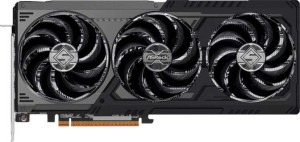
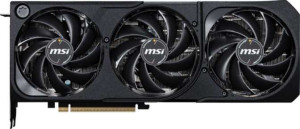
The foundation is essentially identical: both cards run DirectX 12 Ultimate, OpenGL 4.6, ray tracing, 3D support, and can drive up to 4 displays simultaneously. Neither carries LHR restrictions, so there are no artificial compute limitations to worry about. The most impactful divergence in this group, however, is upscaling support — the MSI GeForce RTX 5070 Ti Shadow 3X OC supports DLSS, while the ASRock Radeon RX 9070 XT Steel Legend Dark does not. DLSS is one of the most widely adopted AI-driven upscaling technologies in modern games, capable of boosting frame rates significantly while preserving visual quality, and its absence on the ASRock is a practical gap for gamers prioritizing performance at high resolutions in supported titles.
The MSI also carries a newer OpenCL 3 implementation versus the ASRock's OpenCL 2.2. For users running GPU-accelerated compute applications — video encoding, simulation, or AI inference tools that rely on OpenCL — the newer version brings a more modern feature set and better compatibility with current software. It is a niche advantage, but worth noting for mixed-use workloads. On the BAR side, the ASRock uses AMD SAM and the MSI uses Intel Resizable BAR; both are platform-specific implementations of the same underlying PCIe feature, so this distinction is primarily a motherboard compatibility consideration rather than a performance differentiator.
One area where the ASRock pulls ahead is aesthetics: it includes RGB lighting, which the MSI Shadow 3X OC lacks entirely. For build enthusiasts who prioritize visual customization, that matters. Overall, though, the feature group favors the MSI — DLSS support alone is a meaningful real-world advantage in gaming scenarios, and the newer OpenCL version adds further value for compute users.