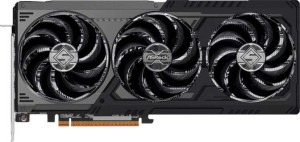
ASRock Radeon RX 9070 XT Steel Legend Dark
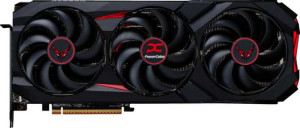
PowerColor Red Devil Radeon RX 9070 XT

ASRock Radeon RX 9070 XT Steel Legend Dark PowerColor Red Devil Radeon RX 9070 XT

Overview

Welcome to this in-depth specification face-off between the ASRock Radeon RX 9070 XT Steel Legend Dark and the PowerColor Red Devil Radeon RX 9070 XT. Both cards share the same RDNA 4.0 architecture, 16GB of GDDR6 memory, and a 304W TDP, making this a fascinating matchup of two takes on the same GPU. The key battlegrounds here are peak clock speeds and raw throughput, DirectX feature support, physical dimensions, and aesthetic extras like RGB lighting.

Common Features

  • Both cards share a base GPU clock speed of 1660 MHz.
  • Both cards have a GPU memory speed of 2518 MHz.
  • Both cards feature 4096 shading units.
  • Both cards have 256 texture mapping units (TMUs).
  • Both cards have 128 render output units (ROPs).
  • Double Precision Floating Point (DPFP) is supported on both cards.
  • Both cards have an effective memory speed of 20000 MHz.
  • Both cards offer a maximum memory bandwidth of 644.6 GB/s.
  • Both cards come with 16GB of VRAM.
  • Both cards use GDDR6 memory.
  • Both cards feature a 256-bit memory bus width.
  • ECC memory is supported on both cards.
  • Both cards support OpenGL version 4.6.
  • Both cards support OpenCL version 2.2.
  • Multi-display technology is supported on both cards.
  • Ray tracing is supported on both cards.
  • 3D support is available on both cards.
  • DLSS is not supported on either card.
  • FSR4 is available on both cards.
  • XeSS (XMX) is not available on either card.
  • Both cards include one HDMI port with HDMI 2.1b.
  • Both cards feature three DisplayPort outputs.
  • Neither card has USB-C, DVI, or mini DisplayPort outputs.
  • Both cards are built on the RDNA 4.0 GPU architecture.
  • Both cards have a Thermal Design Power (TDP) of 304W.
  • Both cards use PCIe version 5.
  • Both cards are manufactured on a 4 nm process.
  • Both cards feature 53,900 million transistors.
  • Neither card supports air-water cooling.

Main Differences

  • GPU turbo clock speed is 2970 MHz on ASRock Radeon RX 9070 XT Steel Legend Dark and 3060 MHz on PowerColor Red Devil Radeon RX 9070 XT.
  • Pixel rate is 380.2 GPixel/s on ASRock Radeon RX 9070 XT Steel Legend Dark and 391.7 GPixel/s on PowerColor Red Devil Radeon RX 9070 XT.
  • Floating-point performance is 48.6 TFLOPS on ASRock Radeon RX 9070 XT Steel Legend Dark and 50.14 TFLOPS on PowerColor Red Devil Radeon RX 9070 XT.
  • Texture rate is 760.3 GTexels/s on ASRock Radeon RX 9070 XT Steel Legend Dark and 783.4 GTexels/s on PowerColor Red Devil Radeon RX 9070 XT.
  • The DirectX version is DirectX 12 Ultimate on ASRock Radeon RX 9070 XT Steel Legend Dark and DirectX 12 on PowerColor Red Devil Radeon RX 9070 XT.
  • RGB lighting is present on ASRock Radeon RX 9070 XT Steel Legend Dark but not available on PowerColor Red Devil Radeon RX 9070 XT.
  • Card width is 298 mm on ASRock Radeon RX 9070 XT Steel Legend Dark and 352 mm on PowerColor Red Devil Radeon RX 9070 XT.
  • Card height is 131 mm on ASRock Radeon RX 9070 XT Steel Legend Dark and 149 mm on PowerColor Red Devil Radeon RX 9070 XT.
Specs Comparison
ASRock Radeon RX 9070 XT Steel Legend Dark

ASRock Radeon RX 9070 XT Steel Legend Dark

PowerColor Red Devil Radeon RX 9070 XT

PowerColor Red Devil Radeon RX 9070 XT

Performance:
GPU clock speed 1660 MHz 1660 MHz
GPU turbo 2970 MHz 3060 MHz
pixel rate 380.2 GPixel/s 391.7 GPixel/s
floating-point performance 48.6 TFLOPS 50.14 TFLOPS
texture rate 760.3 GTexels/s 783.4 GTexels/s
GPU memory speed 2518 MHz 2518 MHz
shading units 4096 4096
texture mapping units (TMUs) 256 256
render output units (ROPs) 128 128
Has Double Precision Floating Point (DPFP)

At the foundation, both cards share identical core hardware configurations: the same 1660 MHz base clock, 4096 shading units, 256 TMUs, 128 ROPs, and 2518 MHz memory speed. This means the underlying silicon and memory bandwidth are equivalent, and any performance gap between them stems entirely from factory overclocking decisions rather than architectural differences.

The critical differentiator is the GPU boost clock. The PowerColor Red Devil reaches 3060 MHz versus the ASRock Steel Legend Dark's 2970 MHz — a 90 MHz (roughly 3%) advantage. While that margin sounds modest, it cascades directly into every throughput metric: the Red Devil leads in floating-point performance (50.14 vs 48.6 TFLOPS), texture rate (783.4 vs 760.3 GTexels/s), and pixel fill rate (391.7 vs 380.2 GPixel/s). In practice, this translates to a slight but consistent edge in shader-heavy workloads, compute tasks, and texture-bound rendering scenarios.

The PowerColor Red Devil holds a clear, if modest, performance advantage in this group strictly due to its higher factory boost clock. The ASRock Steel Legend Dark is not far behind — and real-world frame rates may differ by only a few percent — but if peak out-of-the-box GPU throughput is the deciding factor, the Red Devil is the stronger performer of the two.

Memory:
effective memory speed 20000 MHz 20000 MHz
maximum memory bandwidth 644.6 GB/s 644.6 GB/s
VRAM 16GB 16GB
GDDR version GDDR6 GDDR6
memory bus width 256-bit 256-bit
Supports ECC memory

Memory is one area where choosing between these two cards becomes straightforward: every single spec is identical. Both carry 16GB of GDDR6 running at an effective 20000 MHz across a 256-bit bus, delivering 644.6 GB/s of peak bandwidth. That 16GB pool is a meaningful asset for modern gaming — comfortably handling high-resolution texture packs, 4K assets, and multi-monitor setups without the VRAM pressure that plagues smaller framebuffers.

The 644.6 GB/s bandwidth figure deserves attention. A wide memory bus combined with fast GDDR6 ensures the GPU's shading units are rarely starved for data, which matters most in bandwidth-hungry scenarios like high-resolution rendering or memory-intensive compute workloads. Both cards also support ECC memory, a feature typically associated with professional and workstation use cases — useful for anyone running GPU compute tasks where data integrity is critical.

This group is a complete tie. The ASRock Steel Legend Dark and the PowerColor Red Devil draw from an identical memory subsystem, so neither holds any advantage here. Memory configuration will not be a differentiating factor in any real-world use case between these two cards.

Features:
DirectX version DirectX 12 Ultimate DirectX 12
OpenGL version 4.6 4.6
OpenCL version 2.2 2.2
Supports multi-display technology
supports ray tracing
Supports 3D
supports DLSS
has FSR4
has XeSS (XMX)
AMD SAM / Intel Resizable BAR AMD SAM AMD SAM
has LHR
has RGB lighting
supported displays 4 4

Most of the feature set here is shared ground: both cards support ray tracing, FSR4, AMD SAM, OpenCL 2.2, OpenGL 4.6, and up to 4 simultaneous displays. Neither supports DLSS — expected on AMD hardware — and both lack XeSS with XMX acceleration. For the vast majority of users, these shared capabilities mean identical access to AMD's current software ecosystem.

Two specs do separate them. The ASRock Steel Legend Dark lists DirectX 12 Ultimate support, while the PowerColor Red Devil lists only DirectX 12. DirectX 12 Ultimate is a Microsoft certification that formally guarantees hardware support for features like hardware-accelerated ray tracing, variable rate shading, mesh shaders, and sampler feedback — all relevant to current and upcoming game titles. Whether this reflects a genuine hardware difference or simply a difference in how each manufacturer reported the spec is impossible to determine from the data alone, but as listed, the Steel Legend Dark holds a documentable advantage here. The second difference is cosmetic: the Steel Legend Dark includes RGB lighting, which the Red Devil omits.

Based strictly on the provided data, the ASRock Steel Legend Dark has a narrow edge in this group. The DirectX 12 Ultimate listing is the more consequential differentiator for gamers invested in modern rendering features, while RGB is purely a matter of personal preference for aesthetics and build theming.

Ports:
has an HDMI output
HDMI ports 1 1
HDMI version HDMI 2.1b HDMI 2.1b
DisplayPort outputs 3 3
USB-C ports 0 0
DVI outputs 0 0
mini DisplayPort outputs 0 0

Connectivity is another category where these two cards are indistinguishable. Both offer an identical port layout: 1 HDMI 2.1b output and 3 DisplayPort outputs, supporting up to 4 displays simultaneously — consistent with what was noted in the features group. There are no USB-C, DVI, or mini DisplayPort outputs on either card.

The HDMI 2.1b standard is worth highlighting as a meaningful capability rather than a formality. It supports up to 10K resolution, high frame rate 4K and 8K output, and Variable Refresh Rate (VRR) — making it well-suited for both high-refresh gaming monitors and modern living room TV setups. The triple DisplayPort configuration adds flexibility for multi-monitor workstation builds or daisy-chaining compatible displays.

This group is a complete tie. Port selection and display connectivity will not factor into the decision between these two cards in any way.

General info:
GPU architecture RDNA 4.0 RDNA 4.0
release date March 2025 March 2025
Thermal Design Power (TDP) 304W 304W
PCI Express (PCIe) version 5 5
semiconductor size 4 nm 4 nm
number of transistors 53900 million 53900 million
Has air-water cooling
width 298 mm 352 mm
height 131 mm 149 mm

Under the hood, these two cards are built on identical foundations: the same RDNA 4.0 architecture, a 4nm process node, 53,900 million transistors, a 304W TDP, and PCIe 5.0 connectivity. The shared TDP means both cards will place equivalent demands on your power supply and case airflow — neither is more thermally aggressive than the other at the platform level.

Where they diverge is physical size. The PowerColor Red Devil measures 352 × 149 mm, while the ASRock Steel Legend Dark comes in at a notably more compact 298 × 131 mm — a difference of 54 mm in length and 18 mm in height. That gap is substantial in practice. The Steel Legend Dark is meaningfully easier to fit into mid-tower and smaller cases, and it leaves more clearance for cable routing and airflow around neighboring components. The Red Devil's larger footprint typically signals a more expansive cooler design, but since cooling performance data is not part of this group's specs, no conclusion can be drawn on that front.

For users with spacious full-tower builds, physical dimensions are a non-issue and this group is essentially a tie on all meaningful specs. However, for anyone working with a compact or mid-size case, the ASRock Steel Legend Dark holds a clear practical advantage by virtue of its significantly smaller footprint.

Comparison Summary & Verdict

After a thorough look at the specifications, both cards are closely matched at their core, sharing identical memory configurations, port layouts, and power draw. However, the differences are meaningful depending on your priorities. The PowerColor Red Devil Radeon RX 9070 XT pulls ahead in raw performance metrics, boasting a higher GPU turbo clock of 3060 MHz, greater floating-point performance at 50.14 TFLOPS, and a faster texture rate, making it the stronger choice for users who want maximum out-of-the-box throughput. On the other hand, the ASRock Radeon RX 9070 XT Steel Legend Dark offers DirectX 12 Ultimate support and RGB lighting in a noticeably more compact form factor, appealing to builders working with tighter cases or those who value advanced API features and aesthetics alongside solid performance.

ASRock Radeon RX 9070 XT Steel Legend Dark
Buy ASRock Radeon RX 9070 XT Steel Legend Dark if...

Buy the ASRock Radeon RX 9070 XT Steel Legend Dark if you need a more compact card with DirectX 12 Ultimate support and RGB lighting in your build.

PowerColor Red Devil Radeon RX 9070 XT
Buy PowerColor Red Devil Radeon RX 9070 XT if...

Buy the PowerColor Red Devil Radeon RX 9070 XT if you want the highest possible GPU turbo clock and overall throughput from this GPU generation.