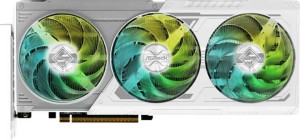
ASRock Radeon RX 9070 XT Steel Legend
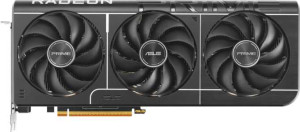
Asus Prime Radeon RX 9070 XT OC Edition

ASRock Radeon RX 9070 XT Steel Legend Asus Prime Radeon RX 9070 XT OC Edition

Overview

When it comes to high-end AMD graphics cards, both the ASRock Radeon RX 9070 XT Steel Legend and the Asus Prime Radeon RX 9070 XT OC Edition bring serious firepower to the table. Built on the same RDNA 4.0 architecture and sharing identical memory configurations, these two cards compete closely on boost clock speeds, raw compute performance, and physical design. This comparison examines exactly where they diverge and which card best suits your needs.

Common Features

  • Both cards share a base GPU clock speed of 1660 MHz.
  • Both cards have a GPU memory speed of 2518 MHz.
  • Both cards include 4096 shading units.
  • Both cards feature 256 texture mapping units (TMUs).
  • Both cards have 128 render output units (ROPs).
  • Double Precision Floating Point (DPFP) is supported on both cards.
  • Both cards have an effective memory speed of 20000 MHz.
  • Both cards offer a maximum memory bandwidth of 644.6 GB/s.
  • Both cards come with 16GB of VRAM.
  • Both cards use GDDR6 memory.
  • Both cards feature a 256-bit memory bus width.
  • ECC memory is supported on both cards.
  • DirectX 12 Ultimate is supported on both cards.
  • Both cards support OpenGL version 4.6.
  • Both cards support OpenCL version 2.2.
  • Multi-display technology is supported on both cards.
  • Ray tracing is supported on both cards.
  • 3D support is available on both cards.
  • DLSS is not supported on either card.
  • FSR4 is supported on both cards.
  • Both cards include one HDMI 2.1b port and three DisplayPort outputs, with no USB-C or DVI outputs.
  • Both cards are built on the RDNA 4.0 GPU architecture.
  • Both cards have a Thermal Design Power (TDP) of 304W.
  • Both cards use PCIe version 5.
  • Both cards are manufactured on a 4 nm process with 53,900 million transistors.
  • Neither card features air-water cooling.

Main Differences

  • GPU turbo clock speed is 2970 MHz on the ASRock Radeon RX 9070 XT Steel Legend and 3010 MHz on the Asus Prime Radeon RX 9070 XT OC Edition.
  • Pixel rate is 380.2 GPixel/s on the ASRock Radeon RX 9070 XT Steel Legend and 385.3 GPixel/s on the Asus Prime Radeon RX 9070 XT OC Edition.
  • Floating-point performance is 48.66 TFLOPS on the ASRock Radeon RX 9070 XT Steel Legend and 49.32 TFLOPS on the Asus Prime Radeon RX 9070 XT OC Edition.
  • Texture rate is 760.3 GTexels/s on the ASRock Radeon RX 9070 XT Steel Legend and 770.6 GTexels/s on the Asus Prime Radeon RX 9070 XT OC Edition.
  • RGB lighting is present on the ASRock Radeon RX 9070 XT Steel Legend but not available on the Asus Prime Radeon RX 9070 XT OC Edition.
  • Card width is 298 mm on the ASRock Radeon RX 9070 XT Steel Legend and 312 mm on the Asus Prime Radeon RX 9070 XT OC Edition.
  • Card height is 131 mm on the ASRock Radeon RX 9070 XT Steel Legend and 130 mm on the Asus Prime Radeon RX 9070 XT OC Edition.
Specs Comparison
ASRock Radeon RX 9070 XT Steel Legend

ASRock Radeon RX 9070 XT Steel Legend

Asus Prime Radeon RX 9070 XT OC Edition

Asus Prime Radeon RX 9070 XT OC Edition

Performance:
GPU clock speed 1660 MHz 1660 MHz
GPU turbo 2970 MHz 3010 MHz
pixel rate 380.2 GPixel/s 385.3 GPixel/s
floating-point performance 48.66 TFLOPS 49.32 TFLOPS
texture rate 760.3 GTexels/s 770.6 GTexels/s
GPU memory speed 2518 MHz 2518 MHz
shading units 4096 4096
texture mapping units (TMUs) 256 256
render output units (ROPs) 128 128
Has Double Precision Floating Point (DPFP)

Both cards are built on the same core silicon, sharing identical base clocks of 1660 MHz, the same 4096 shading units, 256 TMUs, 128 ROPs, and 2518 MHz memory speed. This means their theoretical performance ceiling is defined almost entirely by one variable: the GPU turbo (boost) clock. The Asus Prime OC Edition reaches 3010 MHz versus the ASRock Steel Legend's 2970 MHz — a 40 MHz difference, or roughly 1.3% higher.

That small clock delta cascades predictably into every derived metric. The Asus edges ahead in floating-point performance (49.32 TFLOPS vs 48.66 TFLOPS), texture throughput (770.6 GTexels/s vs 760.3 GTexels/s), and pixel fill rate (385.3 GPixel/s vs 380.2 GPixel/s). In practice, a sub-1.5% compute advantage sits comfortably within frame-to-frame variance in virtually any game or workload, meaning a real-world user is extremely unlikely to perceive a difference. Both cards also support Double Precision Floating Point, which matters for compute and professional tasks beyond gaming.

The Asus Prime OC Edition holds a narrow but measurable paper advantage in every performance metric, courtesy of its slightly higher factory overclock. However, the margin is so slim that it should not be the deciding factor in a purchase — thermal behavior, power delivery, and cooling quality will likely have a larger real-world impact on sustained performance than this 1.3% clock difference.

Memory:
effective memory speed 20000 MHz 20000 MHz
maximum memory bandwidth 644.6 GB/s 644.6 GB/s
VRAM 16GB 16GB
GDDR version GDDR6 GDDR6
memory bus width 256-bit 256-bit
Supports ECC memory

On memory, these two cards are completely indistinguishable. Both feature 16GB of GDDR6 on a 256-bit bus, running at an effective 20000 MHz and delivering 644.6 GB/s of bandwidth. There is not a single figure in this category where one pulls ahead of the other.

The specs themselves carry real weight for buyers. A 256-bit bus paired with 20 Gbps GDDR6 is a well-balanced configuration for the GPU tier — wide enough to avoid bandwidth starvation at 4K and in memory-hungry scenarios like ray tracing or high-resolution texture packs. The 16GB VRAM buffer is particularly future-relevant, as modern titles and creative workloads are increasingly pressing against the 12GB ceiling common on competing cards. Both cards also support ECC memory, a feature that detects and corrects memory errors — typically relevant for compute and professional workloads rather than gaming, but a useful indicator of memory subsystem quality.

This category is an absolute tie. Memory configuration is determined by the GPU architecture and not the board partner, so no amount of factory tuning by ASRock or Asus can differentiate the two here. A buyer prioritizing memory capability gains nothing by choosing one over the other.

Features:
DirectX version DirectX 12 Ultimate DirectX 12 Ultimate
OpenGL version 4.6 4.6
OpenCL version 2.2 2.2
Supports multi-display technology
supports ray tracing
Supports 3D
supports DLSS
has FSR4
has XeSS (XMX)
AMD SAM / Intel Resizable BAR AMD SAM AMD SAM
has LHR
has RGB lighting
supported displays 4 4

Functionally, these two cards are feature-identical where it counts most. Both support DirectX 12 Ultimate and ray tracing, confirming full access to AMD's current rendering feature set. Critically, both include FSR4 — AMD's latest upscaling generation, which uses a machine-learning model to deliver sharper, more temporally stable image reconstruction than its predecessors. For gamers, FSR4 support is arguably the most impactful software feature on this list, as it can meaningfully boost framerates at 4K while preserving visual quality. Neither card supports DLSS, which is expected as that technology is exclusive to Nvidia hardware.

AMD SAM (Smart Access Memory) is present on both, allowing a compatible AMD CPU to access the full VRAM pool rather than a limited 256MB slice — a feature that can yield measurable performance gains in supported titles when paired with a Ryzen platform. Both cards also top out at 4 supported displays, which covers all but the most demanding multi-monitor setups.

The sole differentiator in this group is RGB lighting: the ASRock Steel Legend includes it, while the Asus Prime OC Edition does not. This is purely an aesthetic consideration with zero impact on performance. Buyers who value a clean, understated look may actually prefer the Asus, while those building a themed system may lean toward the ASRock. Beyond this cosmetic distinction, the feature sets are a tie.

Ports:
has an HDMI output
HDMI ports 1 1
HDMI version HDMI 2.1b HDMI 2.1b
DisplayPort outputs 3 3
USB-C ports 0 0
DVI outputs 0 0
mini DisplayPort outputs 0 0

Port selection is identical across both cards: one HDMI 2.1b output and three DisplayPort outputs, for a total of four display connections — matching the four-display limit noted in the Features group. Neither card offers USB-C or any legacy outputs such as DVI or mini DisplayPort.

The version details here matter. HDMI 2.1b supports up to 10K resolution with high refresh rates and includes features like Variable Refresh Rate (VRR) and Auto Low Latency Mode (ALLM), making it fully capable for 4K 144Hz displays and beyond. The three DisplayPort outputs similarly cover any modern high-refresh or high-resolution monitor use case. For the vast majority of users — including those running a multi-monitor setup — this port layout is entirely sufficient.

This category is a complete tie. The configurations are identical down to every port count and version number, so connectivity cannot serve as a differentiator between the ASRock Steel Legend and the Asus Prime OC Edition.

General info:
GPU architecture RDNA 4.0 RDNA 4.0
release date March 2025 March 2025
Thermal Design Power (TDP) 304W 304W
PCI Express (PCIe) version 5 5
semiconductor size 4 nm 4 nm
number of transistors 53900 million 53900 million
Has air-water cooling
width 298 mm 312 mm
height 131 mm 130 mm

At the architectural level, these cards are built from the same foundation: both use AMD's RDNA 4.0 architecture on a 4nm process node with 53,900 million transistors. The move to 4nm brings meaningful density and efficiency gains over the previous generation, and both cards are equally positioned to benefit from it. PCIe 5.0 support is present on both, though at this GPU tier the bandwidth headroom of PCIe 5.0 over 4.0 is largely theoretical rather than practically impactful today.

A shared 304W TDP means power delivery and cooling requirements are identical — buyers should plan for adequate case airflow and a suitably rated PSU regardless of which card they choose. Neither card uses liquid cooling, so thermal performance will come down to each board partner's heatsink and fan implementation, which falls outside the scope of this data.

The only measurable distinction here is physical size. The Asus Prime OC Edition is 14mm longer (312mm vs 298mm), while both are essentially the same height. That length difference is worth checking against case clearance specs, particularly in mid-tower or compact builds. For users with tight cases, the ASRock Steel Legend's slightly shorter footprint could be a practical advantage. Otherwise, this group is largely a tie — same architecture, same process node, same power envelope.

Comparison Summary & Verdict

Both the ASRock Radeon RX 9070 XT Steel Legend and the Asus Prime Radeon RX 9070 XT OC Edition are remarkably similar cards, sharing 16GB of GDDR6 memory, a 304W TDP, the RDNA 4.0 architecture, and an identical port layout. The meaningful differences come down to a few key areas. The Asus card pulls ahead with a higher GPU turbo clock of 3010 MHz, which translates into marginally better pixel rate, texture rate, and floating-point performance. The ASRock card, meanwhile, offers RGB lighting and a more compact width of 298 mm versus 312 mm on the Asus, making it a better fit for builds where case clearance or visual aesthetics matter. Choose the Asus Prime RX 9070 XT OC Edition if squeezing out the best peak performance is your top priority; opt for the ASRock Steel Legend if a smaller footprint and RGB appeal are important to your setup.

ASRock Radeon RX 9070 XT Steel Legend
Buy ASRock Radeon RX 9070 XT Steel Legend if...

Buy the ASRock Radeon RX 9070 XT Steel Legend if RGB lighting and a more compact card width of 298 mm are priorities for your build.

Asus Prime Radeon RX 9070 XT OC Edition
Buy Asus Prime Radeon RX 9070 XT OC Edition if...

Buy the Asus Prime Radeon RX 9070 XT OC Edition if you want the higher boost clock of 3010 MHz and the best out-of-the-box compute performance figures.