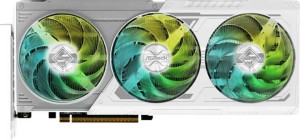
ASRock Radeon RX 9070 XT Steel Legend
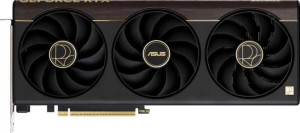
Asus ProArt GeForce RTX 5070 Ti

ASRock Radeon RX 9070 XT Steel Legend Asus ProArt GeForce RTX 5070 Ti

Overview

Welcome to our in-depth spec comparison between the ASRock Radeon RX 9070 XT Steel Legend and the Asus ProArt GeForce RTX 5070 Ti — two powerful mid-to-high-end graphics cards built on completely different architectures. While both cards share 16GB of VRAM and PCIe 5.0 support, they diverge sharply when it comes to memory technology, shading unit counts, and feature sets. Read on to see how AMD and NVIDIA stack up across performance, features, and connectivity.

Common Features

  • Both cards support Double Precision Floating Point (DPFP).
  • Both cards come with 16GB of VRAM.
  • Both cards use a 256-bit memory bus width.
  • ECC memory support is available on both cards.
  • Both cards support DirectX 12 Ultimate.
  • Both cards support OpenGL version 4.6.
  • Multi-display technology is supported on both cards.
  • Ray tracing support is available on both cards.
  • 3D support is available on both cards.
  • XeSS (XMX) support is not available on either card.
  • LHR is not present on either card.
  • RGB lighting is featured on both cards.
  • Both cards have one HDMI port with HDMI 2.1b.
  • Neither card has DVI outputs.
  • Neither card has mini DisplayPort outputs.
  • Both cards use PCIe version 5.
  • Neither card uses air-water cooling.

Main Differences

  • GPU base clock speed is 1660 MHz on ASRock Radeon RX 9070 XT Steel Legend and 2295 MHz on Asus ProArt GeForce RTX 5070 Ti.
  • GPU turbo clock is 2970 MHz on ASRock Radeon RX 9070 XT Steel Legend and 2452 MHz on Asus ProArt GeForce RTX 5070 Ti.
  • Pixel rate is 380.2 GPixel/s on ASRock Radeon RX 9070 XT Steel Legend and 235.4 GPixel/s on Asus ProArt GeForce RTX 5070 Ti.
  • Floating-point performance is 48.66 TFLOPS on ASRock Radeon RX 9070 XT Steel Legend and 43.94 TFLOPS on Asus ProArt GeForce RTX 5070 Ti.
  • Texture rate is 760.3 GTexels/s on ASRock Radeon RX 9070 XT Steel Legend and 686.6 GTexels/s on Asus ProArt GeForce RTX 5070 Ti.
  • GPU memory speed is 2518 MHz on ASRock Radeon RX 9070 XT Steel Legend and 1750 MHz on Asus ProArt GeForce RTX 5070 Ti.
  • Shading units number 4096 on ASRock Radeon RX 9070 XT Steel Legend and 8960 on Asus ProArt GeForce RTX 5070 Ti.
  • Texture mapping units (TMUs) total 256 on ASRock Radeon RX 9070 XT Steel Legend and 280 on Asus ProArt GeForce RTX 5070 Ti.
  • Render output units (ROPs) total 128 on ASRock Radeon RX 9070 XT Steel Legend and 96 on Asus ProArt GeForce RTX 5070 Ti.
  • Effective memory speed is 20000 MHz on ASRock Radeon RX 9070 XT Steel Legend and 28000 MHz on Asus ProArt GeForce RTX 5070 Ti.
  • Maximum memory bandwidth is 644.6 GB/s on ASRock Radeon RX 9070 XT Steel Legend and 896 GB/s on Asus ProArt GeForce RTX 5070 Ti.
  • Memory type is GDDR6 on ASRock Radeon RX 9070 XT Steel Legend and GDDR7 on Asus ProArt GeForce RTX 5070 Ti.
  • OpenCL version is 2.2 on ASRock Radeon RX 9070 XT Steel Legend and 3 on Asus ProArt GeForce RTX 5070 Ti.
  • DLSS support is present on Asus ProArt GeForce RTX 5070 Ti but not available on ASRock Radeon RX 9070 XT Steel Legend.
  • Resizable BAR technology is AMD SAM on ASRock Radeon RX 9070 XT Steel Legend and Intel Resizable BAR on Asus ProArt GeForce RTX 5070 Ti.
  • DisplayPort outputs number 3 on ASRock Radeon RX 9070 XT Steel Legend and 2 on Asus ProArt GeForce RTX 5070 Ti.
  • A USB-C port is present on Asus ProArt GeForce RTX 5070 Ti but not available on ASRock Radeon RX 9070 XT Steel Legend.
  • GPU architecture is RDNA 4.0 on ASRock Radeon RX 9070 XT Steel Legend and Blackwell on Asus ProArt GeForce RTX 5070 Ti.
  • Thermal Design Power (TDP) is 304W on ASRock Radeon RX 9070 XT Steel Legend and 300W on Asus ProArt GeForce RTX 5070 Ti.
  • Semiconductor size is 4 nm on ASRock Radeon RX 9070 XT Steel Legend and 5 nm on Asus ProArt GeForce RTX 5070 Ti.
  • Transistor count is 53900 million on ASRock Radeon RX 9070 XT Steel Legend and 45600 million on Asus ProArt GeForce RTX 5070 Ti.
  • Card width is 298 mm on ASRock Radeon RX 9070 XT Steel Legend and 304 mm on Asus ProArt GeForce RTX 5070 Ti.
  • Card height is 131 mm on ASRock Radeon RX 9070 XT Steel Legend and 126 mm on Asus ProArt GeForce RTX 5070 Ti.
Specs Comparison
ASRock Radeon RX 9070 XT Steel Legend

ASRock Radeon RX 9070 XT Steel Legend

Asus ProArt GeForce RTX 5070 Ti

Asus ProArt GeForce RTX 5070 Ti

Performance:
GPU clock speed 1660 MHz 2295 MHz
GPU turbo 2970 MHz 2452 MHz
pixel rate 380.2 GPixel/s 235.4 GPixel/s
floating-point performance 48.66 TFLOPS 43.94 TFLOPS
texture rate 760.3 GTexels/s 686.6 GTexels/s
GPU memory speed 2518 MHz 1750 MHz
shading units 4096 8960
texture mapping units (TMUs) 256 280
render output units (ROPs) 128 96
Has Double Precision Floating Point (DPFP)

The most striking contrast in this group is the clock speed philosophy. The ASRock RX 9070 XT uses an aggressive boost strategy, leaping from a modest 1660 MHz base all the way to 2970 MHz at turbo — a swing of over 1,300 MHz. The Asus ProArt RTX 5070 Ti, by contrast, operates in a much tighter band, running between 2295 MHz and 2452 MHz. In practice, the RTX 5070 Ti delivers more clock consistency, which can reduce frame time variance, while the RX 9070 XT bets on hitting its ceiling often enough to win on peak throughput.

Looking at the throughput metrics, the RX 9070 XT pulls ahead in every computed performance figure despite having far fewer shading units (4096 vs. 8960). Its 48.66 TFLOPS of floating-point performance, 380.2 GPixel/s pixel rate, and 760.3 GTexels/s texture rate all outpace the RTX 5070 Ti's 43.94 TFLOPS, 235.4 GPixel/s, and 686.6 GTexels/s. This tells a key architectural story: the RX 9070 XT's RDNA 4 design extracts far more work per shader at high clocks, making raw shader count a misleading comparison point here. The RX 9070 XT also pairs these advantages with significantly faster memory at 2518 MHz vs. 1750 MHz, which feeds its pipeline more efficiently. The RTX 5070 Ti holds a small edge in texture mapping units (280 vs. 256), while the RX 9070 XT counters with more render output units (128 ROPs vs. 96), directly benefiting pixel fill rate in demanding scenarios.

On the raw performance metrics provided, the RX 9070 XT Steel Legend holds a clear edge: it leads in floating-point throughput, pixel rate, texture rate, and memory speed. Both cards support Double Precision Floating Point, so neither differentiates there. Users prioritizing peak rasterization throughput based on these figures would favor the RX 9070 XT, while those who value clock stability might appreciate the RTX 5070 Ti's narrower boost range.
Memory:
effective memory speed 20000 MHz 28000 MHz
maximum memory bandwidth 644.6 GB/s 896 GB/s
VRAM 16GB 16GB
GDDR version GDDR6 GDDR7
memory bus width 256-bit 256-bit
Supports ECC memory

Both cards ship with 16GB of VRAM on a 256-bit bus, so neither has an advantage in raw capacity or bus width — a tie that matters, since 16GB is a comfortable ceiling for most current workloads including high-resolution gaming and moderate creative tasks. Where they diverge sharply is memory generation: the RTX 5070 Ti uses GDDR7, while the RX 9070 XT relies on GDDR6. That generational gap is the root cause of every other difference in this group.

The downstream impact of GDDR7 is substantial. The RTX 5070 Ti's effective memory speed of 28000 MHz versus the RX 9070 XT's 20000 MHz translates directly into a bandwidth advantage of 896 GB/s against 644.6 GB/s — a gap of roughly 39%. In practice, higher memory bandwidth reduces the likelihood of the GPU stalling while waiting for data, which is especially meaningful at higher resolutions, with large texture assets, or in memory-intensive compute workloads. This also explains the apparent paradox from the performance group: the RX 9070 XT's faster computed throughput metrics were achieved despite a notable bandwidth disadvantage, suggesting its architecture compensates elsewhere.

Both cards support ECC memory, which is a niche but relevant feature for users running professional or compute workloads where data integrity matters. Overall, the RTX 5070 Ti holds a clear memory advantage in this group, courtesy of GDDR7's superior speed and bandwidth. For workloads that are bandwidth-sensitive — such as 4K rendering, large model inference, or texture-heavy scenes — this gap is meaningful and consistently favors the ProArt.

Features:
DirectX version DirectX 12 Ultimate DirectX 12 Ultimate
OpenGL version 4.6 4.6
OpenCL version 2.2 3
Supports multi-display technology
supports ray tracing
Supports 3D
supports DLSS
has XeSS (XMX)
AMD SAM / Intel Resizable BAR AMD SAM Intel Resizable BAR
has LHR
has RGB lighting
supported displays 4 4

The foundational feature set here is remarkably aligned. Both cards run DirectX 12 Ultimate, support ray tracing, multi-display output up to 4 screens, and include RGB lighting — so for the majority of gaming and display use cases, neither card holds a structural advantage. The one API difference worth noting is OpenCL: the RTX 5070 Ti supports OpenCL 3 versus the RX 9070 XT's OpenCL 2.2, which could matter for users running GPU-accelerated compute tasks that leverage newer OpenCL features, though real-world impact depends heavily on the specific software stack.

The most consequential differentiator in this group is DLSS support. The RTX 5070 Ti includes it; the RX 9070 XT does not. DLSS — particularly in its latest iterations — is one of the most widely adopted upscaling and frame generation technologies in PC gaming, capable of significantly boosting effective frame rates while maintaining image quality in supported titles. Its absence on the RX 9070 XT is a meaningful gap for gamers who prioritize performance in DLSS-enabled games, though AMD's own upscaling technology is not reflected in the provided specs and cannot be considered here.

On the memory resizing front, both cards support their respective platform's smart memory access technology — AMD SAM on the RX 9070 XT and Intel Resizable BAR on the RTX 5070 Ti — which are functionally equivalent mechanisms for giving the CPU full access to GPU memory, yielding frame rate benefits in supported games. These cancel each other out as a differentiator. Overall, the RTX 5070 Ti has a feature advantage in this group, driven primarily by DLSS support and a newer OpenCL revision.

Ports:
has an HDMI output
HDMI ports 1 1
HDMI version HDMI 2.1b HDMI 2.1b
DisplayPort outputs 3 2
USB-C ports 0 1
DVI outputs 0 0
mini DisplayPort outputs 0 0

Both cards share an identical HDMI implementation — a single HDMI 2.1b port — so there is no differentiation there. The split comes from how each card fills out the remaining display outputs. The RX 9070 XT Steel Legend goes with three DisplayPort outputs and no USB-C, while the RTX 5070 Ti opts for two DisplayPort outputs plus a USB-C port. Each configuration still reaches a total of four display connections, matching the maximum supported display count established in the features group.

The practical implications depend entirely on the user's setup. The RX 9070 XT's three full-size DisplayPort outputs make it straightforwardly convenient for multi-monitor rigs using standard cables and adapters — no dongles required. The RTX 5070 Ti trades one of those DisplayPort slots for USB-C, which is increasingly relevant for users connecting high-refresh OLED monitors, VR headsets, or modern portable displays that natively use USB-C input. For those users, the USB-C port is a genuine convenience; for those without such devices, it offers no advantage over a standard DisplayPort.

This group is effectively a tie in total connectivity, with a use-case-dependent tradeoff. Users running a traditional three-monitor DisplayPort setup will find the RX 9070 XT more plug-and-play, while those with USB-C display peripherals will appreciate the RTX 5070 Ti's port mix. Neither configuration is objectively superior based solely on the provided specs.

General info:
GPU architecture RDNA 4.0 Blackwell
release date March 2025 September 2025
Thermal Design Power (TDP) 304W 300W
PCI Express (PCIe) version 5 5
semiconductor size 4 nm 5 nm
number of transistors 53900 million 45600 million
Has air-water cooling
width 298 mm 304 mm
height 131 mm 126 mm

Sitting on different GPU architectures — AMD's RDNA 4.0 versus Nvidia's Blackwell — these two cards take meaningfully different silicon approaches to reach similar power envelopes. The TDP figures are nearly identical at 304W and 300W respectively, which means system builders can treat them as equivalent for PSU sizing and airflow planning. Both also use PCIe 5.0, ensuring neither is bottlenecked by the interface on any current platform.

The more telling contrast is in process node and transistor count. The RX 9070 XT is built on a 4nm process and packs 53,900 million transistors, compared to the RTX 5070 Ti's 5nm node and 45,600 million transistors. The RX 9070 XT's denser process allows AMD to integrate significantly more transistors within a comparable power budget — roughly 18% more. This greater transistor count is part of what enables the architectural efficiency advantages observed in the performance group, where the RX 9070 XT punched above its weight despite fewer shading units.

Physical dimensions are close enough that both cards will fit in the same range of cases, with the RTX 5070 Ti marginally wider (304mm vs. 298mm) and the RX 9070 XT slightly taller (131mm vs. 126mm). Neither difference is likely to be a deciding factor. On balance, this group is largely a tie in practical terms — matched power draw and interface parity dominate — but the RX 9070 XT's newer, denser process node gives it a quiet architectural edge in silicon efficiency.

Comparison Summary & Verdict

After examining all the specifications, these two cards clearly target different audiences. The ASRock Radeon RX 9070 XT Steel Legend stands out with a higher turbo clock of 2970 MHz, superior pixel and texture rates, a more advanced 4 nm process node, and three DisplayPort outputs — making it a compelling pick for those who prioritize raw rasterization throughput and multi-monitor setups. On the other hand, the Asus ProArt GeForce RTX 5070 Ti brings significantly more shading units (8960 vs 4096), faster GDDR7 memory with 896 GB/s bandwidth, DLSS support, and a USB-C port, making it the stronger choice for content creators and gamers who rely on AI-accelerated upscaling and demanding creative workloads. Both cards consume nearly identical power and offer ray tracing, but their architectural philosophies differ greatly.

ASRock Radeon RX 9070 XT Steel Legend
Buy ASRock Radeon RX 9070 XT Steel Legend if...

Buy the ASRock Radeon RX 9070 XT Steel Legend if you want higher turbo clock speeds, better pixel and texture rates, a newer 4 nm chip, and three DisplayPort outputs for multi-monitor setups — all at a similar power envelope.

Asus ProArt GeForce RTX 5070 Ti
Buy Asus ProArt GeForce RTX 5070 Ti if...

Buy the Asus ProArt GeForce RTX 5070 Ti if you need DLSS support, faster GDDR7 memory with greater bandwidth, a significantly higher shader unit count, and a USB-C port for creative or AI-accelerated workloads.