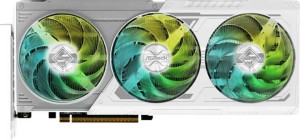
ASRock Radeon RX 9070 XT Steel Legend
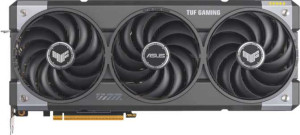
Asus TUF Gaming Radeon RX 9070 XT OC Edition

ASRock Radeon RX 9070 XT Steel Legend Asus TUF Gaming Radeon RX 9070 XT OC Edition

Overview

Welcome to our in-depth specification comparison between the ASRock Radeon RX 9070 XT Steel Legend and the Asus TUF Gaming Radeon RX 9070 XT OC Edition. Both cards are built on AMD's RDNA 4.0 architecture and share the same 16GB GDDR6 memory configuration, yet they diverge in meaningful ways. In this comparison, we examine their clock speed differences, raw performance metrics, and physical dimensions to help you decide which card best fits your build.

Common Features

  • Both cards share a base GPU clock speed of 1660 MHz.
  • Both cards have a GPU memory speed of 2518 MHz.
  • Both cards feature 4096 shading units.
  • Both cards include 256 texture mapping units (TMUs).
  • Both cards have 128 render output units (ROPs).
  • Double Precision Floating Point (DPFP) support is available on both cards.
  • Both cards have an effective memory speed of 20000 MHz.
  • Both cards offer a maximum memory bandwidth of 644.6 GB/s.
  • Both cards come with 16GB of VRAM.
  • Both cards use GDDR6 memory.
  • Both cards have a 256-bit memory bus width.
  • ECC memory support is available on both cards.
  • Both cards support DirectX 12 Ultimate.
  • Both cards support OpenGL version 4.6.
  • Both cards support OpenCL version 2.2.
  • Multi-display technology support is available on both cards.
  • Ray tracing support is available on both cards.
  • 3D support is available on both cards.
  • DLSS support is not available on either card.
  • FSR4 support is available on both cards.
  • Both cards include one HDMI 2.1b port and three DisplayPort outputs, with no USB-C or DVI outputs.
  • Both cards are built on the RDNA 4.0 GPU architecture.
  • Both cards have a Thermal Design Power (TDP) of 304W.
  • Both cards use PCIe version 5.
  • Both cards are manufactured on a 4 nm semiconductor process.
  • Both cards feature 53,900 million transistors.
  • Neither card offers air-water cooling.

Main Differences

  • GPU turbo clock speed is 2970 MHz on the ASRock Radeon RX 9070 XT Steel Legend and 3060 MHz on the Asus TUF Gaming Radeon RX 9070 XT OC Edition.
  • Pixel rate is 380.2 GPixel/s on the ASRock Radeon RX 9070 XT Steel Legend and 391.7 GPixel/s on the Asus TUF Gaming Radeon RX 9070 XT OC Edition.
  • Floating-point performance is 48.66 TFLOPS on the ASRock Radeon RX 9070 XT Steel Legend and 50.14 TFLOPS on the Asus TUF Gaming Radeon RX 9070 XT OC Edition.
  • Texture rate is 760.3 GTexels/s on the ASRock Radeon RX 9070 XT Steel Legend and 783.4 GTexels/s on the Asus TUF Gaming Radeon RX 9070 XT OC Edition.
  • Card width is 298 mm on the ASRock Radeon RX 9070 XT Steel Legend and 330 mm on the Asus TUF Gaming Radeon RX 9070 XT OC Edition.
  • Card height is 131 mm on the ASRock Radeon RX 9070 XT Steel Legend and 140 mm on the Asus TUF Gaming Radeon RX 9070 XT OC Edition.
Specs Comparison
ASRock Radeon RX 9070 XT Steel Legend

ASRock Radeon RX 9070 XT Steel Legend

Asus TUF Gaming Radeon RX 9070 XT OC Edition

Asus TUF Gaming Radeon RX 9070 XT OC Edition

Performance:
GPU clock speed 1660 MHz 1660 MHz
GPU turbo 2970 MHz 3060 MHz
pixel rate 380.2 GPixel/s 391.7 GPixel/s
floating-point performance 48.66 TFLOPS 50.14 TFLOPS
texture rate 760.3 GTexels/s 783.4 GTexels/s
GPU memory speed 2518 MHz 2518 MHz
shading units 4096 4096
texture mapping units (TMUs) 256 256
render output units (ROPs) 128 128
Has Double Precision Floating Point (DPFP)

Both cards share an identical foundation: the same 1660 MHz base clock, 4096 shading units, 256 TMUs, 128 ROPs, and 2518 MHz memory speed. This means any performance difference between them comes down entirely to how aggressively each card boosts under load.

That is where the Asus TUF Gaming RX 9070 XT OC Edition pulls ahead. Its 3060 MHz turbo clock outpaces the ASRock Steel Legend's 2970 MHz — a 90 MHz gap that cascades into measurable differences across every throughput metric: 50.14 TFLOPS of floating-point performance versus 48.66 TFLOPS, a texture rate of 783.4 GTexels/s versus 760.3 GTexels/s, and a pixel fill rate of 391.7 GPixel/s versus 380.2 GPixel/s. In practice, the higher turbo translates to a roughly 3% throughput advantage across shader-heavy workloads, texturing, and rasterization — a modest but consistent lead.

The TUF OC Edition holds a clear, if narrow, performance edge in this group. The Steel Legend is not meaningfully slower, but buyers prioritizing peak compute throughput and the last few percent of rendering performance will find the TUF the stronger choice based strictly on these specs.

Memory:
effective memory speed 20000 MHz 20000 MHz
maximum memory bandwidth 644.6 GB/s 644.6 GB/s
VRAM 16GB 16GB
GDDR version GDDR6 GDDR6
memory bus width 256-bit 256-bit
Supports ECC memory

On memory, these two cards are completely identical across every measurable dimension. Both carry 16GB of GDDR6 over a 256-bit bus, running at an effective 20000 MHz for a peak bandwidth of 644.6 GB/s. There is nothing to separate them here.

The specs themselves are worth contextualizing. A 256-bit bus paired with 16GB is a well-balanced configuration for this GPU tier — wide enough to avoid bandwidth starvation in demanding titles and at high resolutions, while 16GB of VRAM provides comfortable headroom for 4K texture packs, modern open-world games, and creative workloads that increasingly push past the 12GB threshold. ECC memory support is a minor bonus for users running compute or professional tasks where data integrity matters.

This group is a definitive tie. Memory configuration will not be a deciding factor between these two cards — any difference in real-world performance will stem entirely from elsewhere, such as the clock speed advantage the TUF OC Edition holds.

Features:
DirectX version DirectX 12 Ultimate DirectX 12 Ultimate
OpenGL version 4.6 4.6
OpenCL version 2.2 2.2
Supports multi-display technology
supports ray tracing
Supports 3D
supports DLSS
has FSR4
has XeSS (XMX)
AMD SAM / Intel Resizable BAR AMD SAM AMD SAM
has LHR
has RGB lighting
supported displays 4 4

Feature parity is total here — the ASRock Steel Legend and the Asus TUF OC Edition share an identical software and API capability set. Both run DirectX 12 Ultimate, support ray tracing, and include FSR4, AMD's latest upscaling technology. The absence of DLSS on both cards is expected given their AMD architecture, and neither supports XeSS with XMX acceleration, which is an Intel-specific feature.

FSR4 is the most practically significant shared feature. As AMD's most advanced upscaling generation, it allows both cards to render at lower internal resolutions and reconstruct a higher-quality output, directly boosting frame rates in supported titles with minimal visual penalty — a meaningful advantage for high-resolution gaming. Ray tracing support under DirectX 12 Ultimate similarly future-proofs both cards for titles leveraging advanced lighting pipelines. AMD SAM (Smart Access Memory) support on both enables compatible AMD CPU platforms to access the full VRAM pool, which can yield measurable performance gains in select workloads.

There is no winner to declare in this group — every feature present on one card is present on the other. A buyer's choice between these two will not be influenced by feature set at all, making performance and design factors the true differentiators.

Ports:
has an HDMI output
HDMI ports 1 1
HDMI version HDMI 2.1b HDMI 2.1b
DisplayPort outputs 3 3
USB-C ports 0 0
DVI outputs 0 0
mini DisplayPort outputs 0 0

Port selection is identical on both cards: one HDMI 2.1b output and three DisplayPort outputs, totaling four display connections — which aligns with the four supported displays noted in the features group. Neither card offers USB-C, mini DisplayPort, or DVI outputs.

The practical takeaway is straightforward. HDMI 2.1b is the latest revision of the standard, supporting 4K at very high refresh rates and 8K output, making it fully capable for modern high-bandwidth displays and TV setups. Three DisplayPort outputs alongside it give multi-monitor users plenty of flexibility without needing adapters. The absence of USB-C is worth noting for users who own USB-C or Thunderbolt-based monitors, as those would require an adapter — but since both cards are equally affected, it is not a differentiator.

Another complete tie. The port layout on the ASRock Steel Legend and the Asus TUF OC Edition is interchangeable, and connectivity will play no role in choosing between them.

General info:
GPU architecture RDNA 4.0 RDNA 4.0
release date March 2025 March 2025
Thermal Design Power (TDP) 304W 304W
PCI Express (PCIe) version 5 5
semiconductor size 4 nm 4 nm
number of transistors 53900 million 53900 million
Has air-water cooling
width 298 mm 330 mm
height 131 mm 140 mm

Architecturally, these two cards are cut from the same cloth. Both are built on RDNA 4.0 using a 4nm process node, pack 53.9 billion transistors, and carry an identical 304W TDP. PCIe 5.0 support on both ensures neither will face interface bandwidth constraints on any current or near-future platform.

The only meaningful distinction in this group is physical size. The Asus TUF OC Edition is noticeably larger — 330 mm × 140 mm compared to the ASRock Steel Legend's 298 mm × 131 mm. That is a 32mm difference in length and 9mm in height. In practical terms, the TUF's larger cooler shroud may contribute to its higher turbo clock noted in the performance group, as more heatsink and fan surface area typically allows the GPU to sustain elevated frequencies more comfortably. However, the trade-off is case compatibility — the Steel Legend's more compact footprint gives it an edge in smaller mid-tower or compact ATX builds where card length is a constraint.

Neither card has a universal advantage here — it depends on the user's build. Those with spacious cases and a preference for potentially better thermal headroom will lean toward the TUF OC Edition, while builders working within tighter chassis dimensions will appreciate the Steel Legend's smaller footprint. The shared TDP means power requirements are not a factor in this decision.

Comparison Summary & Verdict

Both the ASRock Radeon RX 9070 XT Steel Legend and the Asus TUF Gaming Radeon RX 9070 XT OC Edition are highly capable cards sharing the same RDNA 4.0 architecture, 16GB GDDR6 memory, 304W TDP, and a rich feature set including ray tracing and FSR4. The Asus TUF Gaming OC Edition pulls ahead in outright performance, offering a higher GPU turbo clock of 3060 MHz, a better floating-point throughput of 50.14 TFLOPS, and superior pixel and texture rates. However, the ASRock Steel Legend is the more compact option at 298 x 131 mm versus 330 x 140 mm, making it the smarter pick for smaller chassis builds. Choose based on whether raw performance headroom or physical fit matters most to you.

ASRock Radeon RX 9070 XT Steel Legend
Buy ASRock Radeon RX 9070 XT Steel Legend if...

Buy the ASRock Radeon RX 9070 XT Steel Legend if you have a compact case or limited GPU clearance, as its smaller 298 x 131 mm footprint is a meaningful advantage over the larger Asus TUF model.

Asus TUF Gaming Radeon RX 9070 XT OC Edition
Buy Asus TUF Gaming Radeon RX 9070 XT OC Edition if...

Buy the Asus TUF Gaming Radeon RX 9070 XT OC Edition if you want the highest possible performance, as its 3060 MHz turbo clock, 50.14 TFLOPS floating-point output, and superior texture and pixel rates give it a clear edge over the ASRock Steel Legend.