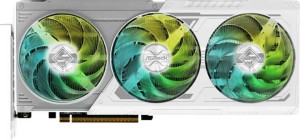
ASRock Radeon RX 9070 XT Steel Legend
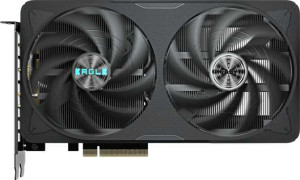
Gigabyte GeForce RTX 5060 Ti Eagle OC 16GB

ASRock Radeon RX 9070 XT Steel Legend Gigabyte GeForce RTX 5060 Ti Eagle OC 16GB

Overview

Welcome to our in-depth specification comparison between the ASRock Radeon RX 9070 XT Steel Legend and the Gigabyte GeForce RTX 5060 Ti Eagle OC 16GB. Both cards share 16GB of VRAM and support for ray tracing and DirectX 12 Ultimate, yet they take very different paths when it comes to raw throughput, memory architecture, and feature sets. Read on to discover how these two GPUs stack up across performance, memory, features, and physical design.

Common Features

  • Both products have 16GB of VRAM.
  • Double Precision Floating Point (DPFP) is supported on both products.
  • ECC memory support is available on both products.
  • Both products support DirectX 12 Ultimate.
  • Both products support OpenGL version 4.6.
  • Multi-display technology is supported on both products.
  • Ray tracing support is available on both products.
  • 3D support is available on both products.
  • XeSS (XMX) support is not available on either product.
  • LHR (Low Hash Rate) is not present on either product.
  • RGB lighting is featured on both products.
  • Both products have an HDMI output with one HDMI port.
  • Both products use HDMI version 2.1b.
  • Both products offer three DisplayPort outputs.
  • Neither product has USB-C ports.
  • Neither product has DVI outputs.
  • Neither product has mini DisplayPort outputs.
  • Both products use PCI Express version 5.
  • Air-water cooling is not present on either product.

Main Differences

  • GPU base clock speed is 1660 MHz on ASRock Radeon RX 9070 XT Steel Legend and 2407 MHz on Gigabyte GeForce RTX 5060 Ti Eagle OC 16GB.
  • GPU turbo clock is 2970 MHz on ASRock Radeon RX 9070 XT Steel Legend and 2617 MHz on Gigabyte GeForce RTX 5060 Ti Eagle OC 16GB.
  • Pixel rate is 380.2 GPixel/s on ASRock Radeon RX 9070 XT Steel Legend and 125.6 GPixel/s on Gigabyte GeForce RTX 5060 Ti Eagle OC 16GB.
  • Floating-point performance is 48.66 TFLOPS on ASRock Radeon RX 9070 XT Steel Legend and 24.12 TFLOPS on Gigabyte GeForce RTX 5060 Ti Eagle OC 16GB.
  • Texture rate is 760.3 GTexels/s on ASRock Radeon RX 9070 XT Steel Legend and 376.8 GTexels/s on Gigabyte GeForce RTX 5060 Ti Eagle OC 16GB.
  • GPU memory speed is 2518 MHz on ASRock Radeon RX 9070 XT Steel Legend and 1750 MHz on Gigabyte GeForce RTX 5060 Ti Eagle OC 16GB.
  • Shading units number 4096 on ASRock Radeon RX 9070 XT Steel Legend and 4608 on Gigabyte GeForce RTX 5060 Ti Eagle OC 16GB.
  • Texture mapping units (TMUs) total 256 on ASRock Radeon RX 9070 XT Steel Legend and 144 on Gigabyte GeForce RTX 5060 Ti Eagle OC 16GB.
  • Render output units (ROPs) number 128 on ASRock Radeon RX 9070 XT Steel Legend and 48 on Gigabyte GeForce RTX 5060 Ti Eagle OC 16GB.
  • Effective memory speed is 20000 MHz on ASRock Radeon RX 9070 XT Steel Legend and 28000 MHz on Gigabyte GeForce RTX 5060 Ti Eagle OC 16GB.
  • Maximum memory bandwidth is 644.6 GB/s on ASRock Radeon RX 9070 XT Steel Legend and 448 GB/s on Gigabyte GeForce RTX 5060 Ti Eagle OC 16GB.
  • GDDR version is GDDR6 on ASRock Radeon RX 9070 XT Steel Legend and GDDR7 on Gigabyte GeForce RTX 5060 Ti Eagle OC 16GB.
  • Memory bus width is 256-bit on ASRock Radeon RX 9070 XT Steel Legend and 128-bit on Gigabyte GeForce RTX 5060 Ti Eagle OC 16GB.
  • OpenCL version is 2.2 on ASRock Radeon RX 9070 XT Steel Legend and 3 on Gigabyte GeForce RTX 5060 Ti Eagle OC 16GB.
  • DLSS support is present on Gigabyte GeForce RTX 5060 Ti Eagle OC 16GB but not available on ASRock Radeon RX 9070 XT Steel Legend.
  • ASRock Radeon RX 9070 XT Steel Legend uses AMD SAM while Gigabyte GeForce RTX 5060 Ti Eagle OC 16GB uses Intel Resizable BAR.
  • GPU architecture is RDNA 4.0 on ASRock Radeon RX 9070 XT Steel Legend and Blackwell on Gigabyte GeForce RTX 5060 Ti Eagle OC 16GB.
  • Thermal Design Power (TDP) is 304W on ASRock Radeon RX 9070 XT Steel Legend and 180W on Gigabyte GeForce RTX 5060 Ti Eagle OC 16GB.
  • Semiconductor size is 4 nm on ASRock Radeon RX 9070 XT Steel Legend and 5 nm on Gigabyte GeForce RTX 5060 Ti Eagle OC 16GB.
  • Transistor count is 53900 million on ASRock Radeon RX 9070 XT Steel Legend and 21900 million on Gigabyte GeForce RTX 5060 Ti Eagle OC 16GB.
  • Card width is 298 mm on ASRock Radeon RX 9070 XT Steel Legend and 215 mm on Gigabyte GeForce RTX 5060 Ti Eagle OC 16GB.
  • Card height is 131 mm on ASRock Radeon RX 9070 XT Steel Legend and 122 mm on Gigabyte GeForce RTX 5060 Ti Eagle OC 16GB.
Specs Comparison
ASRock Radeon RX 9070 XT Steel Legend

ASRock Radeon RX 9070 XT Steel Legend

Gigabyte GeForce RTX 5060 Ti Eagle OC 16GB

Gigabyte GeForce RTX 5060 Ti Eagle OC 16GB

Performance:
GPU clock speed 1660 MHz 2407 MHz
GPU turbo 2970 MHz 2617 MHz
pixel rate 380.2 GPixel/s 125.6 GPixel/s
floating-point performance 48.66 TFLOPS 24.12 TFLOPS
texture rate 760.3 GTexels/s 376.8 GTexels/s
GPU memory speed 2518 MHz 1750 MHz
shading units 4096 4608
texture mapping units (TMUs) 256 144
render output units (ROPs) 128 48
Has Double Precision Floating Point (DPFP)

When comparing raw throughput, the ASRock Radeon RX 9070 XT Steel Legend holds a commanding lead across the most impactful performance metrics. Its 48.66 TFLOPS of floating-point performance is roughly double the RTX 5060 Ti's 24.12 TFLOPS, which directly translates to substantially more compute headroom for complex shader workloads, ray tracing calculations, and general GPU-accelerated tasks. The texture rate tells a similar story — 760.3 GTexels/s versus 376.8 GTexels/s — meaning the RX 9070 XT can process textured geometry at approximately twice the rate, which matters in densely detailed scenes at high resolutions.

The pixel rate gap is even more pronounced: 380.2 GPixel/s on the RX 9070 XT against just 125.6 GPixel/s on the RTX 5060 Ti. This is largely driven by the ROP count — 128 ROPs versus only 48 ROPs — and the significantly higher GPU turbo clock of 2970 MHz compared to 2617 MHz. More ROPs and a higher peak clock together mean the RX 9070 XT can write more final pixels to the framebuffer per second, which is especially beneficial at high resolutions like 4K where fill rate becomes a bottleneck. The RTX 5060 Ti does have a higher base clock (2407 MHz vs 1660 MHz) and slightly more shading units (4608 vs 4096), but these advantages are effectively neutralized by its lower turbo ceiling and constrained backend pipeline.

Overall, the RX 9070 XT Steel Legend has a clear and significant performance advantage in this group. Whether measured in compute throughput, texturing capability, or pixel output, it outpaces the RTX 5060 Ti by a wide margin — often by a factor of two. For users prioritizing raw GPU horsepower based on these specs alone, the RX 9070 XT is the stronger choice.

Memory:
effective memory speed 20000 MHz 28000 MHz
maximum memory bandwidth 644.6 GB/s 448 GB/s
VRAM 16GB 16GB
GDDR version GDDR6 GDDR7
memory bus width 256-bit 128-bit
Supports ECC memory

Both cards carry 16GB of VRAM, which puts them on equal footing for texture-heavy workloads and increasingly VRAM-hungry modern titles. The more revealing distinction lies beneath that shared capacity. The RTX 5060 Ti uses the newer GDDR7 standard running at an effective 28000 MHz, while the RX 9070 XT Steel Legend relies on GDDR6 at 20000 MHz. On paper, GDDR7 is the more advanced technology — but memory speed alone does not tell the full story.

The critical counterweight is bus width. The RX 9070 XT operates on a 256-bit memory interface, exactly double the RTX 5060 Ti's 128-bit bus. This wider pipeline more than compensates for the slower memory chips, resulting in a maximum memory bandwidth of 644.6 GB/s versus just 448 GB/s on the RTX 5060 Ti — a gap of nearly 44%. In practice, memory bandwidth is one of the most direct contributors to sustained GPU performance, particularly at higher resolutions and with anti-aliasing enabled. A wider bandwidth ceiling means the GPU spends less time waiting on data, which keeps the shader cores fed and performance more consistent under heavy loads.

The memory edge clearly belongs to the RX 9070 XT Steel Legend. While the RTX 5060 Ti benefits from a newer memory generation, its narrow 128-bit bus creates a structural bottleneck that the higher chip speed cannot fully overcome. For bandwidth-sensitive workloads — high-resolution gaming, large texture assets, or GPU compute tasks — the RX 9070 XT's 644.6 GB/s throughput represents a meaningful and tangible advantage.

Features:
DirectX version DirectX 12 Ultimate DirectX 12 Ultimate
OpenGL version 4.6 4.6
OpenCL version 2.2 3
Supports multi-display technology
supports ray tracing
Supports 3D
supports DLSS
has XeSS (XMX)
AMD SAM / Intel Resizable BAR AMD SAM Intel Resizable BAR
has LHR
has RGB lighting
supported displays 4 4

At a foundational level, these two cards share a great deal: both support DirectX 12 Ultimate, OpenGL 4.6, ray tracing, 3D output, multi-display setups with up to 4 simultaneous displays, and RGB lighting. For the vast majority of gaming and productivity use cases, this common feature set means neither card leaves users short on essential compatibility. The one minor technical difference — OpenCL 3 on the RTX 5060 Ti versus OpenCL 2.2 on the RX 9070 XT — is relevant primarily for specific GPU compute workloads and is unlikely to matter for typical gaming users.

The most consequential differentiator in this group is upscaling support. The RTX 5060 Ti supports DLSS, Nvidia's AI-driven upscaling technology, which is widely implemented across hundreds of modern titles and can deliver substantial framerate boosts with minimal visual quality loss. The RX 9070 XT Steel Legend does not support DLSS — and while AMD's FSR is not listed here, its absence from the spec data means it cannot be factored into this comparison. Based strictly on what is provided, the RTX 5060 Ti holds a practical software advantage through DLSS alone.

On balance, the RTX 5060 Ti Eagle OC earns a narrow edge in this group, driven entirely by DLSS support. For gamers who play DLSS-enabled titles — and the library is extensive — this translates directly into higher playable framerates, particularly at demanding resolutions. Everything else in this feature set is effectively a tie between the two cards.
Ports:
has an HDMI output
HDMI ports 1 1
HDMI version HDMI 2.1b HDMI 2.1b
DisplayPort outputs 3 3
USB-C ports 0 0
DVI outputs 0 0
mini DisplayPort outputs 0 0

The port configuration on these two cards is identical in every respect: one HDMI 2.1b output and three DisplayPort outputs, with no USB-C, DVI, or mini DisplayPort connections on either. This gives both cards a total of four display outputs, matching the four-display limit noted in their feature specifications. For the overwhelming majority of users — whether running a single high-refresh monitor, a multi-screen workstation setup, or a home theater configuration — this layout is more than sufficient.

The presence of HDMI 2.1b on both cards is worth noting, as it supports high bandwidth output suitable for 4K high-refresh and 8K display connections. The three DisplayPort outputs similarly accommodate demanding multi-monitor arrangements without compromise. Neither card offers USB-C display output, which may be a consideration for users with USB-C monitors, but this absence applies equally to both.

This group is a complete tie. There is no differentiator to speak of — every port type, count, and version is a perfect match between the RX 9070 XT Steel Legend and the RTX 5060 Ti Eagle OC. Connectivity should play no role in choosing between these two cards.

General info:
GPU architecture RDNA 4.0 Blackwell
release date March 2025 April 2025
Thermal Design Power (TDP) 304W 180W
PCI Express (PCIe) version 5 5
semiconductor size 4 nm 5 nm
number of transistors 53900 million 21900 million
Has air-water cooling
width 298 mm 215 mm
height 131 mm 122 mm

These two cards represent very different engineering philosophies. The RX 9070 XT Steel Legend is built on AMD's RDNA 4.0 architecture using a 4nm process with a massive 53,900 million transistors, while the RTX 5060 Ti Eagle OC is based on Nvidia's Blackwell architecture, fabbed at 5nm with 21,900 million transistors. The RX 9070 XT is essentially a much larger, more complex die — which directly explains its dominant performance numbers in other spec groups. More transistors generally mean more functional units, wider pipelines, and greater computational throughput, all of which the RX 9070 XT clearly leverages.

That larger die comes with a real-world cost: power consumption. The RX 9070 XT carries a 304W TDP compared to the RTX 5060 Ti's notably leaner 180W. A 124W difference is substantial — it means the RX 9070 XT demands a higher-capacity power supply, generates more heat requiring better case airflow, and will draw meaningfully more electricity over time. The RTX 5060 Ti's efficiency advantage is genuine and relevant for users in small form-factor builds or those sensitive to running costs. Physical size reinforces this divide: the RX 9070 XT measures 298 × 131mm against the RTX 5060 Ti's more compact 215 × 122mm, making the latter a significantly easier fit in tighter chassis.

There is no single winner here — the advantage depends on the user's priorities. The RX 9070 XT Steel Legend offers a far more complex and capable chip, but demands considerably more power and space. The RTX 5060 Ti Eagle OC is the more system-friendly card, with a lower TDP and a smaller footprint that suits compact or power-constrained builds. Both share PCIe 5.0 connectivity, ensuring neither is bottlenecked by interface bandwidth on a modern platform.

Comparison Summary & Verdict

After examining the full specification breakdown, it is clear that both cards occupy distinct positions in the GPU market. The ASRock Radeon RX 9070 XT Steel Legend stands out with significantly higher floating-point performance at 48.66 TFLOPS, a wider 256-bit memory bus, and superior texture and pixel rates, making it the stronger choice for raw rasterization workloads. The Gigabyte GeForce RTX 5060 Ti Eagle OC 16GB, on the other hand, counters with a much lower 180W TDP, faster GDDR7 memory, a higher effective memory speed of 28000 MHz, and exclusive access to DLSS support, making it a compelling option for those who prioritize power efficiency and AI-accelerated rendering. Both cards match on port selection, PCIe 5 support, and 16GB VRAM, so the decision ultimately comes down to your priorities: brute compute power or efficiency and ecosystem features.

ASRock Radeon RX 9070 XT Steel Legend
Buy ASRock Radeon RX 9070 XT Steel Legend if...

Buy the ASRock Radeon RX 9070 XT Steel Legend if you want maximum raw compute performance, higher texture throughput, and greater memory bandwidth for demanding rasterization workloads.

Gigabyte GeForce RTX 5060 Ti Eagle OC 16GB
Buy Gigabyte GeForce RTX 5060 Ti Eagle OC 16GB if...

Buy the Gigabyte GeForce RTX 5060 Ti Eagle OC 16GB if you prioritize lower power consumption, faster GDDR7 memory speed, and access to DLSS for AI-accelerated frame generation.