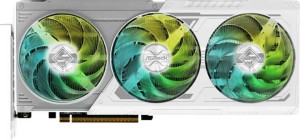
ASRock Radeon RX 9070 XT Steel Legend
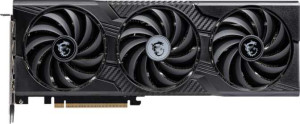
MSI GeForce RTX 5070 Gaming Duke 3X

ASRock Radeon RX 9070 XT Steel Legend MSI GeForce RTX 5070 Gaming Duke 3X

Overview

Welcome to this in-depth specification face-off between the ASRock Radeon RX 9070 XT Steel Legend and the MSI GeForce RTX 5070 Gaming Duke 3X. These two mid-to-high-end graphics cards represent the latest silicon from AMD and NVIDIA respectively, and their rivalry spans key battlegrounds including raw compute throughput, memory configuration, power efficiency, and feature sets — making the choice between them far from straightforward.

Common Features

  • Both products support Double Precision Floating Point (DPFP).
  • Both products support ECC memory.
  • Both products support DirectX 12 Ultimate.
  • Both products support OpenGL version 4.6.
  • Both products support multi-display technology.
  • Both products support ray tracing.
  • Both products support 3D.
  • XeSS (XMX) support is not available on either product.
  • LHR is not present on either product.
  • RGB lighting is present on both products.
  • Both products have an HDMI output with a single HDMI 2.1b port.
  • Both products have 3 DisplayPort outputs.
  • Neither product has USB-C ports, DVI outputs, or mini DisplayPort outputs.
  • Both products use PCI Express version 5.
  • Neither product features air-water cooling.

Main Differences

  • GPU clock speed is 1660 MHz on ASRock Radeon RX 9070 XT Steel Legend and 2325 MHz on MSI GeForce RTX 5070 Gaming Duke 3X.
  • GPU turbo clock is 2970 MHz on ASRock Radeon RX 9070 XT Steel Legend and 2512 MHz on MSI GeForce RTX 5070 Gaming Duke 3X.
  • Pixel rate is 380.2 GPixel/s on ASRock Radeon RX 9070 XT Steel Legend and 201 GPixel/s on MSI GeForce RTX 5070 Gaming Duke 3X.
  • Floating-point performance is 48.66 TFLOPS on ASRock Radeon RX 9070 XT Steel Legend and 30.87 TFLOPS on MSI GeForce RTX 5070 Gaming Duke 3X.
  • Texture rate is 760.3 GTexels/s on ASRock Radeon RX 9070 XT Steel Legend and 482.3 GTexels/s on MSI GeForce RTX 5070 Gaming Duke 3X.
  • GPU memory speed is 2518 MHz on ASRock Radeon RX 9070 XT Steel Legend and 1750 MHz on MSI GeForce RTX 5070 Gaming Duke 3X.
  • Shading units total 4096 on ASRock Radeon RX 9070 XT Steel Legend and 6144 on MSI GeForce RTX 5070 Gaming Duke 3X.
  • Texture mapping units (TMUs) number 256 on ASRock Radeon RX 9070 XT Steel Legend and 192 on MSI GeForce RTX 5070 Gaming Duke 3X.
  • Render output units (ROPs) number 128 on ASRock Radeon RX 9070 XT Steel Legend and 80 on MSI GeForce RTX 5070 Gaming Duke 3X.
  • Effective memory speed is 20000 MHz on ASRock Radeon RX 9070 XT Steel Legend and 28000 MHz on MSI GeForce RTX 5070 Gaming Duke 3X.
  • Maximum memory bandwidth is 644.6 GB/s on ASRock Radeon RX 9070 XT Steel Legend and 672 GB/s on MSI GeForce RTX 5070 Gaming Duke 3X.
  • VRAM is 16GB on ASRock Radeon RX 9070 XT Steel Legend and 12GB on MSI GeForce RTX 5070 Gaming Duke 3X.
  • Memory type is GDDR6 on ASRock Radeon RX 9070 XT Steel Legend and GDDR7 on MSI GeForce RTX 5070 Gaming Duke 3X.
  • Memory bus width is 256-bit on ASRock Radeon RX 9070 XT Steel Legend and 192-bit on MSI GeForce RTX 5070 Gaming Duke 3X.
  • OpenCL version is 2.2 on ASRock Radeon RX 9070 XT Steel Legend and 3 on MSI GeForce RTX 5070 Gaming Duke 3X.
  • DLSS support is present on MSI GeForce RTX 5070 Gaming Duke 3X but not available on ASRock Radeon RX 9070 XT Steel Legend.
  • ASRock Radeon RX 9070 XT Steel Legend uses AMD SAM while MSI GeForce RTX 5070 Gaming Duke 3X uses Intel Resizable BAR.
  • GPU architecture is RDNA 4.0 on ASRock Radeon RX 9070 XT Steel Legend and Blackwell on MSI GeForce RTX 5070 Gaming Duke 3X.
  • Thermal Design Power (TDP) is 304W on ASRock Radeon RX 9070 XT Steel Legend and 250W on MSI GeForce RTX 5070 Gaming Duke 3X.
  • Semiconductor size is 4 nm on ASRock Radeon RX 9070 XT Steel Legend and 5 nm on MSI GeForce RTX 5070 Gaming Duke 3X.
  • Number of transistors is 53900 million on ASRock Radeon RX 9070 XT Steel Legend and 31100 million on MSI GeForce RTX 5070 Gaming Duke 3X.
  • Card width is 298 mm on ASRock Radeon RX 9070 XT Steel Legend and 325 mm on MSI GeForce RTX 5070 Gaming Duke 3X.
  • Card height is 131 mm on ASRock Radeon RX 9070 XT Steel Legend and 121 mm on MSI GeForce RTX 5070 Gaming Duke 3X.
Specs Comparison
ASRock Radeon RX 9070 XT Steel Legend

ASRock Radeon RX 9070 XT Steel Legend

MSI GeForce RTX 5070 Gaming Duke 3X

MSI GeForce RTX 5070 Gaming Duke 3X

Performance:
GPU clock speed 1660 MHz 2325 MHz
GPU turbo 2970 MHz 2512 MHz
pixel rate 380.2 GPixel/s 201 GPixel/s
floating-point performance 48.66 TFLOPS 30.87 TFLOPS
texture rate 760.3 GTexels/s 482.3 GTexels/s
GPU memory speed 2518 MHz 1750 MHz
shading units 4096 6144
texture mapping units (TMUs) 256 192
render output units (ROPs) 128 80
Has Double Precision Floating Point (DPFP)

At first glance, the MSI GeForce RTX 5070 Gaming Duke 3X appears competitive thanks to its higher base clock of 2325 MHz and a larger shader count of 6144 shading units. However, once you look beyond those two figures, the throughput picture shifts decisively. The ASRock Radeon RX 9070 XT Steel Legend reaches a turbo clock of 2970 MHz versus the RTX 5070's 2512 MHz, and that wider turbo headroom translates directly into its superior computed throughput metrics across the board.

The practical consequence of that clock advantage is substantial: the RX 9070 XT delivers 48.66 TFLOPS of floating-point performance against the RTX 5070's 30.87 TFLOPS — roughly a 58% lead. Its pixel fill rate of 380.2 GPixel/s and texture rate of 760.3 GTexels/s similarly outpace the RTX 5070's 201 GPixel/s and 482.3 GTexels/s respectively. The RX 9070 XT also holds more ROPs (128 vs 80) and a faster memory bus speed (2518 MHz vs 1750 MHz), reinforcing its advantage in both rasterization throughput and memory bandwidth potential. In real-world terms, more ROPs accelerate frame output at high resolutions, while the memory speed gap directly benefits texture streaming and bandwidth-intensive workloads.

Both cards support Double Precision Floating Point (DPFP), making neither uniquely suited to compute tasks on that basis alone. Overall, on every major throughput metric provided, the ASRock RX 9070 XT Steel Legend holds a clear performance edge in this group. The RTX 5070's higher shader count does not overcome its significantly lower turbo frequency, resulting in lower computed performance figures across pixels, texels, and general compute.
Memory:
effective memory speed 20000 MHz 28000 MHz
maximum memory bandwidth 644.6 GB/s 672 GB/s
VRAM 16GB 12GB
GDDR version GDDR6 GDDR7
memory bus width 256-bit 192-bit
Supports ECC memory

The memory configurations here represent two genuinely different design philosophies. The ASRock RX 9070 XT Steel Legend pairs a wider 256-bit bus with 16GB of GDDR6, while the MSI RTX 5070 Gaming Duke 3X opts for a narrower 192-bit bus but compensates with faster GDDR7 memory running at an effective 28000 MHz versus the RX 9070 XT's 20000 MHz. This is a classic bandwidth-per-pin versus bus-width trade-off.

The result is a near-wash on total bandwidth: the RTX 5070 achieves 672 GB/s against the RX 9070 XT's 644.6 GB/s — a difference of under 5%, which is negligible in practice. However, the VRAM capacity gap is more consequential. The RX 9070 XT's 16GB versus the RTX 5070's 12GB gives it a meaningful advantage for high-resolution texture work, large open-world games, and memory-intensive creative workloads, where running out of VRAM causes significant performance degradation. As games and applications continue to push VRAM requirements upward, that extra 4GB becomes an increasingly important buffer. Both cards support ECC memory, a feature relevant primarily to professional compute use cases rather than gaming.

On balance, the RX 9070 XT Steel Legend holds the memory edge in this group. The RTX 5070 largely closes the bandwidth gap through GDDR7's higher speed, but it cannot offset the raw capacity deficit. For users who prioritize future-proofing and headroom at 4K or in content creation scenarios, the larger 16GB frame buffer is the more significant differentiator here.

Features:
DirectX version DirectX 12 Ultimate DirectX 12 Ultimate
OpenGL version 4.6 4.6
OpenCL version 2.2 3
Supports multi-display technology
supports ray tracing
Supports 3D
supports DLSS
has XeSS (XMX)
AMD SAM / Intel Resizable BAR AMD SAM Intel Resizable BAR
has LHR
has RGB lighting
supported displays 4 4

Much of this feature set is shared ground: both cards support DirectX 12 Ultimate, OpenGL 4.6, ray tracing, 3D output, and up to 4 displays simultaneously, so neither holds an advantage on those fronts. The one technical footnote worth flagging is the MSI RTX 5070's OpenCL 3 versus the RX 9070 XT's OpenCL 2.2 — a newer revision that broadens compatibility with certain compute workloads, though its real-world impact depends heavily on the specific software being used.

The most decisive differentiator in this group is DLSS support. The RTX 5070 offers it; the RX 9070 XT does not. DLSS is NVIDIA's AI-driven upscaling technology, and in supported titles it can deliver substantial frame rate gains with minimal visual quality loss — making it a meaningful practical advantage for gaming. The RX 9070 XT's absence of DLSS is not compensated by any exclusive upscaling feature listed in this data set, which tips the balance here toward the RTX 5070 for users who prioritize that capability.

The AMD SAM versus Intel Resizable BAR distinction is essentially a branding difference for the same underlying PCIe feature, so it carries no meaningful real-world differentiation between the two. Overall, the RTX 5070 Gaming Duke 3X holds the edge in this group, primarily due to its DLSS support — a feature with direct, tangible impact on gaming performance in a wide library of titles.

Ports:
has an HDMI output
HDMI ports 1 1
HDMI version HDMI 2.1b HDMI 2.1b
DisplayPort outputs 3 3
USB-C ports 0 0
DVI outputs 0 0
mini DisplayPort outputs 0 0

This is a rare case of a complete spec-for-spec tie. Both the ASRock RX 9070 XT Steel Legend and the MSI RTX 5070 Gaming Duke 3X offer an identical port layout: 1 HDMI 2.1b output and 3 DisplayPort outputs, with no USB-C, DVI, or mini DisplayPort connectors on either card.

The practical implication is straightforward: both cards can drive up to four monitors simultaneously — consistent with the display count noted in their feature specs — and both support the same HDMI 2.1b standard, which enables 4K at high refresh rates and 8K output over a single cable. The triple DisplayPort configuration is equally well-suited for multi-monitor gaming or productivity setups. The absence of USB-C on both cards means neither can directly connect to USB-C or Thunderbolt displays without an adapter.

There is no meaningful distinction to draw here — this group is a complete tie. Connectivity will not be a deciding factor between these two cards.

General info:
GPU architecture RDNA 4.0 Blackwell
release date March 2025 April 2025
Thermal Design Power (TDP) 304W 250W
PCI Express (PCIe) version 5 5
semiconductor size 4 nm 5 nm
number of transistors 53900 million 31100 million
Has air-water cooling
width 298 mm 325 mm
height 131 mm 121 mm

Two different architectural approaches define this group. The ASRock RX 9070 XT Steel Legend is built on AMD's RDNA 4.0 architecture using a 4nm process node and packs 53,900 million transistors, while the MSI RTX 5070 Gaming Duke 3X is based on NVIDIA's Blackwell architecture on a 5nm node with 31,100 million transistors. The finer process node on the RX 9070 XT enables greater transistor density, which is part of what allows it to fit significantly more transistors into the die — a factor that contributes directly to its higher raw throughput figures seen in the performance group.

The power and efficiency trade-off is where the RTX 5070 makes its clearest argument. Its 250W TDP versus the RX 9070 XT's 304W means the RTX 5070 draws notably less power under load — a 54W difference that translates into lower electricity costs over time, reduced heat output, and less strain on the system PSU. For users with tighter power budgets or smaller cases with limited airflow, this gap is practically relevant. Both cards rely on air cooling and share the same PCIe 5.0 interface, so neither holds an advantage on connectivity or cooling type.

On physical size, the RTX 5070 is longer at 325mm compared to the RX 9070 XT's 298mm, while the RX 9070 XT is slightly taller at 131mm versus 121mm. Case compatibility should be verified for either card, but the RTX 5070's extra length makes it the more restrictive fit in compact builds. Overall, this group doesn't yield a single clear winner — the RX 9070 XT leads on transistor count and process node, while the RTX 5070 holds a meaningful edge in power efficiency and card length.

Comparison Summary & Verdict

After examining the full specification breakdown, both cards clearly target different types of users. The ASRock Radeon RX 9070 XT Steel Legend stands out with superior floating-point performance at 48.66 TFLOPS, a larger 16GB GDDR6 frame buffer, higher pixel and texture rates, and a more transistor-dense 4nm chip — making it an excellent choice for workloads that demand raw throughput and ample VRAM. The MSI GeForce RTX 5070 Gaming Duke 3X, on the other hand, benefits from faster GDDR7 memory, a lower 250W TDP, a higher base clock, and exclusive access to DLSS support — advantages that matter greatly in modern gaming titles and power-constrained builds. Both cards share DirectX 12 Ultimate, ray tracing, and a robust port layout, so neither disappoints on feature parity. Your ideal pick ultimately depends on whether you value brute compute power and memory capacity, or energy efficiency and NVIDIA-exclusive upscaling technology.

ASRock Radeon RX 9070 XT Steel Legend
Buy ASRock Radeon RX 9070 XT Steel Legend if...

Buy the ASRock Radeon RX 9070 XT Steel Legend if you prioritize higher raw compute performance, a larger 16GB VRAM buffer, and greater pixel and texture throughput for demanding workloads.

MSI GeForce RTX 5070 Gaming Duke 3X
Buy MSI GeForce RTX 5070 Gaming Duke 3X if...

Buy the MSI GeForce RTX 5070 Gaming Duke 3X if you want a lower power draw, faster GDDR7 memory, and access to DLSS support for optimized gaming performance.