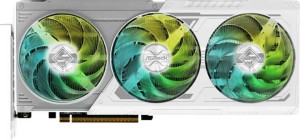
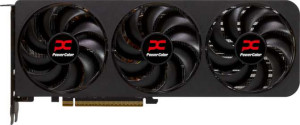
For the most part, the feature sets of the Steel Legend and the Reaper run parallel — both support ray tracing, FSR4, AMD SAM, OpenCL 2.2, and up to 4 simultaneous displays. Notably, neither card supports DLSS, which is expected given these are AMD GPUs. FSR4 is the upscaling technology to focus on here: as AMD's latest generation of super resolution, it offers meaningful image quality and performance uplift, making it a relevant feature for 1440p and 4K gaming.
Two genuine differentiators emerge on closer inspection. First, the Steel Legend lists DirectX 12 Ultimate support, while the Reaper is listed with DirectX 12. DirectX 12 Ultimate is a superset that formally certifies support for features like hardware-accelerated ray tracing tiers, mesh shaders, and variable rate shading — capabilities that will matter increasingly as more titles adopt them. Second, the Steel Legend includes RGB lighting, which the Reaper lacks entirely — a straightforward aesthetic distinction for users building themed systems.
The Steel Legend holds a clear edge in this group. The DirectX 12 Ultimate certification is the more substantive advantage, signaling broader and more future-proof API feature support. The RGB lighting is purely cosmetic but adds value for aesthetics-conscious builders. The Reaper matches the Steel Legend on all functional gaming and compute features, but on paper it trails in two distinct areas — one technical, one visual.