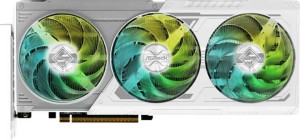
ASRock Radeon RX 9070 XT Steel Legend
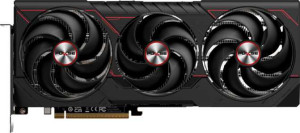
Sapphire Pulse Radeon RX 9070 XT

ASRock Radeon RX 9070 XT Steel Legend Sapphire Pulse Radeon RX 9070 XT

Overview

Welcome to our in-depth spec comparison between the ASRock Radeon RX 9070 XT Steel Legend and the Sapphire Pulse Radeon RX 9070 XT, two powerful RDNA 4.0 graphics cards targeting enthusiast-level gaming. While these cards share the same core silicon and performance fundamentals, the real debate comes down to physical dimensions, display connectivity, and aesthetic choices like RGB lighting. Read on to find out which card best suits your build and setup.

Common Features

  • Both products have a GPU clock speed of 1660 MHz.
  • Both products have a GPU turbo speed of 2970 MHz.
  • Both products deliver a pixel rate of 380.2 GPixel/s.
  • Both products offer 48.66 TFLOPS of floating-point performance.
  • Both products have a texture rate of 760.3 GTexels/s.
  • Both products have a GPU memory speed of 2518 MHz.
  • Both products feature 4096 shading units.
  • Both products include 256 texture mapping units (TMUs).
  • Both products have an effective memory speed of 20000 MHz.
  • Both products provide a maximum memory bandwidth of 644.6 GB/s.
  • Both products come with 16GB of VRAM.
  • Both products use GDDR6 memory.
  • Both products have a 256-bit memory bus width.
  • ECC memory is supported on both products.
  • Both products support DirectX 12 Ultimate.
  • Both products support OpenGL version 4.6.
  • Both products support OpenCL version 2.2.
  • Multi-display technology is supported on both products.
  • Ray tracing is supported on both products.
  • 3D support is available on both products.
  • DLSS is not supported on either product.
  • FSR4 is available on both products.
  • Both products include an HDMI output with HDMI 2.1b.
  • Neither product has USB-C ports, DVI outputs, or mini DisplayPort outputs.
  • Both products are based on the RDNA 4.0 GPU architecture.
  • Both products have a Thermal Design Power (TDP) of 304W.
  • Both products use PCIe version 5.
  • Both products are manufactured on a 4 nm semiconductor process.
  • Both products feature 53900 million transistors.
  • Neither product supports air-water cooling.

Main Differences

  • RGB lighting is present on the ASRock Radeon RX 9070 XT Steel Legend but not available on the Sapphire Pulse Radeon RX 9070 XT.
  • HDMI port count is 1 on the ASRock Radeon RX 9070 XT Steel Legend and 2 on the Sapphire Pulse Radeon RX 9070 XT.
  • DisplayPort outputs number 3 on the ASRock Radeon RX 9070 XT Steel Legend and 2 on the Sapphire Pulse Radeon RX 9070 XT.
  • Width is 298 mm on the ASRock Radeon RX 9070 XT Steel Legend and 320 mm on the Sapphire Pulse Radeon RX 9070 XT.
  • Height is 131 mm on the ASRock Radeon RX 9070 XT Steel Legend and 120.3 mm on the Sapphire Pulse Radeon RX 9070 XT.
Specs Comparison
ASRock Radeon RX 9070 XT Steel Legend

ASRock Radeon RX 9070 XT Steel Legend

Sapphire Pulse Radeon RX 9070 XT

Sapphire Pulse Radeon RX 9070 XT

Performance:
GPU clock speed 1660 MHz 1660 MHz
GPU turbo 2970 MHz 2970 MHz
pixel rate 380.2 GPixel/s 380.2 GPixel/s
floating-point performance 48.66 TFLOPS 48.66 TFLOPS
texture rate 760.3 GTexels/s 760.3 GTexels/s
GPU memory speed 2518 MHz 2518 MHz
shading units 4096 4096
texture mapping units (TMUs) 256 256
render output units (ROPs) 128 128
Has Double Precision Floating Point (DPFP)

In the Performance category, the ASRock Radeon RX 9070 XT Steel Legend and the Sapphire Pulse Radeon RX 9070 XT are in complete lockstep across every measurable metric. Both cards share identical base and boost clocks — 1660 MHz and 2970 MHz respectively — and this alignment carries through to every derived performance figure: a pixel rate of 380.2 GPixel/s, a texture rate of 760.3 GTexels/s, and 48.66 TFLOPS of floating-point throughput.

At the architectural level, both GPUs are built on the same silicon configuration: 4096 shading units, 256 TMUs, and 128 ROPs. The TMU count directly feeds the texture rate, while the ROP count governs how quickly the GPU can write final pixel data to the framebuffer — both figures being critical for high-resolution gaming. The 2518 MHz memory speed is also shared, meaning memory bandwidth — a key bottleneck for GPU-bound workloads — is identical. Both cards also support Double Precision Floating Point (DPFP), which is relevant for compute-oriented workloads like simulation or certain professional applications, though it is rarely a differentiator in gaming.

The verdict here is an unambiguous tie. There is no performance edge to be found between these two cards at the spec level — they are functionally the same GPU running at the same clocks with the same compute resources. Any real-world performance difference, if one exists, would come down to sustained boost clock behavior under thermal load — a factor determined by cooling design rather than these core specs.

Memory:
effective memory speed 20000 MHz 20000 MHz
maximum memory bandwidth 644.6 GB/s 644.6 GB/s
VRAM 16GB 16GB
GDDR version GDDR6 GDDR6
memory bus width 256-bit 256-bit
Supports ECC memory

Memory is often the deciding factor in how well a GPU handles demanding workloads, and both the ASRock Steel Legend and the Sapphire Pulse arrive with identical configurations here. Each card carries 16GB of GDDR6 across a 256-bit bus, delivering a peak bandwidth of 644.6 GB/s at an effective speed of 20000 MHz. That 16GB pool is a meaningful amount for a mainstream-to-enthusiast card — enough to handle high-resolution texture packs, 4K gaming assets, and GPU-accelerated workloads without hitting a VRAM ceiling that would otherwise force expensive data swaps with system memory.

The 256-bit bus width is the architectural backbone behind that bandwidth figure. Wider buses allow more data to flow per clock cycle, and at this speed, the resulting 644.6 GB/s is competitive for this GPU tier — sufficient to keep the shader array fed in the vast majority of gaming and compute scenarios. Both cards also support ECC (Error-Correcting Code) memory, a feature that detects and corrects single-bit memory errors on the fly. While this is rarely relevant for pure gaming, it adds reliability headroom for users running compute tasks or professional workloads where data integrity matters.

As with the Performance group, this is a straight tie. Every memory specification — capacity, type, bus width, bandwidth, and ECC support — is identical between the two cards. Neither has any advantage here; the choice between them will need to rest on other factors entirely.

Features:
DirectX version DirectX 12 Ultimate DirectX 12 Ultimate
OpenGL version 4.6 4.6
OpenCL version 2.2 2.2
Supports multi-display technology
supports ray tracing
Supports 3D
supports DLSS
has FSR4
has XeSS (XMX)
AMD SAM / Intel Resizable BAR AMD SAM AMD SAM
has LHR
has RGB lighting
supported displays 4 4

Both cards share an identical software and API feature set. DirectX 12 Ultimate support is the headline here — it unlocks the full suite of modern rendering features including hardware-accelerated ray tracing, which both cards support. On the upscaling front, neither card supports DLSS (an Nvidia-exclusive technology), but both carry FSR4, AMD's latest spatial upscaling solution, which can significantly boost frame rates in supported titles with minimal visual quality loss. AMD SAM (Smart Access Memory) is also present on both, allowing a compatible AMD CPU to access the full VRAM pool directly — a bandwidth optimization that can yield meaningful gains in supported games.

The one concrete differentiator in this group is RGB lighting: the ASRock Steel Legend has it, while the Sapphire Pulse does not. For builders who prioritize a cohesive, lit aesthetic inside a windowed case, this is a genuine advantage for the ASRock card. For those indifferent to aesthetics — or running a closed case — it is entirely irrelevant to the purchase decision.

On functional features, the two cards are evenly matched in every meaningful way. The ASRock Steel Legend claims a narrow edge in this group solely due to its RGB lighting support, which will matter to some buyers and not at all to others. If aesthetics are part of your build criteria, the Steel Legend wins here; otherwise, treat this category as a tie.

Ports:
has an HDMI output
HDMI ports 1 2
HDMI version HDMI 2.1b HDMI 2.1b
DisplayPort outputs 3 2
USB-C ports 0 0
DVI outputs 0 0
mini DisplayPort outputs 0 0

Both cards top out at four supported displays and share the same HDMI 2.1b standard, which supports 4K at 144Hz, 8K, and Variable Refresh Rate — so the quality ceiling on HDMI connections is identical. The real difference lies in how that total port count is distributed. The ASRock Steel Legend offers 1 HDMI and 3 DisplayPort outputs, while the Sapphire Pulse flips the ratio to 2 HDMI and 2 DisplayPort.

This distinction is more practical than it might first appear. HDMI is the dominant connector on consumer TVs, many monitors, and A/V receivers, whereas DisplayPort is the standard of choice for high-refresh-rate gaming monitors and daisy-chaining setups. A user running a mixed display environment — say, a gaming monitor alongside a TV or a secondary screen — may find the Sapphire Pulse's dual HDMI configuration more immediately convenient, requiring fewer adapters. Conversely, a user with a desk full of DisplayPort monitors will prefer the Steel Legend's three-port layout.

Neither configuration is objectively superior — it comes down entirely to what the buyer's display setup demands. That said, the Sapphire Pulse holds a slight practical edge for the broader consumer audience, given that HDMI remains the more universally used connector across TVs and general-purpose monitors. Users with predominantly DisplayPort displays will find the ASRock Steel Legend the better fit.

General info:
GPU architecture RDNA 4.0 RDNA 4.0
release date March 2025 March 2025
Thermal Design Power (TDP) 304W 304W
PCI Express (PCIe) version 5 5
semiconductor size 4 nm 4 nm
number of transistors 53900 million 53900 million
Has air-water cooling
width 298 mm 320 mm
height 131 mm 120.3 mm

At the architectural level, these two cards are cut from identical cloth. Both are built on the RDNA 4.0 architecture using a 4nm manufacturing process with 53,900 million transistors, and both draw the same 304W TDP — meaning power delivery requirements and expected heat output are equal. PCIe 5.0 support is shared as well, though in practice the bandwidth headroom of PCIe 5.0 far exceeds what either GPU needs today, making this a forward-compatibility checkbox rather than a current performance differentiator.

Where the two cards diverge is in their physical footprint. The ASRock Steel Legend measures 298mm long and 131mm tall, while the Sapphire Pulse is 320mm long but only 120.3mm tall. The Pulse is 22mm longer — a meaningful difference that could create clearance issues in smaller mid-tower or compact cases. The Steel Legend, being shorter in length, is the more case-friendly option for tighter builds. The Pulse's reduced height, however, gives it a slight advantage in cases where vertical clearance near the PCIe slot or motherboard components is constrained.

For most standard ATX builds, neither dimension difference will pose a problem — but in compact or heavily populated cases, the ASRock Steel Legend holds a practical edge in length clearance. Buyers with smaller cases should measure carefully before committing to the Sapphire Pulse. On every other spec in this group, the two cards are identical.

Comparison Summary & Verdict

After a thorough side-by-side analysis, it is clear that the ASRock Radeon RX 9070 XT Steel Legend and the Sapphire Pulse Radeon RX 9070 XT are virtually identical in raw performance, memory configuration, and feature support. The meaningful distinctions lie in form and connectivity: the ASRock card is narrower at 298 mm wide and adds RGB lighting alongside three DisplayPort outputs, making it a strong fit for compact or aesthetics-focused builds that rely on multiple DisplayPort monitors. The Sapphire card, at 320 mm wide but a slightly lower 120.3 mm tall, trades RGB for a cleaner look and offers two HDMI 2.1b ports, making it the better pick for users connecting HDMI-based displays such as TVs or high-refresh monitors. Neither card holds a performance advantage, so your choice should come down entirely to case clearance, monitor setup, and personal style preferences.

ASRock Radeon RX 9070 XT Steel Legend
Buy ASRock Radeon RX 9070 XT Steel Legend if...

Buy the ASRock Radeon RX 9070 XT Steel Legend if you want RGB lighting in your build and prefer three DisplayPort outputs combined with a slightly more compact 298 mm width.

Sapphire Pulse Radeon RX 9070 XT
Buy Sapphire Pulse Radeon RX 9070 XT if...

Buy the Sapphire Pulse Radeon RX 9070 XT if you need two HDMI 2.1b ports for TV or HDMI-based monitor connections and prefer a clean, RGB-free aesthetic.