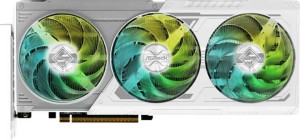
ASRock Radeon RX 9070 XT Steel Legend
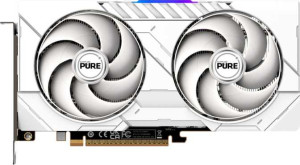
Sapphire Pure Radeon RX 9060 XT 16GB

ASRock Radeon RX 9070 XT Steel Legend Sapphire Pure Radeon RX 9060 XT 16GB

Overview

Welcome to our in-depth specification comparison between the ASRock Radeon RX 9070 XT Steel Legend and the Sapphire Pure Radeon RX 9060 XT 16GB. Both cards share the same RDNA 4.0 architecture, 16GB of GDDR6 memory, and a robust feature set including ray tracing and FSR4 support — but they differ significantly in raw compute power, memory bandwidth, and thermal footprint. Read on to see how these two RDNA 4.0 contenders stack up across every key specification.

Common Features

  • Both cards share a GPU memory speed of 2518 MHz.
  • Double Precision Floating Point (DPFP) is supported on both products.
  • Both cards have an effective memory speed of 20000 MHz.
  • Both cards feature 16GB of VRAM.
  • Both use GDDR6 memory.
  • ECC memory support is present on both products.
  • Both cards support DirectX 12 Ultimate.
  • Both cards support OpenGL version 4.6.
  • Both cards support OpenCL version 2.2.
  • Multi-display technology is supported on both products.
  • Ray tracing is supported on both products.
  • 3D support is available on both products.
  • DLSS is not supported on either product.
  • FSR4 is available on both products.
  • Both cards include one HDMI 2.1b port.
  • Neither card includes a USB-C port, DVI output, or mini DisplayPort output.
  • Both cards are built on the RDNA 4.0 GPU architecture.
  • Both cards use PCIe version 5.
  • Both cards are manufactured on a 4 nm process.
  • Air-water cooling is not available on either product.

Main Differences

  • GPU base clock speed is 1660 MHz on ASRock Radeon RX 9070 XT Steel Legend and 1700 MHz on Sapphire Pure Radeon RX 9060 XT 16GB.
  • GPU turbo clock is 2970 MHz on ASRock Radeon RX 9070 XT Steel Legend and 3290 MHz on Sapphire Pure Radeon RX 9060 XT 16GB.
  • Pixel rate is 380.2 GPixel/s on ASRock Radeon RX 9070 XT Steel Legend and 210.6 GPixel/s on Sapphire Pure Radeon RX 9060 XT 16GB.
  • Floating-point performance is 48.66 TFLOPS on ASRock Radeon RX 9070 XT Steel Legend and 26.95 TFLOPS on Sapphire Pure Radeon RX 9060 XT 16GB.
  • Texture rate is 760.3 GTexels/s on ASRock Radeon RX 9070 XT Steel Legend and 421.1 GTexels/s on Sapphire Pure Radeon RX 9060 XT 16GB.
  • Shading units total 4096 on ASRock Radeon RX 9070 XT Steel Legend and 2048 on Sapphire Pure Radeon RX 9060 XT 16GB.
  • Texture mapping units (TMUs) number 256 on ASRock Radeon RX 9070 XT Steel Legend and 128 on Sapphire Pure Radeon RX 9060 XT 16GB.
  • Render output units (ROPs) total 128 on ASRock Radeon RX 9070 XT Steel Legend and 64 on Sapphire Pure Radeon RX 9060 XT 16GB.
  • Maximum memory bandwidth is 644.6 GB/s on ASRock Radeon RX 9070 XT Steel Legend and 322.3 GB/s on Sapphire Pure Radeon RX 9060 XT 16GB.
  • Memory bus width is 256-bit on ASRock Radeon RX 9070 XT Steel Legend and 128-bit on Sapphire Pure Radeon RX 9060 XT 16GB.
  • RGB lighting is present on ASRock Radeon RX 9070 XT Steel Legend but not available on Sapphire Pure Radeon RX 9060 XT 16GB.
  • Supported displays number 4 on ASRock Radeon RX 9070 XT Steel Legend and 3 on Sapphire Pure Radeon RX 9060 XT 16GB.
  • DisplayPort outputs total 3 on ASRock Radeon RX 9070 XT Steel Legend and 2 on Sapphire Pure Radeon RX 9060 XT 16GB.
  • Thermal Design Power (TDP) is 304W on ASRock Radeon RX 9070 XT Steel Legend and 170W on Sapphire Pure Radeon RX 9060 XT 16GB.
  • Transistor count is 53900 million on ASRock Radeon RX 9070 XT Steel Legend and 29700 million on Sapphire Pure Radeon RX 9060 XT 16GB.
  • Card width is 298 mm on ASRock Radeon RX 9070 XT Steel Legend and 240 mm on Sapphire Pure Radeon RX 9060 XT 16GB.
  • Card height is 131 mm on ASRock Radeon RX 9070 XT Steel Legend and 124 mm on Sapphire Pure Radeon RX 9060 XT 16GB.
Specs Comparison
ASRock Radeon RX 9070 XT Steel Legend

ASRock Radeon RX 9070 XT Steel Legend

Sapphire Pure Radeon RX 9060 XT 16GB

Sapphire Pure Radeon RX 9060 XT 16GB

Performance:
GPU clock speed 1660 MHz 1700 MHz
GPU turbo 2970 MHz 3290 MHz
pixel rate 380.2 GPixel/s 210.6 GPixel/s
floating-point performance 48.66 TFLOPS 26.95 TFLOPS
texture rate 760.3 GTexels/s 421.1 GTexels/s
GPU memory speed 2518 MHz 2518 MHz
shading units 4096 2048
texture mapping units (TMUs) 256 128
render output units (ROPs) 128 64
Has Double Precision Floating Point (DPFP)

The most decisive factor separating these two GPUs is the sheer difference in shader hardware. The ASRock Radeon RX 9070 XT fields 4096 shading units, 256 TMUs, and 128 ROPs — exactly double what the Sapphire Radeon RX 9060 XT 16GB offers at 2048 shaders, 128 TMUs, and 64 ROPs. This is not a marginal gap: doubling the render and texture hardware translates directly into significantly higher throughput for geometry-heavy scenes, complex shaders, and high-resolution rendering workloads.

This hardware advantage compounds in the throughput numbers. The 9070 XT delivers 48.66 TFLOPS of floating-point performance versus 26.95 TFLOPS on the 9060 XT — an 80% lead — while its pixel rate of 380.2 GPixel/s and texture rate of 760.3 GTexels/s are similarly nearly double. In practice, this means the 9070 XT can push substantially more pixels per second, making it the stronger card for higher resolutions and demanding rasterization. Interestingly, the 9060 XT posts a higher GPU turbo clock of 3290 MHz versus the 9070 XT's 2970 MHz, but with half the compute units, that clock speed advantage cannot compensate — the 9070 XT's raw parallelism overwhelms it. Memory speeds are identical at 2518 MHz, and both support Double Precision Floating Point, which is a shared baseline rather than a differentiator here.

The RX 9070 XT Steel Legend holds a clear and commanding performance advantage in this group across every significant throughput metric. The 9060 XT's higher boost clock is a minor bright spot but is structurally insufficient to close the gap created by its half-sized compute array. Users prioritizing raw GPU performance should favor the 9070 XT; the 9060 XT is better understood as a lower-tier option where its compute headroom may suit less demanding workloads or tighter budgets.

Memory:
effective memory speed 20000 MHz 20000 MHz
maximum memory bandwidth 644.6 GB/s 322.3 GB/s
VRAM 16GB 16GB
GDDR version GDDR6 GDDR6
memory bus width 256-bit 128-bit
Supports ECC memory

On the surface, these two cards look remarkably similar in memory configuration: both carry 16GB of GDDR6 VRAM at an identical effective speed of 20000 MHz, and both support ECC memory. For users who care about frame buffer size alone — particularly for AI workloads, large texture assets, or future-proofing at higher resolutions — neither card has an edge here.

Where the configurations diverge sharply is the memory bus. The RX 9070 XT Steel Legend uses a 256-bit bus, while the 9060 XT 16GB is equipped with a 128-bit bus — exactly half the width. Since bandwidth scales directly with bus width at the same clock speed, this explains precisely why the 9070 XT achieves 644.6 GB/s of memory bandwidth versus only 322.3 GB/s on the 9060 XT. In real-world terms, a wider memory bus allows the GPU to feed its shader array faster, which matters most at high resolutions, with anti-aliasing enabled, or in memory-bandwidth-sensitive workloads like ray tracing and large texture streaming.

The memory group verdict strongly favors the 9070 XT. While the shared 16GB capacity and GDDR6 standard are genuine points of parity, the 9060 XT's 128-bit bus creates a structural bandwidth ceiling that halves its data throughput relative to its sibling. This bottleneck becomes increasingly relevant as rendering demands grow, meaning the 9060 XT's generous VRAM capacity may at times go underutilized simply because the bus cannot deliver data to the GPU fast enough.

Features:
DirectX version DirectX 12 Ultimate DirectX 12 Ultimate
OpenGL version 4.6 4.6
OpenCL version 2.2 2.2
Supports multi-display technology
supports ray tracing
Supports 3D
supports DLSS
has FSR4
has XeSS (XMX)
AMD SAM / Intel Resizable BAR AMD SAM AMD SAM
has LHR
has RGB lighting
supported displays 4 3

From an API and software feature standpoint, these two cards are virtually identical. Both support DirectX 12 Ultimate, OpenGL 4.6, OpenCL 2.2, ray tracing, AMD SAM, and FSR4 — AMD's latest upscaling technology. This means users on either card get the same gaming compatibility baseline, the same upscaling quality tier, and the same driver-level feature set. Neither supports DLSS or XeSS, which is expected given both are AMD products.

Two practical differences do exist. The 9070 XT Steel Legend supports 4 simultaneous displays versus 3 on the 9060 XT — a meaningful distinction for power users running expansive multi-monitor setups, but irrelevant for the majority of single or dual-display users. The 9070 XT also includes RGB lighting, which the 9060 XT lacks; purely aesthetic, but relevant for builds where visual customization matters.

For this group, the two cards are functionally tied on every feature that impacts gaming or compute performance. The 9070 XT holds a narrow edge for multi-display enthusiasts and RGB-focused builders, but neither advantage speaks to rendering capability or software compatibility. Users should treat features as a non-factor in their decision and let performance and memory specs carry the weight.

Ports:
has an HDMI output
HDMI ports 1 1
HDMI version HDMI 2.1b HDMI 2.1b
DisplayPort outputs 3 2
USB-C ports 0 0
DVI outputs 0 0
mini DisplayPort outputs 0 0

Connectivity between these two cards is largely consistent. Both offer a single HDMI 2.1b port and share the same absence of USB-C, DVI, and mini DisplayPort outputs. HDMI 2.1b is a capable standard supporting high refresh rates at 4K and beyond, so neither card compromises on that front.

The only differentiator here is DisplayPort count: the 9070 XT Steel Legend provides 3 DisplayPort outputs while the 9060 XT 16GB offers 2. Combined with their respective HDMI port, this gives the 9070 XT a total of 4 possible display connections versus 3 on the 9060 XT — which aligns with the supported display counts noted in the Features group. For users running three monitors entirely over DisplayPort, the 9060 XT falls one port short without factoring in the HDMI output.

The 9070 XT holds a modest edge in this group purely by virtue of the extra DisplayPort. For single or dual-display users the difference is irrelevant, but anyone building a three-DisplayPort setup will find the 9060 XT's configuration limiting. Beyond that one distinction, both cards are evenly matched on connectivity quality.

General info:
GPU architecture RDNA 4.0 RDNA 4.0
release date March 2025 June 2025
Thermal Design Power (TDP) 304W 170W
PCI Express (PCIe) version 5 5
semiconductor size 4 nm 4 nm
number of transistors 53900 million 29700 million
Has air-water cooling
width 298 mm 240 mm
height 131 mm 124 mm

Both cards share the same architectural foundation — RDNA 4.0 built on a 4nm process node — and both use PCIe 5.0, ensuring neither is bottlenecked by slot bandwidth on modern platforms. The shared process and architecture mean they benefit from the same driver maturity and feature roadmap, with no generational gap between them.

The most consequential divergence in this group is power consumption. The 9070 XT Steel Legend carries a 304W TDP compared to the 9060 XT's 170W — a difference of 134W that has real system-level implications. A higher TDP demands a more robust PSU, better case airflow, and typically produces more heat and fan noise under load. The transistor counts tell the same story structurally: the 9070 XT packs 53,900 million transistors versus 29,700 million on the 9060 XT, directly reflecting the larger die needed to house its doubled compute array. Physically, the 9070 XT is also notably larger at 298 × 131 mm versus 240 × 124 mm, which could matter for compact or mid-tower builds with tight GPU clearance.

Neither card holds an absolute advantage in this group — the right choice depends on the user's build constraints. The 9060 XT is the clear winner for small form factor cases, power-limited systems, or users prioritizing lower thermals and noise. The 9070 XT's higher TDP and larger footprint are the direct cost of its greater compute capacity, making it a deliberate trade-off rather than a flaw — but one that requires a capable system to accommodate it properly.

Comparison Summary & Verdict

After examining every specification, a clear picture emerges for each card. The ASRock Radeon RX 9070 XT Steel Legend is the stronger performer by a wide margin, delivering double the shading units (4096 vs 2048), a 644.6 GB/s memory bandwidth over a 256-bit bus, and nearly 48.66 TFLOPS of floating-point performance — making it the right choice for enthusiasts who demand high-end gaming and content creation headroom. It also supports up to 4 displays and adds RGB lighting for those who value aesthetics. The Sapphire Pure Radeon RX 9060 XT 16GB, on the other hand, draws only 170W TDP and has a more compact 240 mm footprint, making it ideal for users building power-efficient or small-form-factor systems who still want 16GB of VRAM, ray tracing, and FSR4 at a lower thermal cost. Choose the Steel Legend for maximum performance; choose the Sapphire Pure for efficiency and compactness.

ASRock Radeon RX 9070 XT Steel Legend
Buy ASRock Radeon RX 9070 XT Steel Legend if...

Buy the ASRock Radeon RX 9070 XT Steel Legend if you want maximum GPU performance, with nearly double the compute power, twice the memory bandwidth, and support for up to 4 simultaneous displays.

Sapphire Pure Radeon RX 9060 XT 16GB
Buy Sapphire Pure Radeon RX 9060 XT 16GB if...

Buy the Sapphire Pure Radeon RX 9060 XT 16GB if you are building a power-efficient or compact system and need a capable RDNA 4.0 card with 16GB VRAM at a much lower 170W TDP.