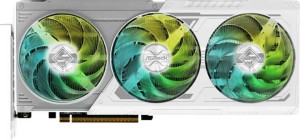
ASRock Radeon RX 9070 XT Steel Legend
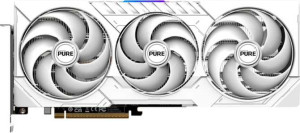
Sapphire Pure Radeon RX 9070 XT

ASRock Radeon RX 9070 XT Steel Legend Sapphire Pure Radeon RX 9070 XT

Overview

Welcome to our in-depth spec comparison between the ASRock Radeon RX 9070 XT Steel Legend and the Sapphire Pure Radeon RX 9070 XT. Both cards are built on the same RDNA 4.0 architecture and share an identical memory configuration, yet they diverge in key areas including boost clock speeds, thermal design power, physical dimensions, and display output layouts. Read on to find out which card best suits your setup.

Common Features

  • Both cards share a base GPU clock speed of 1660 MHz.
  • Both cards have a GPU memory speed of 2518 MHz.
  • Both cards feature 4096 shading units.
  • Both cards include 256 texture mapping units (TMUs).
  • Both cards have 128 render output units (ROPs).
  • Double Precision Floating Point (DPFP) is supported on both cards.
  • Both cards have an effective memory speed of 20000 MHz.
  • Both cards offer a maximum memory bandwidth of 644.6 GB/s.
  • Both cards come with 16GB of VRAM.
  • Both cards use GDDR6 memory.
  • Both cards feature a 256-bit memory bus width.
  • ECC memory is supported on both cards.
  • Both cards support DirectX 12 Ultimate.
  • Both cards support OpenGL version 4.6.
  • Both cards support OpenCL version 2.2.
  • Multi-display technology is supported on both cards.
  • Ray tracing is supported on both cards.
  • 3D support is available on both cards.
  • DLSS is not supported on either card.
  • FSR4 is supported on both cards.
  • Both cards include an HDMI 2.1b output.
  • Neither card includes USB-C ports, DVI outputs, or mini DisplayPort outputs.
  • Both cards are built on the RDNA 4.0 GPU architecture.
  • Both cards use PCIe version 5.
  • Both cards are manufactured on a 4 nm process.
  • Both cards contain 53900 million transistors.
  • Neither card features air-water cooling.

Main Differences

  • GPU turbo clock speed is 2970 MHz on ASRock Radeon RX 9070 XT Steel Legend and 3010 MHz on Sapphire Pure Radeon RX 9070 XT.
  • Pixel rate is 380.2 GPixel/s on ASRock Radeon RX 9070 XT Steel Legend and 385.3 GPixel/s on Sapphire Pure Radeon RX 9070 XT.
  • Floating-point performance is 48.66 TFLOPS on ASRock Radeon RX 9070 XT Steel Legend and 49.32 TFLOPS on Sapphire Pure Radeon RX 9070 XT.
  • Texture rate is 760.3 GTexels/s on ASRock Radeon RX 9070 XT Steel Legend and 770.6 GTexels/s on Sapphire Pure Radeon RX 9070 XT.
  • The number of HDMI ports is 1 on ASRock Radeon RX 9070 XT Steel Legend and 2 on Sapphire Pure Radeon RX 9070 XT.
  • DisplayPort outputs total 3 on ASRock Radeon RX 9070 XT Steel Legend and 2 on Sapphire Pure Radeon RX 9070 XT.
  • Thermal Design Power (TDP) is 304W on ASRock Radeon RX 9070 XT Steel Legend and 317W on Sapphire Pure Radeon RX 9070 XT.
  • Card width is 298 mm on ASRock Radeon RX 9070 XT Steel Legend and 320 mm on Sapphire Pure Radeon RX 9070 XT.
  • Card height is 131 mm on ASRock Radeon RX 9070 XT Steel Legend and 120.3 mm on Sapphire Pure Radeon RX 9070 XT.
Specs Comparison
ASRock Radeon RX 9070 XT Steel Legend

ASRock Radeon RX 9070 XT Steel Legend

Sapphire Pure Radeon RX 9070 XT

Sapphire Pure Radeon RX 9070 XT

Performance:
GPU clock speed 1660 MHz 1660 MHz
GPU turbo 2970 MHz 3010 MHz
pixel rate 380.2 GPixel/s 385.3 GPixel/s
floating-point performance 48.66 TFLOPS 49.32 TFLOPS
texture rate 760.3 GTexels/s 770.6 GTexels/s
GPU memory speed 2518 MHz 2518 MHz
shading units 4096 4096
texture mapping units (TMUs) 256 256
render output units (ROPs) 128 128
Has Double Precision Floating Point (DPFP)

At their core, the ASRock Steel Legend and the Sapphire Pure are built on the same GPU silicon: identical base clocks of 1660 MHz, the same 4096 shading units, 256 TMUs, 128 ROPs, and matched memory speeds of 2518 MHz. This means their theoretical throughput ceiling is set by one variable alone — the GPU turbo (boost) clock — which is where the two cards begin to diverge.

The Sapphire Pure reaches a higher boost of 3010 MHz versus the Steel Legend's 2970 MHz, a difference of 40 MHz or roughly 1.3%. Modest as that sounds, it propagates consistently across every derived performance metric: the Pure leads in floating-point performance (49.32 TFLOPS vs 48.66 TFLOPS), texture throughput (770.6 GTexels/s vs 760.3 GTexels/s), and pixel fill rate (385.3 GPixel/s vs 380.2 GPixel/s). In practice, a ~1.3% clock advantage will rarely produce a perceptible fps difference in real workloads, but it does indicate the Sapphire Pure ships with a slightly more aggressive factory tune.

Edge: Sapphire Pure — it holds a consistent, if narrow, lead across all performance metrics purely due to its higher boost clock. Both cards support Double Precision Floating Point, making neither uniquely advantaged for compute tasks. For users choosing strictly on peak theoretical throughput, the Pure has the upper hand, but the gap is small enough that thermal behavior, power delivery, and real-world sustained clocks will matter far more than the spec sheet alone.
Memory:
effective memory speed 20000 MHz 20000 MHz
maximum memory bandwidth 644.6 GB/s 644.6 GB/s
VRAM 16GB 16GB
GDDR version GDDR6 GDDR6
memory bus width 256-bit 256-bit
Supports ECC memory

When two cards share every single memory specification, the comparison becomes straightforward: the Steel Legend and the Sapphire Pure are in complete parity here. Both feature 16GB of GDDR6 running at an effective 20000 MHz across a 256-bit bus, yielding identical peak bandwidth of 644.6 GB/s. There is nothing on the memory spec sheet that separates them.

That said, these shared numbers are worth contextualizing. A 256-bit bus paired with fast GDDR6 delivers bandwidth that comfortably supports high-resolution textures and large frame buffers at 1440p and 4K. The 16GB VRAM allocation is particularly relevant for modern titles and creative workloads where texture assets and scene complexity are growing rapidly — neither card will feel constrained in the near term. ECC memory support on both is a minor but meaningful bonus for users doing precision compute tasks, adding error-correction capability without any trade-off.

Verdict: Dead tie. Every memory metric is identical across both cards. Choosing between them on memory alone is impossible — buyers should weigh other spec groups or factors like cooling, acoustics, and pricing instead.

Features:
DirectX version DirectX 12 Ultimate DirectX 12 Ultimate
OpenGL version 4.6 4.6
OpenCL version 2.2 2.2
Supports multi-display technology
supports ray tracing
Supports 3D
supports DLSS
has FSR4
has XeSS (XMX)
AMD SAM / Intel Resizable BAR AMD SAM AMD SAM
has LHR
has RGB lighting
supported displays 4 4

Feature parity is total between these two cards. Both support DirectX 12 Ultimate and ray tracing, placing them fully in the current generation of GPU feature sets. Equally important for AMD users is shared support for FSR4 — AMD's latest upscaling technology — which provides a meaningful image quality and performance uplift in supported titles, effectively replacing the need for NVIDIA's DLSS (which neither card supports, as expected for AMD hardware).

AMD SAM (Smart Access Memory) is present on both, allowing a compatible AMD CPU and motherboard to unlock the full VRAM for the processor — a feature that can yield tangible frame rate improvements in SAM-supported games. Neither card carries LHR (Lite Hash Rate) restrictions, and both top out at 4 supported displays, which covers virtually all multi-monitor use cases. RGB lighting is also confirmed on both, though its relevance is purely aesthetic.

Verdict: Complete tie. Not a single feature differentiates the Steel Legend from the Sapphire Pure in this category. Buyers who prioritize software capabilities, API support, or display connectivity will find no reason to prefer one over the other based on features alone.

Ports:
has an HDMI output
HDMI ports 1 2
HDMI version HDMI 2.1b HDMI 2.1b
DisplayPort outputs 3 2
USB-C ports 0 0
DVI outputs 0 0
mini DisplayPort outputs 0 0

Both cards offer four total display outputs and share the same HDMI 2.1b standard, which supports 4K at high refresh rates and 8K output — so the version parity means no difference in display capability per port. The divergence lies entirely in how those four slots are allocated: the Steel Legend goes 1 HDMI + 3 DisplayPort, while the Sapphire Pure opts for 2 HDMI + 2 DisplayPort.

This distinction is more meaningful than it first appears. Users running multiple monitors via HDMI — common with TVs, capture devices, or older displays that lack DisplayPort — will find the Sapphire Pure's dual-HDMI layout more accommodating without needing adapters. Conversely, users with a DisplayPort-heavy setup, such as three high-refresh-rate gaming monitors, will prefer the Steel Legend's three DisplayPort outputs, which can drive that configuration natively.

Edge: depends on use case — neither layout is objectively superior, but the Sapphire Pure better serves mixed or HDMI-centric setups, while the Steel Legend is the stronger fit for DisplayPort-dominant multi-monitor configurations. Buyers should map their specific display connections before deciding.

General info:
GPU architecture RDNA 4.0 RDNA 4.0
release date March 2025 March 2025
Thermal Design Power (TDP) 304W 317W
PCI Express (PCIe) version 5 5
semiconductor size 4 nm 4 nm
number of transistors 53900 million 53900 million
Has air-water cooling
width 298 mm 320 mm
height 131 mm 120.3 mm

Sharing the same RDNA 4.0 architecture, 4nm process node, and identical transistor count, both cards are cut from the same silicon cloth — so the interesting story here is in how each board partner has chosen to implement it. Two numbers stand out: power draw and physical size.

The Sapphire Pure carries a 317W TDP versus the Steel Legend's 304W — a 13W difference that likely reflects the Pure's higher boost clock (as seen in the Performance group) requiring more headroom. Neither figure is alarming for this GPU tier, but the Steel Legend's lower TDP means marginally less heat generated and slightly lower peak power demands on the PSU, which can matter in thermally constrained or tighter-budget builds. On dimensions, the two cards diverge in an interesting way: the Steel Legend is shorter in length (298mm vs 320mm) but taller (131mm vs 120.3mm). The Pure's extra 22mm in length could create clearance issues in more compact cases, while the Steel Legend's greater height is rarely a concern since most cases accommodate standard dual-slot heights easily.

Edge: ASRock Steel Legend on general hardware practicality — its lower TDP and shorter length make it the more case-friendly option, particularly for builds where PSU overhead or chassis space are limiting factors. The Sapphire Pure's higher power budget is the trade-off it makes for its marginally higher clock speeds.

Comparison Summary & Verdict

Both the ASRock Radeon RX 9070 XT Steel Legend and the Sapphire Pure Radeon RX 9070 XT deliver the same core RDNA 4.0 experience with identical 16GB GDDR6 memory, full DirectX 12 Ultimate and ray tracing support, and FSR4 compatibility. Where they diverge is telling: the Sapphire edges ahead with a higher GPU turbo clock of 3010 MHz, slightly better floating-point performance at 49.32 TFLOPS, and an extra HDMI port, making it the stronger pick for enthusiasts chasing peak throughput or multi-monitor HDMI setups. The ASRock, meanwhile, draws less power at 304W TDP, occupies a narrower 298 mm footprint, and offers three DisplayPort outputs, making it the more practical choice for compact builds or users who rely heavily on DisplayPort connectivity.

ASRock Radeon RX 9070 XT Steel Legend
Buy ASRock Radeon RX 9070 XT Steel Legend if...

Buy the ASRock Radeon RX 9070 XT Steel Legend if you want a more compact card with lower power consumption and three DisplayPort outputs for a multi-monitor DisplayPort setup.

Sapphire Pure Radeon RX 9070 XT
Buy Sapphire Pure Radeon RX 9070 XT if...

Buy the Sapphire Pure Radeon RX 9070 XT if you want the higher boost clock speed and slightly stronger overall performance, or if you need two HDMI outputs for your display configuration.