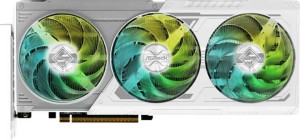
ASRock Radeon RX 9070 XT Steel Legend
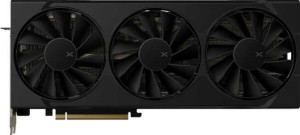
XFX Swift Radeon RX 9070 OC Triple Fan Gaming Edition

ASRock Radeon RX 9070 XT Steel Legend XFX Swift Radeon RX 9070 OC Triple Fan Gaming Edition

Overview

Welcome to our in-depth specification comparison between the ASRock Radeon RX 9070 XT Steel Legend and the XFX Swift Radeon RX 9070 OC Triple Fan Gaming Edition. Both cards are built on the RDNA 4.0 architecture and share a strong feature foundation, yet they diverge notably in areas like GPU clock speeds, raw compute throughput, power consumption, and physical dimensions — making the choice between them far from straightforward.

Common Features

  • Both cards share the same GPU memory speed of 2518 MHz.
  • Both cards have 128 render output units (ROPs).
  • Double Precision Floating Point (DPFP) is supported on both cards.
  • Both cards have an effective memory speed of 20000 MHz.
  • Both cards are equipped with 16GB of VRAM.
  • Both cards use GDDR6 memory.
  • Both cards feature a 256-bit memory bus width.
  • ECC memory is supported on both cards.
  • Both cards support DirectX 12 Ultimate.
  • Both cards support OpenGL version 4.6.
  • Both cards support OpenCL version 2.2.
  • Multi-display technology is supported on both cards.
  • Ray tracing is supported on both cards.
  • 3D support is available on both cards.
  • DLSS is not supported on either card.
  • FSR4 is available on both cards.
  • Both cards feature one HDMI output using HDMI version 2.1b.
  • Both cards have three DisplayPort outputs.
  • Neither card has USB-C ports, DVI outputs, or mini DisplayPort outputs.
  • Both cards are built on the RDNA 4.0 GPU architecture.
  • Both cards use PCIe version 5.
  • Both cards contain 53,900 million transistors.
  • Neither card features air-water cooling.

Main Differences

  • GPU base clock speed is 1660 MHz on ASRock Radeon RX 9070 XT Steel Legend and 1440 MHz on XFX Swift Radeon RX 9070 OC Triple Fan Gaming Edition.
  • GPU turbo clock speed is 2970 MHz on ASRock Radeon RX 9070 XT Steel Legend and 2700 MHz on XFX Swift Radeon RX 9070 OC Triple Fan Gaming Edition.
  • Pixel rate is 380.2 GPixel/s on ASRock Radeon RX 9070 XT Steel Legend and 345.6 GPixel/s on XFX Swift Radeon RX 9070 OC Triple Fan Gaming Edition.
  • Floating-point performance is 48.66 TFLOPS on ASRock Radeon RX 9070 XT Steel Legend and 38.71 TFLOPS on XFX Swift Radeon RX 9070 OC Triple Fan Gaming Edition.
  • Texture rate is 760.3 GTexels/s on ASRock Radeon RX 9070 XT Steel Legend and 604.8 GTexels/s on XFX Swift Radeon RX 9070 OC Triple Fan Gaming Edition.
  • Shading units number 4096 on ASRock Radeon RX 9070 XT Steel Legend and 3584 on XFX Swift Radeon RX 9070 OC Triple Fan Gaming Edition.
  • Texture mapping units (TMUs) total 256 on ASRock Radeon RX 9070 XT Steel Legend and 224 on XFX Swift Radeon RX 9070 OC Triple Fan Gaming Edition.
  • Maximum memory bandwidth is 644.6 GB/s on ASRock Radeon RX 9070 XT Steel Legend and 640 GB/s on XFX Swift Radeon RX 9070 OC Triple Fan Gaming Edition.
  • Thermal Design Power (TDP) is 304W on ASRock Radeon RX 9070 XT Steel Legend and 220W on XFX Swift Radeon RX 9070 OC Triple Fan Gaming Edition.
  • Semiconductor size is 4 nm on ASRock Radeon RX 9070 XT Steel Legend and 5 nm on XFX Swift Radeon RX 9070 OC Triple Fan Gaming Edition.
  • Card width is 298 mm on ASRock Radeon RX 9070 XT Steel Legend and 325 mm on XFX Swift Radeon RX 9070 OC Triple Fan Gaming Edition.
  • Card height is 131 mm on ASRock Radeon RX 9070 XT Steel Legend and 150 mm on XFX Swift Radeon RX 9070 OC Triple Fan Gaming Edition.
Specs Comparison
ASRock Radeon RX 9070 XT Steel Legend

ASRock Radeon RX 9070 XT Steel Legend

XFX Swift Radeon RX 9070 OC Triple Fan Gaming Edition

XFX Swift Radeon RX 9070 OC Triple Fan Gaming Edition

Performance:
GPU clock speed 1660 MHz 1440 MHz
GPU turbo 2970 MHz 2700 MHz
pixel rate 380.2 GPixel/s 345.6 GPixel/s
floating-point performance 48.66 TFLOPS 38.71 TFLOPS
texture rate 760.3 GTexels/s 604.8 GTexels/s
GPU memory speed 2518 MHz 2518 MHz
shading units 4096 3584
texture mapping units (TMUs) 256 224
render output units (ROPs) 128 128
Has Double Precision Floating Point (DPFP)

The most telling difference between these two cards lies in their raw compute muscle. The ASRock RX 9070 XT Steel Legend ships with 4096 shading units and 256 TMUs, versus 3584 shading units and 224 TMUs on the XFX RX 9070 OC — a roughly 14% advantage in shader and texturing hardware. Combined with higher clock speeds (a base of 1660 MHz and turbo of 2970 MHz on the XT, versus 1440 MHz / 2700 MHz on the 9070 OC), this translates into a floating-point performance gap of 48.66 TFLOPS versus 38.71 TFLOPS — nearly a 26% lead for the XT. In practice, this gap shows up in demanding workloads: higher sustained frame rates at 4K, more headroom for ray tracing, and faster AI-accelerated features.

The texture throughput numbers reinforce this picture. The Steel Legend delivers 760.3 GTexels/s compared to 604.8 GTexels/s for the XFX card, meaning the XT can process texture-heavy scenes — think open-world environments with dense foliage or high-resolution texture packs — noticeably faster. Both cards share an identical 128 ROPs count and the same 2518 MHz memory speed, so pixel fill rate and memory bandwidth characteristics are closer, though the XT still edges ahead on pixel rate (380.2 vs 345.6 GPixel/s) thanks to its clock advantage. Double Precision Floating Point support is present on both, which matters for compute and productivity tasks beyond gaming.

The ASRock RX 9070 XT Steel Legend holds a clear and consistent performance advantage across every compute and throughput metric in this group. The XFX RX 9070 OC is not a weak card by any measure, but it is a fundamentally different GPU tier — the non-XT die with fewer execution units and lower clocks. Users prioritizing peak gaming performance, especially at higher resolutions, will find the XT the stronger choice here; the 9070 OC makes more sense if it carries a meaningful price advantage.
Memory:
effective memory speed 20000 MHz 20000 MHz
maximum memory bandwidth 644.6 GB/s 640 GB/s
VRAM 16GB 16GB
GDDR version GDDR6 GDDR6
memory bus width 256-bit 256-bit
Supports ECC memory

On paper, the memory configurations of these two cards are nearly indistinguishable. Both carry 16GB of GDDR6 across a 256-bit bus, running at an effective speed of 20000 MHz with ECC memory support — a feature typically valued in professional and compute workloads where data integrity matters. For gaming at 4K or with high-resolution texture mods, 16GB is a comfortable buffer that should remain relevant for years, and neither card sacrifices anything here.

The only numerical separation is in maximum memory bandwidth: 644.6 GB/s for the ASRock RX 9070 XT Steel Legend versus 640 GB/s for the XFX RX 9070 OC. That roughly 0.7% difference is negligible in any real-world scenario — it falls well within the noise of typical frame-time variance and would never be perceptible in actual use. It is likely a minor consequence of slight clock tuning differences rather than any architectural distinction.

This group is effectively a dead heat. Both cards offer the same memory capacity, the same bus width, the same GDDR standard, and the same effective speed. Neither holds a meaningful advantage in memory configuration, and this dimension of the comparison should carry no weight in a purchase decision between the two.

Features:
DirectX version DirectX 12 Ultimate DirectX 12 Ultimate
OpenGL version 4.6 4.6
OpenCL version 2.2 2.2
Supports multi-display technology
supports ray tracing
Supports 3D
supports DLSS
has FSR4
has XeSS (XMX)
AMD SAM / Intel Resizable BAR AMD SAM AMD SAM
has LHR
has RGB lighting
supported displays 4 4

Feature parity between these two cards is total. Every specification in this group — from DirectX 12 Ultimate and OpenGL 4.6 support to ray tracing capability, FSR4 upscaling, AMD SAM, and a maximum of 4 simultaneous displays — is identical. This is expected, since both are AMD RDNA 4 architecture cards and inherit the same software and API feature set from the platform rather than from board partner customization.

A few of these shared features are worth contextualizing. FSR4, AMD's latest upscaling technology, is a meaningful asset for both cards, offering AI-assisted image reconstruction that can significantly boost frame rates in supported titles while preserving visual quality. The absence of DLSS is a platform-level reality for all AMD cards and is not a differentiator here. Ray tracing support is present on both, consistent with RDNA 4's architectural improvements in that area. RGB lighting on both cards signals a shared focus on aesthetics for builds where that matters.

This group is a complete tie with zero differentiators. Features will play no role in choosing between the ASRock RX 9070 XT Steel Legend and the XFX RX 9070 OC — any decision should rest entirely on performance, cooling, physical design, and pricing.

Ports:
has an HDMI output
HDMI ports 1 1
HDMI version HDMI 2.1b HDMI 2.1b
DisplayPort outputs 3 3
USB-C ports 0 0
DVI outputs 0 0
mini DisplayPort outputs 0 0

Connectivity is another area where these two cards are perfectly matched. Both offer the same port layout: one HDMI 2.1b output and three DisplayPort outputs, totaling four display connections — consistent with the four-display maximum noted in their feature specs. Neither card includes USB-C or any legacy outputs such as DVI or mini DisplayPort.

HDMI 2.1b is a meaningful inclusion, supporting up to 4K at high refresh rates and 8K output, making both cards well-suited for modern high-resolution displays and home theater setups without requiring an adapter. The three DisplayPort outputs give multi-monitor users plenty of flexibility for productivity or gaming arrays, and the absence of USB-C is unlikely to be a concern for the vast majority of desktop GPU buyers.

There is nothing to separate these two cards on connectivity — it is an identical setup in every respect. As with the Features group, ports should factor into this comparison only if a specific output type is a hard requirement for a given setup, and even then, both cards satisfy or fall short of that requirement equally.

General info:
GPU architecture RDNA 4.0 RDNA 4.0
release date March 2025 March 2025
Thermal Design Power (TDP) 304W 220W
PCI Express (PCIe) version 5 5
semiconductor size 4 nm 5 nm
number of transistors 53900 million 53900 million
Has air-water cooling
width 298 mm 325 mm
height 131 mm 150 mm

Despite sharing the same RDNA 4.0 architecture, identical transistor counts of 53,900 million, and the same PCIe 5.0 interface, two specs in this group reveal meaningful real-world differences. The ASRock RX 9070 XT Steel Legend carries a 304W TDP against the XFX RX 9070 OC's 220W — a gap of 84W that has direct implications for system requirements. Buyers of the XT will need a more capable power supply and can expect noticeably higher heat output and fan noise under sustained load. The XFX 9070 OC is a significantly more power-efficient card, which matters in smaller cases, quieter builds, or systems with tighter PSU headroom.

The semiconductor size listing is also worth noting: 4 nm for the ASRock XT versus 5 nm for the XFX 9070 OC. A smaller node generally allows for greater transistor density or improved power efficiency at comparable performance levels. The identical transistor count across both cards makes this an unusual pairing to interpret directly, but it is a data point consistent with the two cards being distinct GPU dies. Physical dimensions add another consideration: the XFX card is actually the larger cooler at 325 × 150 mm compared to the ASRock's 298 × 131 mm, which is somewhat counterintuitive given the XT's higher TDP — case compatibility checks are warranted for both, but especially for the XFX.

This group surfaces a genuine trade-off rather than a clear winner. The ASRock RX 9070 XT Steel Legend demands more from a system's power and thermal infrastructure, while the XFX RX 9070 OC is the more power-efficient and physically smaller cooler option — though it still requires careful case clearance checks. For users building in compact enclosures or prioritizing lower power draw, the XFX holds a practical advantage here; for those unconstrained by those factors, the higher TDP of the XT is simply the cost of its greater performance.

Comparison Summary & Verdict

After examining the full spec sheet, both cards share an impressive common foundation: RDNA 4.0 architecture, 16GB GDDR6 memory, PCIe 5 support, ray tracing, and FSR4. However, the key differentiators are clear. The ASRock Radeon RX 9070 XT Steel Legend pulls ahead with a higher GPU turbo clock of 2970 MHz, 48.66 TFLOPS of floating-point performance, 4096 shading units, and a finer 4 nm semiconductor process — making it the stronger performer overall. The XFX Swift Radeon RX 9070 OC Triple Fan Gaming Edition, on the other hand, operates at a significantly lower 220W TDP and features a more compact shading unit count of 3584, making it the more power-efficient and physically larger-cooled option. Choose the ASRock if outright performance is your priority; choose the XFX if power efficiency and thermal headroom matter more to your build.

ASRock Radeon RX 9070 XT Steel Legend
Buy ASRock Radeon RX 9070 XT Steel Legend if...

Buy the ASRock Radeon RX 9070 XT Steel Legend if you want maximum GPU performance, with higher clock speeds, more shading units, and greater floating-point throughput for demanding workloads and gaming.

XFX Swift Radeon RX 9070 OC Triple Fan Gaming Edition
Buy XFX Swift Radeon RX 9070 OC Triple Fan Gaming Edition if...

Buy the XFX Swift Radeon RX 9070 OC Triple Fan Gaming Edition if power efficiency is a priority, as its significantly lower 220W TDP makes it a better fit for builds with tighter power budgets.