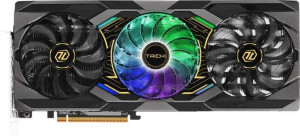
ASRock Radeon RX 9070 XT Taichi OC
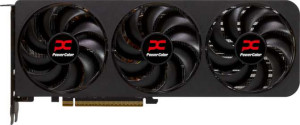
PowerColor Reaper Radeon RX 9070 XT

ASRock Radeon RX 9070 XT Taichi OC PowerColor Reaper Radeon RX 9070 XT

Overview

Welcome to our in-depth specification comparison between the ASRock Radeon RX 9070 XT Taichi OC and the PowerColor Reaper Radeon RX 9070 XT. Both cards are built on the same RDNA 4.0 architecture and share identical memory configurations, yet they diverge in meaningful ways across clock speeds, raw compute performance, feature sets, and physical dimensions. Whether you are chasing maximum throughput or a more compact form factor, this comparison will help you navigate the key battlegrounds between these two RDNA 4.0 contenders.

Common Features

  • Both cards share a GPU memory speed of 2518 MHz.
  • Both cards feature 4096 shading units.
  • Both cards include 256 texture mapping units (TMUs).
  • Both cards have 128 render output units (ROPs).
  • Double Precision Floating Point (DPFP) is supported on both cards.
  • Both cards have an effective memory speed of 20000 MHz.
  • Both cards offer a maximum memory bandwidth of 644.6 GB/s.
  • Both cards come with 16GB of VRAM.
  • Both cards use GDDR6 memory.
  • Both cards have a 256-bit memory bus width.
  • ECC memory is supported on both cards.
  • Both cards support OpenGL version 4.6.
  • Both cards support OpenCL version 2.2.
  • Multi-display technology is supported on both cards.
  • Ray tracing is supported on both cards.
  • 3D support is available on both cards.
  • DLSS is not supported on either card.
  • FSR4 is available on both cards.
  • XeSS (XMX) is not available on either card.
  • Both cards include one HDMI 2.1b port and three DisplayPort outputs, with no USB-C or DVI outputs.
  • Both cards are built on the RDNA 4.0 GPU architecture.
  • Both cards have a Thermal Design Power (TDP) of 304W.
  • Both cards use PCIe version 5.
  • Both cards are manufactured on a 4 nm semiconductor process.
  • Both cards contain 53900 million transistors.
  • Neither card uses air-water cooling.

Main Differences

  • GPU base clock speed is 1870 MHz on ASRock Radeon RX 9070 XT Taichi OC and 1660 MHz on PowerColor Reaper Radeon RX 9070 XT.
  • GPU turbo clock speed is 3100 MHz on ASRock Radeon RX 9070 XT Taichi OC and 2970 MHz on PowerColor Reaper Radeon RX 9070 XT.
  • Pixel rate is 396.8 GPixel/s on ASRock Radeon RX 9070 XT Taichi OC and 380.2 GPixel/s on PowerColor Reaper Radeon RX 9070 XT.
  • Floating-point performance is 50.79 TFLOPS on ASRock Radeon RX 9070 XT Taichi OC and 48.66 TFLOPS on PowerColor Reaper Radeon RX 9070 XT.
  • Texture rate is 793.6 GTexels/s on ASRock Radeon RX 9070 XT Taichi OC and 760.3 GTexels/s on PowerColor Reaper Radeon RX 9070 XT.
  • DirectX support is DirectX 12 Ultimate on ASRock Radeon RX 9070 XT Taichi OC and DirectX 12 on PowerColor Reaper Radeon RX 9070 XT.
  • RGB lighting is present on ASRock Radeon RX 9070 XT Taichi OC but not available on PowerColor Reaper Radeon RX 9070 XT.
  • Card width is 330 mm on ASRock Radeon RX 9070 XT Taichi OC and 304 mm on PowerColor Reaper Radeon RX 9070 XT.
  • Card height is 140 mm on ASRock Radeon RX 9070 XT Taichi OC and 127 mm on PowerColor Reaper Radeon RX 9070 XT.
Specs Comparison
ASRock Radeon RX 9070 XT Taichi OC

ASRock Radeon RX 9070 XT Taichi OC

PowerColor Reaper Radeon RX 9070 XT

PowerColor Reaper Radeon RX 9070 XT

Performance:
GPU clock speed 1870 MHz 1660 MHz
GPU turbo 3100 MHz 2970 MHz
pixel rate 396.8 GPixel/s 380.2 GPixel/s
floating-point performance 50.79 TFLOPS 48.66 TFLOPS
texture rate 793.6 GTexels/s 760.3 GTexels/s
GPU memory speed 2518 MHz 2518 MHz
shading units 4096 4096
texture mapping units (TMUs) 256 256
render output units (ROPs) 128 128
Has Double Precision Floating Point (DPFP)

Both cards share the same fundamental GPU architecture: identical 4096 shading units, 256 TMUs, 128 ROPs, and the same 2518 MHz memory speed. This means the silicon underneath is the same, and any performance difference comes entirely from how aggressively each card is clocked out of the box.

That is precisely where the ASRock Taichi OC pulls ahead. Its base clock of 1870 MHz and boost of 3100 MHz are meaningfully higher than the Reaper's 1660 MHz / 2970 MHz. Because throughput metrics like pixel rate, texture rate, and floating-point performance are direct mathematical products of clock speed and fixed shader counts, the Taichi OC converts its clock advantage into a consistent lead: 50.79 TFLOPS versus 48.66 TFLOPS, and 793.6 GTexels/s versus 760.3 GTexels/s. In practice, this translates to a roughly 4–5% theoretical performance edge in GPU-bound workloads such as rasterized gaming and GPU compute tasks.

The Taichi OC has a clear performance edge in this group, driven entirely by its factory overclock. The Reaper is not a slow card — it runs the same GPU at reference-adjacent speeds — but if raw out-of-the-box throughput is the priority, the Taichi OC wins on every computed metric. Both cards support Double Precision Floating Point, so that feature offers no differentiation here.

Memory:
effective memory speed 20000 MHz 20000 MHz
maximum memory bandwidth 644.6 GB/s 644.6 GB/s
VRAM 16GB 16GB
GDDR version GDDR6 GDDR6
memory bus width 256-bit 256-bit
Supports ECC memory

Memory is the one area where there is absolutely nothing to separate these two cards. Both carry 16GB of GDDR6 on a 256-bit bus, running at an effective 20000 MHz and delivering 644.6 GB/s of bandwidth. That 16GB capacity sits comfortably above the 12GB threshold where modern titles at 4K with high-resolution texture packs begin to show constraints, making both cards well-equipped for demanding workloads today and reasonably future-proofed in the near term.

The 644.6 GB/s bandwidth figure is also worth appreciating in context: it is the direct result of pairing a wide 256-bit bus with fast GDDR6, and it ensures the GPU's shader array is rarely starved of data in memory-intensive scenarios like open-world rendering or high-resolution compute. ECC memory support is present on both, which adds a layer of reliability for professional or mixed-use workloads where data integrity matters.

This group is an unambiguous dead heat. Every single memory specification is identical, so no buying decision can be made on memory grounds alone. Shoppers should look to other spec groups — particularly performance clocks or thermal and power design — to differentiate between the two cards.

Features:
DirectX version DirectX 12 Ultimate DirectX 12
OpenGL version 4.6 4.6
OpenCL version 2.2 2.2
Supports multi-display technology
supports ray tracing
Supports 3D
supports DLSS
has FSR4
has XeSS (XMX)
AMD SAM / Intel Resizable BAR AMD SAM AMD SAM
has LHR
has RGB lighting
supported displays 4 4

The feature sets of these two cards are nearly identical, but two differences stand out. The more technically significant one is the Taichi OC's DirectX 12 Ultimate support versus the Reaper's plain DirectX 12. DirectX 12 Ultimate is not just a marketing badge — it is a formal hardware certification that guarantees support for features like hardware-accelerated ray tracing, mesh shaders, and variable-rate shading at a specified tier. The gap may not affect most games today, but for titles that explicitly target DX12 Ultimate capabilities, the Taichi OC is the more future-proof choice on paper.

Beyond that, both cards share the same practical software feature parity: FSR4 support for AI-assisted upscaling, AMD SAM for CPU-to-GPU bandwidth optimization, ray tracing, and the ability to drive up to 4 displays simultaneously. Neither card supports DLSS, which is expected given these are AMD GPUs. The absence of LHR on both is also a non-issue for gaming-focused buyers.

The second differentiator is purely aesthetic: the Taichi OC includes RGB lighting while the Reaper does not. This has no bearing on performance, but matters to builders who invest in a themed system. On balance, the Taichi OC holds a modest edge in this group — its DirectX 12 Ultimate certification is a meaningful technical advantage, and RGB is a bonus for those who want it.

Ports:
has an HDMI output
HDMI ports 1 1
HDMI version HDMI 2.1b HDMI 2.1b
DisplayPort outputs 3 3
USB-C ports 0 0
DVI outputs 0 0
mini DisplayPort outputs 0 0

Connectivity is another area where these two cards are completely interchangeable. Both offer the same layout: 1 HDMI 2.1b port and 3 DisplayPort outputs, supporting up to 4 simultaneous displays — consistent with what was noted in the Features group. No USB-C, DVI, or mini DisplayPort outputs are present on either card.

The HDMI 2.1b specification is worth highlighting for what it enables: bandwidth sufficient for 4K at high refresh rates and 8K output, along with features like Variable Refresh Rate over HDMI. The triple DisplayPort configuration similarly gives multi-monitor users flexibility to mix and match display types without adapters. For a single high-refresh 4K display or a three-screen productivity or gaming setup, both cards are equally capable.

This group is a complete tie — every port, version, and count is identical. Buyers with specific connectivity requirements, such as needing USB-C video output, will find neither card accommodates that, but for standard desktop display use cases, both are equally well-equipped.

General info:
GPU architecture RDNA 4.0 RDNA 4.0
release date March 2025 March 2025
Thermal Design Power (TDP) 304W 304W
PCI Express (PCIe) version 5 5
semiconductor size 4 nm 4 nm
number of transistors 53900 million 53900 million
Has air-water cooling
width 330 mm 304 mm
height 140 mm 127 mm

At the foundational level, these cards are built from the same cloth: identical RDNA 4.0 architecture on a 4nm process node with 53,900 million transistors, connected via PCIe 5.0, and rated at the same 304W TDP. The shared power envelope is particularly relevant — it means both cards demand the same from your PSU and produce the same theoretical heat load, so neither has a systemic efficiency advantage over the other at the platform level.

Where the two diverge is physical footprint. The Taichi OC measures 330 × 140 mm, while the Reaper is noticeably more compact at 304 × 127 mm — a difference of 26mm in length and 13mm in height. For builders working with smaller mid-tower or micro-ATX cases, that gap can be the difference between a card fitting cleanly and requiring careful clearance checks. The Reaper's smaller dimensions also suggest a less elaborate cooler design, though both cards rely solely on air cooling.

For case compatibility, the Reaper holds a practical advantage with its smaller footprint, making it the more versatile choice for space-constrained builds. The Taichi OC's larger cooler may have thermal headroom implications, but since TDP is identical and no thermal data is provided in this group, that remains outside the scope of this comparison. Buyers in standard full-tower builds will find both cards equally accommodating.

Comparison Summary & Verdict

After examining every specification, a clear picture emerges for each card. The ASRock Radeon RX 9070 XT Taichi OC holds a consistent edge in outright performance, delivering a higher GPU turbo clock of 3100 MHz, a floating-point output of 50.79 TFLOPS, and full DirectX 12 Ultimate support, making it the stronger pick for enthusiasts who want every last frame and future-facing API headroom. It also adds RGB lighting for those who value aesthetics. The PowerColor Reaper Radeon RX 9070 XT, meanwhile, answers with a notably more compact footprint at 304 x 127 mm, making it a practical choice for smaller chassis builds where space is at a premium. Both cards share the same 16 GB GDDR6 memory, 304 W TDP, and port configuration, so the decision ultimately comes down to performance headroom versus physical fit.

ASRock Radeon RX 9070 XT Taichi OC
Buy ASRock Radeon RX 9070 XT Taichi OC if...

Buy the ASRock Radeon RX 9070 XT Taichi OC if you want the highest clock speeds, greater floating-point performance, DirectX 12 Ultimate support, and RGB lighting in your build.

PowerColor Reaper Radeon RX 9070 XT
Buy PowerColor Reaper Radeon RX 9070 XT if...

Buy the PowerColor Reaper Radeon RX 9070 XT if you need a more compact card that fits smaller cases, without sacrificing the same memory configuration or core architecture.