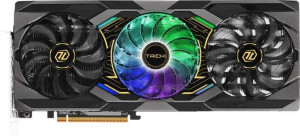
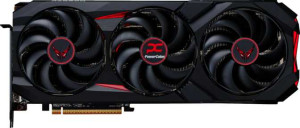
Across most feature checkboxes, these two cards are in lockstep — both support ray tracing, FSR4, AMD SAM, multi-display output across up to 4 displays, and share identical OpenGL 4.6 and OpenCL 2.2 support. The one concrete divergence is DirectX support: the ASRock Taichi OC lists DirectX 12 Ultimate, while the PowerColor Red Devil Limited Edition lists DirectX 12. DirectX 12 Ultimate is a superset of DX12 that formally certifies support for hardware ray tracing tiers, mesh shaders, variable rate shading, and sampler feedback — features increasingly used by modern titles. Whether this reflects a genuine hardware or driver-level difference, or simply a difference in how each manufacturer has documented the specification, the data as provided gives the Taichi OC a higher-tier API certification on paper.
Elsewhere, the shared presence of FSR4 is worth highlighting. As AMD's latest upscaling generation, FSR4 represents a significant quality leap over prior FSR iterations, and having it on both cards means buyers get access to competitive AI-assisted upscaling regardless of which they choose. The absence of DLSS on both is expected — that remains an Nvidia-exclusive technology — and XeSS (XMX) is similarly unavailable on either card.
Taking the specs strictly at face value, the ASRock Taichi OC holds an edge in this group by virtue of its DirectX 12 Ultimate classification, which implies broader and more formally certified support for next-generation rendering features. For users who prioritize future-facing API compatibility, that distinction is meaningful.