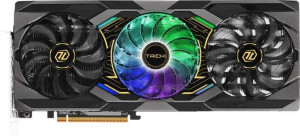
ASRock Radeon RX 9070 XT Taichi OC
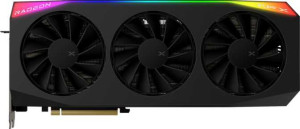
XFX Mercury Radeon RX 9070 XT OC Gaming Edition

ASRock Radeon RX 9070 XT Taichi OC XFX Mercury Radeon RX 9070 XT OC Gaming Edition

Overview

Welcome to our detailed spec comparison between the ASRock Radeon RX 9070 XT Taichi OC and the XFX Mercury Radeon RX 9070 XT OC Gaming Edition. Both cards share the same RDNA 4.0 architecture and identical core performance figures, making the real battle come down to subtler distinctions. In this comparison, we examine their memory bandwidth and physical dimensions to help you decide which card is the better fit for your build.

Common Features

  • Both cards have a base GPU clock speed of 1870 MHz.
  • Both cards have a GPU turbo speed of 3100 MHz.
  • Both cards deliver a pixel rate of 396.8 GPixel/s.
  • Both cards offer 50.79 TFLOPS of floating-point performance.
  • Both cards have a texture rate of 793.6 GTexels/s.
  • Both cards have a GPU memory speed of 2518 MHz.
  • Both cards feature 4096 shading units.
  • Both cards include 256 texture mapping units (TMUs).
  • Both cards have an effective memory speed of 20000 MHz.
  • Both cards come with 16GB of VRAM.
  • Both cards use GDDR6 memory.
  • Both cards have a 256-bit memory bus width.
  • ECC memory is supported on both cards.
  • Both cards support DirectX 12 Ultimate.
  • Both cards support OpenGL version 4.6.
  • Both cards support OpenCL version 2.2.
  • Multi-display technology is supported on both cards.
  • Ray tracing is supported on both cards.
  • 3D support is available on both cards.
  • DLSS is not supported on either card.
  • FSR4 is available on both cards.
  • Both cards have one HDMI 2.1b output.
  • Both cards include three DisplayPort outputs.
  • Neither card has USB-C ports.
  • Neither card has DVI outputs.
  • Neither card has mini DisplayPort outputs.
  • Both cards are based on the RDNA 4.0 GPU architecture.
  • Both cards have a Thermal Design Power (TDP) of 304W.
  • Both cards use PCIe version 5.
  • Both cards are built on a 4 nm semiconductor process.
  • Both cards contain 53900 million transistors.
  • Neither card features air-water cooling.

Main Differences

  • Maximum memory bandwidth is 644.6 GB/s on ASRock Radeon RX 9070 XT Taichi OC and 640 GB/s on XFX Mercury Radeon RX 9070 XT OC Gaming Edition.
  • Width is 330 mm on ASRock Radeon RX 9070 XT Taichi OC and 360 mm on XFX Mercury Radeon RX 9070 XT OC Gaming Edition.
  • Height is 140 mm on ASRock Radeon RX 9070 XT Taichi OC and 155 mm on XFX Mercury Radeon RX 9070 XT OC Gaming Edition.
Specs Comparison
ASRock Radeon RX 9070 XT Taichi OC

ASRock Radeon RX 9070 XT Taichi OC

XFX Mercury Radeon RX 9070 XT OC Gaming Edition

XFX Mercury Radeon RX 9070 XT OC Gaming Edition

Performance:
GPU clock speed 1870 MHz 1870 MHz
GPU turbo 3100 MHz 3100 MHz
pixel rate 396.8 GPixel/s 396.8 GPixel/s
floating-point performance 50.79 TFLOPS 50.79 TFLOPS
texture rate 793.6 GTexels/s 793.6 GTexels/s
GPU memory speed 2518 MHz 2518 MHz
shading units 4096 4096
texture mapping units (TMUs) 256 256
render output units (ROPs) 128 128
Has Double Precision Floating Point (DPFP)

In terms of raw GPU performance, the ASRock Radeon RX 9070 XT Taichi OC and the XFX Mercury Radeon RX 9070 XT OC Gaming Edition are built on identical silicon configurations. Both cards share a base clock of 1870 MHz and a boost clock of 3100 MHz, meaning neither has a frequency advantage out of the box. They also feature the same 4096 shading units, 256 TMUs, and 128 ROPs — the full AMD RDNA 4 compute block with no cuts or binning differences between them.

The throughput figures flow directly from those shared specs: both deliver 50.79 TFLOPS of floating-point performance, a texture rate of 793.6 GTexels/s, and a pixel fill rate of 396.8 GPixel/s. Memory bandwidth is also matched, with both running at 2518 MHz on the GDDR6 side. In practice, this means users can expect identical frame rates, rasterization throughput, and shader workload handling across both cards in real gaming and compute scenarios — the GPU engine is, for all measurable purposes, the same.

Both cards also support Double Precision Floating Point (DPFP), which matters for compute-oriented workloads like scientific simulations or certain AI inference tasks, though it is rarely a differentiator in consumer gaming. The verdict for this group is a clear tie: every single performance metric is identical. Any real-world performance difference between these two cards would have to come from cooling efficiency, power delivery stability, or factory overclocking headroom — none of which are captured in these specs.
Memory:
effective memory speed 20000 MHz 20000 MHz
maximum memory bandwidth 644.6 GB/s 640 GB/s
VRAM 16GB 16GB
GDDR version GDDR6 GDDR6
memory bus width 256-bit 256-bit
Supports ECC memory

The memory configurations of these two cards are nearly identical on paper, and for most specs that matters greatly — both feature 16GB of GDDR6 across a 256-bit bus at an effective speed of 20000 MHz. That combination is well-suited for high-resolution gaming and memory-intensive workloads like 4K textures or large modding environments, where VRAM capacity and bus width directly determine whether assets stall or stream smoothly.

The one measurable difference surfaces in maximum memory bandwidth: the ASRock Taichi OC is rated at 644.6 GB/s, while the XFX Mercury comes in at 640 GB/s — a gap of roughly 4.6 GB/s, or less than 1%. In theory, higher bandwidth means the GPU can feed its shader array more data per second, which benefits bandwidth-bound workloads. In practice, a sub-1% difference is firmly within the noise floor of real-world benchmarks and would not be perceptible in gaming or typical compute tasks.

Both cards also support ECC memory, which adds error-correction capability useful in professional or compute contexts where data integrity is critical — a feature not always present on consumer GPUs. On balance, the memory group is effectively a tie: the ASRock Taichi OC holds a technically higher bandwidth figure, but the margin is too slim to constitute a meaningful real-world advantage.

Features:
DirectX version DirectX 12 Ultimate DirectX 12 Ultimate
OpenGL version 4.6 4.6
OpenCL version 2.2 2.2
Supports multi-display technology
supports ray tracing
Supports 3D
supports DLSS
has FSR4
has XeSS (XMX)
AMD SAM / Intel Resizable BAR AMD SAM AMD SAM
has LHR
has RGB lighting
supported displays 4 4

Feature parity is total here — every capability listed for the ASRock Taichi OC is matched exactly by the XFX Mercury. Both support DirectX 12 Ultimate, which is the current ceiling for gaming API support and unlocks hardware-accelerated ray tracing, mesh shaders, and variable-rate shading in compatible titles. Ray tracing support is confirmed for both, meaning neither card cuts corners on the modern rendering pipeline that an increasing number of AAA games now rely on.

On the upscaling front, both cards carry FSR4 — AMD's latest spatial and machine-learning-based upscaling technology — while neither supports DLSS (an NVIDIA-exclusive feature) or XeSS via XMX (Intel-exclusive matrix hardware). For buyers coming from an NVIDIA card who rely heavily on DLSS, this is worth noting, though FSR4 operates across a wide range of hardware and titles. Both cards also support AMD SAM (Smart Access Memory), which allows a compatible AMD CPU to access the full GPU framebuffer, providing a measurable performance uplift in SAM-enabled systems.

Multi-display users will find that both cards top out at 4 simultaneous displays, and RGB lighting is present on both — relevant for aesthetics-focused builds. With no differentiating feature on either side, this group is a definitive tie: a buyer choosing between these two cards gains or loses nothing in terms of software capabilities, API support, or display functionality.

Ports:
has an HDMI output
HDMI ports 1 1
HDMI version HDMI 2.1b HDMI 2.1b
DisplayPort outputs 3 3
USB-C ports 0 0
DVI outputs 0 0
mini DisplayPort outputs 0 0

Both the ASRock Taichi OC and the XFX Mercury offer an identical port layout: 3 DisplayPort outputs and 1 HDMI port, totaling four display connections — matching the four-display maximum noted in their feature specs. The HDMI implementation is HDMI 2.1b on both cards, which supports up to 10K resolution, 4K at 144Hz, and 8K at 60Hz, making it fully capable of driving the most demanding consumer displays and TVs available today.

The absence of USB-C and legacy DVI outputs is worth acknowledging. No USB-C means users who prefer a single-cable connection to a USB-C or Thunderbolt-compatible monitor will need an active adapter. DVI's omission is effectively irrelevant in 2025 — that connector is long obsolete. The three DisplayPort outputs are the workhorses here, ideal for high-refresh-rate gaming monitors and multi-monitor productivity setups alike.

There is nothing to separate these two cards on connectivity — every port type, count, and version is a perfect match. This group is a tie, and port selection should play no role in choosing between them.

General info:
GPU architecture RDNA 4.0 RDNA 4.0
release date March 2025 March 2025
Thermal Design Power (TDP) 304W 304W
PCI Express (PCIe) version 5 5
semiconductor size 4 nm 4 nm
number of transistors 53900 million 53900 million
Has air-water cooling
width 330 mm 360 mm
height 140 mm 155 mm

At the silicon level, these two cards are cut from the same cloth — both are built on AMD's RDNA 4.0 architecture using a 4nm process node with 53.9 billion transistors, and both carry a 304W TDP. That power figure is substantial and should be factored into PSU planning; a quality 750W or higher unit is advisable. PCIe 5.0 support future-proofs the interface for upcoming motherboard generations, though both cards are fully backward compatible with PCIe 4.0 and 3.0 slots.

Where these cards finally diverge in a tangible way is physical size. The ASRock Taichi OC measures 330mm × 140mm, while the XFX Mercury is notably larger at 360mm × 155mm — that is 30mm longer and 15mm taller. For builders working with compact or mid-tower cases, this is a meaningful difference. The Taichi OC's smaller footprint makes it the more accommodating option for tighter builds, whereas the Mercury's larger dimensions suggest a bigger cooler array, though whether that translates to quieter or more efficient thermal performance cannot be determined from these specs alone.

Neither card uses liquid cooling, so both rely entirely on air cooling solutions. Given the shared 304W TDP, the XFX Mercury's larger heatsink surface area could theoretically handle thermals with more headroom, but that remains outside what the data confirms. On the basis of these specs, the ASRock Taichi OC holds a practical edge for case compatibility, while the XFX Mercury may suit builders with full-tower setups who prioritize a larger cooling footprint.

Comparison Summary & Verdict

After a thorough review of the specifications, the ASRock Radeon RX 9070 XT Taichi OC and the XFX Mercury Radeon RX 9070 XT OC Gaming Edition are remarkably well-matched cards. They share identical GPU clocks, floating-point performance, VRAM capacity, feature sets, and port configurations. The ASRock edges ahead with a slightly higher maximum memory bandwidth of 644.6 GB/s versus 640 GB/s, and it is notably more compact at 330 mm wide and 140 mm tall, compared to the XFX at 360 mm wide and 155 mm tall. The XFX is the better pick for builders who have a full-size case and no space concerns, while the ASRock is the smarter choice for those working with tighter builds or who want every last drop of memory bandwidth.

ASRock Radeon RX 9070 XT Taichi OC
Buy ASRock Radeon RX 9070 XT Taichi OC if...

Buy the ASRock Radeon RX 9070 XT Taichi OC if you want a more compact card with a slightly higher maximum memory bandwidth of 644.6 GB/s and need it to fit in a smaller or more space-constrained case.

XFX Mercury Radeon RX 9070 XT OC Gaming Edition
Buy XFX Mercury Radeon RX 9070 XT OC Gaming Edition if...

Buy the XFX Mercury Radeon RX 9070 XT OC Gaming Edition if case clearance is not a concern and you are comfortable with its larger 360 mm x 155 mm footprint alongside its otherwise equivalent performance.