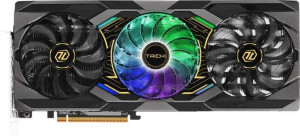
ASRock Radeon RX 9070 XT Taichi OC
Zotac Gaming GeForce RTX 5070 Ti Solid

ASRock Radeon RX 9070 XT Taichi OC Zotac Gaming GeForce RTX 5070 Ti Solid

Overview

Welcome to our in-depth specification comparison between the ASRock Radeon RX 9070 XT Taichi OC and the Zotac Gaming GeForce RTX 5070 Ti Solid — two high-performance graphics cards built on competing architectures and targeting enthusiast-level gaming. In this head-to-head, we examine key battlegrounds including raw compute performance, memory technology, feature support, and overall design to help you determine which card best suits your needs.

Common Features

  • Both cards support Double Precision Floating Point (DPFP).
  • Both cards come with 16GB of VRAM.
  • Both cards use a 256-bit memory bus width.
  • ECC memory support is available on both products.
  • Both cards support DirectX 12 Ultimate.
  • Both cards support OpenGL version 4.6.
  • Multi-display technology is supported on both products.
  • Ray tracing support is available on both products.
  • 3D support is available on both products.
  • XeSS (XMX) support is not available on either product.
  • LHR is not present on either product.
  • RGB lighting is available on both products.
  • Both cards include one HDMI output.
  • Both cards use HDMI version 2.1b.
  • Both cards feature three DisplayPort outputs.
  • Neither card has USB-C ports.
  • Neither card has DVI outputs.
  • Neither card has mini DisplayPort outputs.
  • Both cards use PCI Express version 5.
  • Air-water cooling is not available on either product.

Main Differences

  • GPU base clock speed is 1870 MHz on ASRock Radeon RX 9070 XT Taichi OC and 2295 MHz on Zotac Gaming GeForce RTX 5070 Ti Solid.
  • GPU turbo clock is 3100 MHz on ASRock Radeon RX 9070 XT Taichi OC and 2452 MHz on Zotac Gaming GeForce RTX 5070 Ti Solid.
  • Pixel rate is 396.8 GPixel/s on ASRock Radeon RX 9070 XT Taichi OC and 235.4 GPixel/s on Zotac Gaming GeForce RTX 5070 Ti Solid.
  • Floating-point performance is 50.79 TFLOPS on ASRock Radeon RX 9070 XT Taichi OC and 43.94 TFLOPS on Zotac Gaming GeForce RTX 5070 Ti Solid.
  • Texture rate is 793.6 GTexels/s on ASRock Radeon RX 9070 XT Taichi OC and 686.6 GTexels/s on Zotac Gaming GeForce RTX 5070 Ti Solid.
  • GPU memory speed is 2518 MHz on ASRock Radeon RX 9070 XT Taichi OC and 1750 MHz on Zotac Gaming GeForce RTX 5070 Ti Solid.
  • Shading units number 4096 on ASRock Radeon RX 9070 XT Taichi OC and 8960 on Zotac Gaming GeForce RTX 5070 Ti Solid.
  • Texture mapping units (TMUs) total 256 on ASRock Radeon RX 9070 XT Taichi OC and 280 on Zotac Gaming GeForce RTX 5070 Ti Solid.
  • Render output units (ROPs) number 128 on ASRock Radeon RX 9070 XT Taichi OC and 96 on Zotac Gaming GeForce RTX 5070 Ti Solid.
  • Effective memory speed is 20000 MHz on ASRock Radeon RX 9070 XT Taichi OC and 28000 MHz on Zotac Gaming GeForce RTX 5070 Ti Solid.
  • Maximum memory bandwidth is 644.6 GB/s on ASRock Radeon RX 9070 XT Taichi OC and 896 GB/s on Zotac Gaming GeForce RTX 5070 Ti Solid.
  • The ASRock Radeon RX 9070 XT Taichi OC uses GDDR6 memory, while the Zotac Gaming GeForce RTX 5070 Ti Solid uses GDDR7.
  • OpenCL version is 2.2 on ASRock Radeon RX 9070 XT Taichi OC and 3 on Zotac Gaming GeForce RTX 5070 Ti Solid.
  • DLSS support is present on Zotac Gaming GeForce RTX 5070 Ti Solid but not available on ASRock Radeon RX 9070 XT Taichi OC.
  • The ASRock Radeon RX 9070 XT Taichi OC uses AMD SAM, while the Zotac Gaming GeForce RTX 5070 Ti Solid uses Intel Resizable BAR.
  • GPU architecture is RDNA 4.0 on ASRock Radeon RX 9070 XT Taichi OC and Blackwell on Zotac Gaming GeForce RTX 5070 Ti Solid.
  • Thermal Design Power (TDP) is 304W on ASRock Radeon RX 9070 XT Taichi OC and 300W on Zotac Gaming GeForce RTX 5070 Ti Solid.
  • Semiconductor size is 4 nm on ASRock Radeon RX 9070 XT Taichi OC and 5 nm on Zotac Gaming GeForce RTX 5070 Ti Solid.
  • Transistor count is 53900 million on ASRock Radeon RX 9070 XT Taichi OC and 45600 million on Zotac Gaming GeForce RTX 5070 Ti Solid.
  • Card width is 330 mm on ASRock Radeon RX 9070 XT Taichi OC and 329.7 mm on Zotac Gaming GeForce RTX 5070 Ti Solid, and height is 140 mm versus 137.8 mm respectively.
Specs Comparison
ASRock Radeon RX 9070 XT Taichi OC

ASRock Radeon RX 9070 XT Taichi OC

Zotac Gaming GeForce RTX 5070 Ti Solid

Zotac Gaming GeForce RTX 5070 Ti Solid

Performance:
GPU clock speed 1870 MHz 2295 MHz
GPU turbo 3100 MHz 2452 MHz
pixel rate 396.8 GPixel/s 235.4 GPixel/s
floating-point performance 50.79 TFLOPS 43.94 TFLOPS
texture rate 793.6 GTexels/s 686.6 GTexels/s
GPU memory speed 2518 MHz 1750 MHz
shading units 4096 8960
texture mapping units (TMUs) 256 280
render output units (ROPs) 128 96
Has Double Precision Floating Point (DPFP)

The most striking contrast between these two cards lies in how they achieve their peak performance. The ASRock RX 9070 XT Taichi operates with an aggressive boost strategy, leaping from a modest 1870 MHz base all the way to 3100 MHz at turbo — a swing of over 1,200 MHz. The Zotac RTX 5070 Ti Solid, by contrast, runs a much tighter range from 2295 MHz to just 2452 MHz. In practice, the Taichi's architecture is designed to scale hard under sustained load, while the 5070 Ti delivers a more consistent, predictable clock profile that stays close to its base frequency.

On raw throughput metrics, the RX 9070 XT Taichi holds a meaningful lead across the board. Its 50.79 TFLOPS of floating-point performance outpaces the 5070 Ti's 43.94 TFLOPS — a ~16% advantage that translates to faster shader-heavy workloads. Its pixel rate of 396.8 GPixel/s versus 235.4 GPixel/s, and texture rate of 793.6 GTexels/s versus 686.6 GTexels/s, reinforce this lead in rasterization-bound scenarios. The Taichi also benefits from a significantly faster memory bus at 2518 MHz versus 1750 MHz, which reduces memory bandwidth bottlenecks in texture-heavy or high-resolution workloads. The one area where the 5070 Ti pulls ahead structurally is shading unit count — 8960 versus 4096 — but given that its TFLOPS figure is still lower, those units operate at substantially lower clock rates, limiting their realized throughput.

Based strictly on these specs, the RX 9070 XT Taichi OC holds a clear performance edge in computed throughput, pixel fill rate, texture throughput, and memory speed. The 5070 Ti's higher shading unit count does not overcome its lower clocks in terms of actual compute output as measured by TFLOPS. Both cards support Double Precision Floating Point, making that a non-differentiator. For users prioritizing raw rasterization and compute performance from these specs alone, the Taichi presents the stronger numbers.
Memory:
effective memory speed 20000 MHz 28000 MHz
maximum memory bandwidth 644.6 GB/s 896 GB/s
VRAM 16GB 16GB
GDDR version GDDR6 GDDR7
memory bus width 256-bit 256-bit
Supports ECC memory

Both cards ship with 16GB of VRAM over a 256-bit bus, so neither has a capacity or bus-width advantage — a tie that matters for VRAM-hungry workloads like high-resolution textures or large AI inference tasks. Where they diverge sharply is memory technology: the RX 9070 XT Taichi uses GDDR6, while the RTX 5070 Ti Solid steps up to GDDR7. That generational difference is the root cause of everything else that separates them in this category.

The real-world gap surfaces in bandwidth. The 5070 Ti's GDDR7 delivers an effective memory speed of 28000 MHz versus 20000 MHz on the Taichi — a 40% clock advantage that compounds into a substantial bandwidth lead: 896 GB/s against 644.6 GB/s. In practice, higher memory bandwidth reduces the likelihood of the GPU stalling while waiting for texture data, frame buffers, or intermediate render targets to be fetched. This matters most at 4K, in bandwidth-intensive effects like ray tracing, or in compute workloads that stream large datasets. Both cards support ECC memory, a feature more relevant to professional and compute use cases than gaming.

On memory specs alone, the Zotac RTX 5070 Ti Solid holds a clear edge. The GDDR7 advantage translates directly into ~39% more peak memory bandwidth — a gap large enough to influence real workloads, not just benchmarks. The Taichi matches it on capacity and bus width, but the 5070 Ti's faster memory subsystem gives it more headroom in scenarios where bandwidth is the limiting factor.

Features:
DirectX version DirectX 12 Ultimate DirectX 12 Ultimate
OpenGL version 4.6 4.6
OpenCL version 2.2 3
Supports multi-display technology
supports ray tracing
Supports 3D
supports DLSS
has XeSS (XMX)
AMD SAM / Intel Resizable BAR AMD SAM Intel Resizable BAR
has LHR
has RGB lighting
supported displays 4 4

Much of this feature set is shared ground: both cards run DirectX 12 Ultimate, OpenGL 4.6, support ray tracing, multi-display output up to 4 screens, and include RGB lighting. For most users, these overlapping capabilities mean the day-to-day gaming and display feature experience will be largely equivalent. The one API difference worth noting is OpenCL — the 5070 Ti supports OpenCL 3 versus OpenCL 2.2 on the Taichi, which could matter in GPU-accelerated compute tasks that target the newer standard, though this is a niche consideration for typical gaming use.

The most consequential differentiator in this group is DLSS support. The RTX 5070 Ti Solid supports it; the RX 9070 XT Taichi does not — and cannot, as DLSS is an Nvidia-exclusive upscaling technology. In supported games, DLSS allows the GPU to render at a lower internal resolution and reconstruct a higher-quality image using AI, delivering a significant framerate boost with minimal visual trade-off. For gamers who heavily target DLSS-supported titles, this is a tangible, real-world advantage that no driver update or firmware change can bring to the Taichi.

On balance, the Zotac RTX 5070 Ti Solid holds the edge in this group, and DLSS is the deciding factor. The Taichi's AMD SAM support is its platform-specific equivalent to Resizable BAR and does not constitute a broader feature advantage. Strip away DLSS, and the two cards are effectively matched on features — but DLSS is too widely supported in modern titles to dismiss as marginal.

Ports:
has an HDMI output
HDMI ports 1 1
HDMI version HDMI 2.1b HDMI 2.1b
DisplayPort outputs 3 3
USB-C ports 0 0
DVI outputs 0 0
mini DisplayPort outputs 0 0

This is a straightforward category: the two cards are identical in every port specification. Both offer 1 HDMI 2.1b port and 3 DisplayPort outputs, with no USB-C, DVI, or mini-DisplayPort connections on either. That configuration supports up to four simultaneous displays, which aligns with the multi-display capability noted in their feature specs.

The shared HDMI 2.1b standard is worth highlighting as a practical positive for both cards — it supports 4K at high refresh rates and 8K output, making either card a capable pairing for modern high-end monitors and TVs without requiring an adapter. The trio of DisplayPort outputs similarly ensures flexibility for multi-monitor desktop setups using standard PC displays.

This group is a complete tie. There is no port configuration advantage on either side, and connector selection should have zero influence on a purchase decision between these two cards.

General info:
GPU architecture RDNA 4.0 Blackwell
release date March 2025 February 2025
Thermal Design Power (TDP) 304W 300W
PCI Express (PCIe) version 5 5
semiconductor size 4 nm 5 nm
number of transistors 53900 million 45600 million
Has air-water cooling
width 330 mm 329.7 mm
height 140 mm 137.8 mm

Under the hood, these cards come from different architectural generations and different fabrication strategies. The RX 9070 XT Taichi is built on AMD's RDNA 4.0 architecture using a 4 nm process with 53.9 billion transistors, while the RTX 5070 Ti Solid is based on Nvidia's Blackwell architecture on a 5 nm node with 45.6 billion transistors. The Taichi's denser process node allows more transistors to be packed into a comparable die area, which generally contributes to improved power efficiency and performance-per-watt at equivalent thermal budgets.

Despite their architectural differences, the two cards land in virtually the same thermal envelope: 304W TDP for the Taichi versus 300W for the 5070 Ti Solid. For builders, this means both cards impose essentially the same demands on power supply headroom and case airflow. Physical dimensions are equally matched — both measure around 330 mm in length and roughly 138–140 mm in height, so slot compatibility and clearance requirements will be near-identical across most mid-tower and full-tower cases. Both also use PCIe 5.0, ensuring neither is bottlenecked on current-generation motherboards.

In this group, the RX 9070 XT Taichi holds a modest structural edge by virtue of its more advanced 4 nm process node and higher transistor count — both indicators of a more silicon-dense design. However, the near-identical TDP and physical footprint mean the practical build-and-cooling experience will be essentially the same for either card. The architectural difference is more relevant as a foundation for the performance and efficiency figures seen in other spec groups than as a standalone purchase factor here.

Comparison Summary & Verdict

After examining all the data, both cards occupy a similar market tier but serve subtly different audiences. The ASRock Radeon RX 9070 XT Taichi OC stands out with a higher turbo clock of 3100 MHz, superior pixel and texture rates, more transistors at 53,900 million, and a cutting-edge 4 nm process node — making it a compelling choice for raw rasterization throughput. The Zotac Gaming GeForce RTX 5070 Ti Solid counters with a significantly larger shader count of 8960 units, faster GDDR7 memory delivering 896 GB/s of bandwidth, and exclusive DLSS support — advantages that benefit AI-accelerated rendering and memory-intensive workloads. Both share 16 GB VRAM, identical port configurations, and ray tracing support, making the decision come down to workload priorities rather than a clear-cut winner.

ASRock Radeon RX 9070 XT Taichi OC
Buy ASRock Radeon RX 9070 XT Taichi OC if...

Buy the ASRock Radeon RX 9070 XT Taichi OC if you prioritize higher turbo clock speeds, superior pixel and texture fill rates, and a more advanced 4 nm manufacturing process for strong rasterization performance.

Zotac Gaming GeForce RTX 5070 Ti Solid
Buy Zotac Gaming GeForce RTX 5070 Ti Solid if...

Buy the Zotac Gaming GeForce RTX 5070 Ti Solid if you want faster GDDR7 memory with greater bandwidth, a significantly higher shader unit count, and exclusive DLSS support for AI-powered upscaling.