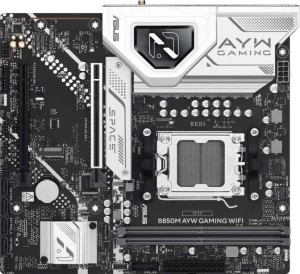
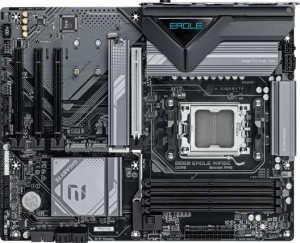
Internal connectivity is largely mirrored between these two boards — both provide 4 SATA 3 connectors, identical internal USB expansion headers, and no legacy SATA 2 or U.2 sockets. Where the Gigabyte B850 Eagle WiFi6E pulls ahead is in three specific areas that compound in importance for more demanding builds. It offers 3 M.2 sockets versus the Asus B850M AYW Gaming Wi-Fi's 2, meaning users can run an additional NVMe drive without sacrificing any SATA ports — a tangible advantage for content creators or anyone building a high-capacity storage array.
Fan and cooling management is another point of separation. The Gigabyte's 6 fan headers versus the Asus's 4 gives builders significantly more flexibility for direct-from-board control of case fans, radiator pumps, and CPU coolers — reducing reliance on external fan hubs and keeping cable management cleaner. The Gigabyte also includes a TPM connector, which the Asus lacks entirely. While TPM functionality is often handled by firmware on modern platforms, a dedicated header is relevant for enterprise users, those running specific security configurations, or builds requiring a discrete TPM module for compliance reasons.
Taken together, the Gigabyte B850 Eagle WiFi6E holds a clear advantage in this group. The extra M.2 slot, additional fan headers, and TPM connector collectively serve builders who plan more complex or expandable systems, while the Asus offers a more constrained internal layout that suits straightforward, no-frills configurations.