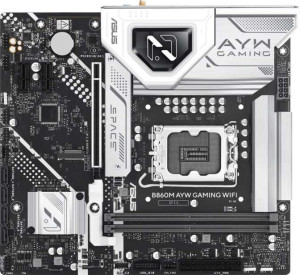
Asus B860M AYW Gaming WiFi
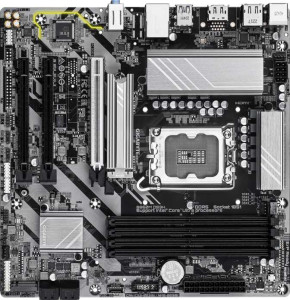
Gigabyte B860M DS3H

Asus B860M AYW Gaming WiFi Gigabyte B860M DS3H

Overview

Welcome to our in-depth spec comparison between the Asus B860M AYW Gaming WiFi and the Gigabyte B860M DS3H, two Micro-ATX motherboards built on the B860 chipset for LGA 1851 processors. While they share a solid common foundation, these two boards take notably different approaches to memory capacity and expansion, wireless connectivity, and PCIe slot generation, making the choice between them far from straightforward.

Common Features

  • Both motherboards use the LGA 1851 CPU socket.
  • Both motherboards are based on the B860 chipset.
  • Both motherboards use the Micro-ATX form factor.
  • Both motherboards support HDMI 2.1.
  • Both motherboards support overclocking.
  • Both motherboards feature dual BIOS.
  • Neither motherboard has integrated graphics.
  • Both motherboards have 1 CPU socket.
  • Both motherboards support DDR5 memory.
  • Both motherboards have 2 memory channels.
  • Neither motherboard supports ECC memory.
  • Both motherboards have 1 USB 3.2 Gen 2 port (USB-A).
  • Both motherboards have 2 USB 3.2 Gen 1 ports (USB-A).
  • Neither motherboard has USB 3.2 Gen 2 ports (USB-C).
  • Neither motherboard has USB 3.2 Gen 1 ports (USB-C).
  • Both motherboards have 3 USB 2.0 ports.
  • Neither motherboard has USB 3.2 Gen 2x2, USB 4 40Gbps, or USB 4 20Gbps ports.
  • Both motherboards have 2 USB 3.2 Gen 1 ports through expansion and 4 USB 2.0 ports through expansion.
  • Both motherboards have 4 SATA 3 connectors and 2 M.2 sockets.
  • Both motherboards include a TPM connector.
  • Neither motherboard has an mSATA connector or U.2 sockets.
  • Both motherboards have 2 PCIe x1 slots and no PCI, PCIe 2.0 x16, PCIe 3.0 x16, PCIe x4, or PCIe x8 slots.
  • Both motherboards support 7.1 audio channels with 3 audio connectors.
  • Neither motherboard has an S/PDIF Out port.
  • Both motherboards support RAID 0, RAID 1, RAID 5, and RAID 10, but neither supports RAID 0+1.

Main Differences

  • Wi-Fi support is present on the Asus B860M AYW Gaming WiFi but not available on the Gigabyte B860M DS3H.
  • Bluetooth support is present on the Asus B860M AYW Gaming WiFi but not available on the Gigabyte B860M DS3H.
  • RGB lighting is present on the Asus B860M AYW Gaming WiFi but not available on the Gigabyte B860M DS3H.
  • Easy BIOS reset is supported on the Asus B860M AYW Gaming WiFi but not on the Gigabyte B860M DS3H.
  • The height is 222 mm on the Asus B860M AYW Gaming WiFi and 244 mm on the Gigabyte B860M DS3H.
  • Maximum memory capacity is 128 GB on the Asus B860M AYW Gaming WiFi and 256 GB on the Gigabyte B860M DS3H.
  • Maximum overclocked RAM speed is 8800 MHz on the Asus B860M AYW Gaming WiFi and 9066 MHz on the Gigabyte B860M DS3H.
  • Memory slots number 2 on the Asus B860M AYW Gaming WiFi and 4 on the Gigabyte B860M DS3H.
  • DisplayPort outputs number 0 on the Asus B860M AYW Gaming WiFi and 1 on the Gigabyte B860M DS3H.
  • PS/2 ports number 0 on the Asus B860M AYW Gaming WiFi and 1 on the Gigabyte B860M DS3H.
  • Fan headers number 3 on the Asus B860M AYW Gaming WiFi and 4 on the Gigabyte B860M DS3H.
  • The Asus B860M AYW Gaming WiFi has 1 PCIe 4.0 x16 slot while the Gigabyte B860M DS3H has none.
  • The Gigabyte B860M DS3H has 1 PCIe 5.0 x16 slot while the Asus B860M AYW Gaming WiFi has none.
Specs Comparison
Asus B860M AYW Gaming WiFi

Asus B860M AYW Gaming WiFi

Gigabyte B860M DS3H

Gigabyte B860M DS3H

General info:
CPU socket LGA 1851 LGA 1851
chipset B860 B860
form factor Micro-ATX Micro-ATX
release date January 2025 January 2025
supports Wi-Fi
Has Bluetooth
HDMI version HDMI 2.1 HDMI 2.1
Easy to overclock
has RGB lighting
Easy to reset BIOS
Has dual BIOS
CPU sockets 1 1
Has integrated graphics
warranty period 3 years 3 years
height 222 mm 244 mm
width 244 mm 244 mm
Has integrated CPU

Both boards share the same fundamental platform: the LGA 1851 socket, B860 chipset, and Micro-ATX form factor, meaning they target the same generation of Intel processors with a mid-range feature set. They also match on HDMI 2.1 output, dual BIOS protection, a 3-year warranty, and the same 244 mm width — so the baseline platform experience is identical for buyers who only care about core compatibility.

The clearest differentiator is wireless connectivity. The Asus B860M AYW Gaming WiFi includes built-in Wi-Fi and Bluetooth, while the Gigabyte B860M DS3H has neither. In practice, this means DS3H buyers who want wireless will need to budget for an add-in card or USB adapter. The AYW also has RGB lighting and an easy BIOS reset mechanism — small but real quality-of-life advantages, especially during initial system builds or troubleshooting. Physically, the AYW is notably shorter at 222 mm versus the DS3H's 244 mm (square), which could matter in tighter Micro-ATX cases with limited vertical clearance.

For this spec group, the Asus B860M AYW Gaming WiFi has a clear overall edge: it delivers everything the DS3H offers and adds wireless connectivity, easier BIOS management, RGB aesthetics, and a more compact footprint — all without sacrificing platform parity. The DS3H makes sense only if wireless is irrelevant and budget is the primary concern.

Memory:
maximum memory amount 128GB 256GB
overclocked RAM speed 8800 MHz 9066 MHz
memory slots 2 4
DDR memory version 5 5
memory channels 2 2
Supports ECC memory

The Asus B860M AYW Gaming WiFi and the Gigabyte B860M DS3H differ significantly in their memory specifications. The Asus motherboard supports a maximum memory capacity of 128GB, whereas the Gigabyte model can handle up to 256GB of memory, offering a notably higher maximum limit.

In terms of overclocked RAM speed, the Asus B860M AYW Gaming WiFi supports speeds up to 8800 MHz, while the Gigabyte B860M DS3H can reach a higher 9066 MHz, allowing for faster potential memory performance. The Asus board has 2 memory slots, compared to the Gigabyte's 4 memory slots, providing more room for memory expansion on the Gigabyte model.

Both motherboards support DDR5 memory and have 2 memory channels, and neither supports ECC memory. These similarities ensure that both boards are well-suited for modern high-performance memory modules, but the Gigabyte model offers greater flexibility in terms of memory capacity and expansion options.

Ports:
USB 3.2 Gen 2 ports (USB-A) 1 1
USB 3.2 Gen 1 ports (USB-A) 2 2
USB 3.2 Gen 2 ports (USB-C) 0 0
USB 3.2 Gen 1 ports (USB-C) 0 0
USB 2.0 ports 3 3
USB 3.2 Gen 2x2 ports 0 0
USB 4 40Gbps ports 0 0
USB 4 20Gbps ports 0 0
Thunderbolt 4 ports 0 0
Thunderbolt 3 ports 0 0
has an HDMI output
DisplayPort outputs 0 1
RJ45 ports 1 1
Has USB Type-C
eSATA ports 0 0
DVI outputs 0 0
has a VGA connector
PS/2 ports 0 1

Both the Asus B860M AYW Gaming WiFi and the Gigabyte B860M DS3H offer similar sets of ports, with a few notable differences. Both motherboards have 1 USB 3.2 Gen 2 port (USB-A), 2 USB 3.2 Gen 1 ports (USB-A), and 3 USB 2.0 ports. Neither board features USB 3.2 Gen 2x2 ports, USB 4 40Gbps ports, or USB 4 20Gbps ports, and both lack Thunderbolt 3 and 4 ports.

Regarding video outputs, the Asus model includes an HDMI output, while the Gigabyte board also includes HDMI but adds a DisplayPort output. This gives the Gigabyte model a slight advantage in terms of video output options. Both motherboards have 1 RJ45 Ethernet port for wired networking, and neither includes a USB Type-C port.

There is a key distinction in legacy ports: the Gigabyte B860M DS3H offers a PS/2 port, which the Asus B860M AYW Gaming WiFi does not include. Additionally, both boards lack eSATA, DVI, and VGA connectors, focusing instead on modern video outputs like HDMI and DisplayPort on the Gigabyte board.

Connectors:
USB 3.2 Gen 1 ports (through expansion) 2 2
USB 2.0 ports (through expansion) 4 4
SATA 3 connectors 4 4
fan headers 3 4
USB 3.0 ports (through expansion) 2 2
M.2 sockets 2 2
Has TPM connector
U.2 sockets 0 0
Has mSATA connector
SATA 2 connectors 0 0

Both the Asus B860M AYW Gaming WiFi and the Gigabyte B860M DS3H offer similar connector options, but there are some differences. Both motherboards include 2 USB 3.2 Gen 1 ports (through expansion), 4 USB 2.0 ports (through expansion), and 2 USB 3.0 ports (through expansion), making their expansion capabilities very much alike. Both also feature 4 SATA 3 connectors and 2 M.2 sockets, ensuring strong support for modern storage devices.

In terms of fan headers, the Asus model includes 3 fan headers, while the Gigabyte board provides 4, offering one additional fan header for expanded cooling options. Both motherboards support TPM connectors and lack U.2 and mSATA connectors, and both feature 0 SATA 2 connectors.

Overall, the differences between these two motherboards in this group are minor, with the Gigabyte model providing one more fan header, while the rest of the connector features are the same across both products.

Expansion slots:
PCIe 4.0 x16 slots 1 0
PCIe 5.0 x16 slots 0 1
PCIe 3.0 x16 slots 0 0
PCIe x1 slots 2 2
PCI slots 0 0
PCIe 2.0 x16 slots 0 0
PCIe x4 slots 0 0
PCIe x8 slots 0 0

The Asus B860M AYW Gaming WiFi and the Gigabyte B860M DS3H differ in their PCIe slot configurations. The Asus model includes one PCIe 4.0 x16 slot and two PCIe x1 slots, while the Gigabyte model features one PCIe 5.0 x16 slot and also two PCIe x1 slots. This means that while both motherboards offer similar expansion capabilities for smaller PCIe cards, the Asus board supports PCIe 4.0 for its primary x16 slot, while the Gigabyte board uses the newer PCIe 5.0 standard for its x16 slot.

Neither motherboard includes PCI slots, PCIe 2.0 x16 slots, PCIe x4 slots, or PCIe x8 slots, so their expansion options in terms of legacy PCIe standards are non-existent. Both models support a single PCIe x16 slot, but the difference lies in the version of PCIe they support, with the Gigabyte board using the latest PCIe 5.0 technology.

Overall, the key difference between these two motherboards in terms of expansion slots is the PCIe 5.0 support on the Gigabyte model, while the Asus board utilizes PCIe 4.0 for its primary x16 slot.

Audio:
audio channels 7.1 7.1
Has S/PDIF Out port
audio connectors 3 3

The audio specifications for both the Asus B860M AYW Gaming WiFi and the Gigabyte B860M DS3H are identical. Both motherboards support 7.1 audio channels, ensuring immersive sound quality. Neither board features an S/PDIF Out port, and both offer 3 audio connectors for connecting speakers, headphones, or microphones.

There are no differences in the audio capabilities between these two models, with both providing the same number of channels and audio connectors. These specifications are suitable for most users seeking solid onboard audio performance.

In conclusion, the audio features of the Asus and Gigabyte motherboards match perfectly, offering identical audio channel support and connector options.

Storage:
Supports RAID 1
Supports RAID 10 (1+0)
Supports RAID 5
Supports RAID 0
Supports RAID 0+1

The Asus B860M AYW Gaming WiFi and the Gigabyte B860M DS3H both support the same RAID configurations. Both motherboards allow RAID 1, RAID 10 (1+0), RAID 5, and RAID 0. Neither of them supports RAID 0+1, so there are no differences between the two in terms of storage configuration options.

Both models provide robust storage capabilities with identical RAID support, allowing for flexible setups based on the user's needs for redundancy or performance.

In conclusion, there is no distinction in storage support between the Asus and Gigabyte motherboards, as both offer the same RAID options.

Comparison Summary & Verdict

Both boards deliver a reliable B860 Micro-ATX platform with DDR5 support, dual BIOS, and strong storage options, but their differences reveal two distinct target audiences. The Asus B860M AYW Gaming WiFi stands out with built-in Wi-Fi and Bluetooth, RGB lighting, an easier BIOS reset mechanism, and a more compact 222 mm height, making it the better pick for gaming builds and tidy, cable-free setups. The Gigabyte B860M DS3H, on the other hand, wins on raw expandability: it offers 4 memory slots supporting up to 256 GB of RAM at 9066 MHz, a faster PCIe 5.0 x16 slot, an extra fan header, a DisplayPort output, and a PS/2 port, making it the stronger choice for power users and workstation builders who prioritize headroom and future-proofing over wireless convenience.

Asus B860M AYW Gaming WiFi
Buy Asus B860M AYW Gaming WiFi if...

Buy the Asus B860M AYW Gaming WiFi if you want built-in Wi-Fi and Bluetooth for a wireless setup, and appreciate RGB lighting, a more compact board size, and easier BIOS reset functionality.

Gigabyte B860M DS3H
Buy Gigabyte B860M DS3H if...

Buy the Gigabyte B860M DS3H if you need maximum memory expandability with 4 slots and up to 256 GB of RAM, a faster PCIe 5.0 x16 slot, or an additional fan header and DisplayPort output.