Asus Dual GeForce RTX 5050 OC Edition
Colorful GeForce RTX 5050 Battle AX Duo

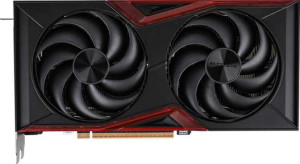
Asus Dual GeForce RTX 5050 OC Edition Colorful GeForce RTX 5050 Battle AX Duo

Overview

When choosing between two mid-range cards built on NVIDIA’s Blackwell architecture, the Asus Dual GeForce RTX 5050 OC Edition and the Colorful GeForce RTX 5050 Battle AX Duo present a fascinating matchup. Both deliver 8GB GDDR6 memory, a 130W TDP, ray tracing, and DLSS support, yet they diverge meaningfully on GPU turbo clocks, memory speed, and design features. Read on to see exactly where each card gains the upper hand.

Common Features

  • Both cards have a base GPU clock speed of 2317 MHz.
  • Both cards feature 2560 shading units.
  • Both cards have 80 texture mapping units (TMUs).
  • Both cards have 32 render output units (ROPs).
  • Double Precision Floating Point (DPFP) is supported on both cards.
  • Both cards have an effective memory speed of 20000 MHz.
  • Both cards offer a maximum memory bandwidth of 320 GB/s.
  • Both cards come with 8GB of VRAM.
  • Both cards use GDDR6 memory.
  • Both cards have a 128-bit memory bus width.
  • ECC memory is supported on both cards.
  • Both cards support DirectX 12 Ultimate.
  • Both cards support OpenGL version 4.6.
  • Both cards support OpenCL version 3.
  • Multi-display technology is supported on both cards.
  • Ray tracing is supported on both cards.
  • 3D support is available on both cards.
  • DLSS is supported on both cards.
  • XeSS (XMX) support is not available on either card.
  • Both cards have one HDMI output running HDMI version 2.1b.
  • Both cards have 3 DisplayPort outputs.
  • Neither card has USB-C ports, DVI outputs, or mini DisplayPort outputs.
  • Both cards are built on the Blackwell GPU architecture.
  • Both cards have a Thermal Design Power (TDP) of 130W.
  • Both cards use PCIe version 5.
  • Both cards are manufactured on a 5 nm semiconductor process.
  • Both cards feature 16900 million transistors.
  • Air-water cooling is not available on either card.

Main Differences

  • GPU turbo clock speed is 2677 MHz on Asus Dual GeForce RTX 5050 OC Edition and 2572 MHz on Colorful GeForce RTX 5050 Battle AX Duo.
  • Pixel rate is 85.66 GPixel/s on Asus Dual GeForce RTX 5050 OC Edition and 82.3 GPixel/s on Colorful GeForce RTX 5050 Battle AX Duo.
  • Floating-point performance is 13.71 TFLOPS on Asus Dual GeForce RTX 5050 OC Edition and 13.17 TFLOPS on Colorful GeForce RTX 5050 Battle AX Duo.
  • Texture rate is 214.2 GTexels/s on Asus Dual GeForce RTX 5050 OC Edition and 205.8 GTexels/s on Colorful GeForce RTX 5050 Battle AX Duo.
  • GPU memory speed is 1750 MHz on Asus Dual GeForce RTX 5050 OC Edition and 2500 MHz on Colorful GeForce RTX 5050 Battle AX Duo.
  • RGB lighting is present on Colorful GeForce RTX 5050 Battle AX Duo but not available on Asus Dual GeForce RTX 5050 OC Edition.
  • Card width is 203 mm on Asus Dual GeForce RTX 5050 OC Edition and 231 mm on Colorful GeForce RTX 5050 Battle AX Duo.
  • Card height is 120.2 mm on Asus Dual GeForce RTX 5050 OC Edition and 120 mm on Colorful GeForce RTX 5050 Battle AX Duo.
Specs Comparison
Asus Dual GeForce RTX 5050 OC Edition

Asus Dual GeForce RTX 5050 OC Edition

Colorful GeForce RTX 5050 Battle AX Duo

Colorful GeForce RTX 5050 Battle AX Duo

Performance:
GPU clock speed 2317 MHz 2317 MHz
GPU turbo 2677 MHz 2572 MHz
pixel rate 85.66 GPixel/s 82.3 GPixel/s
floating-point performance 13.71 TFLOPS 13.17 TFLOPS
texture rate 214.2 GTexels/s 205.8 GTexels/s
GPU memory speed 1750 MHz 2500 MHz
shading units 2560 2560
texture mapping units (TMUs) 80 80
render output units (ROPs) 32 32
Has Double Precision Floating Point (DPFP)

Both cards share an identical foundation: the same 2317 MHz base clock, 2560 shading units, 80 TMUs, and 32 ROPs, confirming they are built on the same GPU die with no architectural differences between them. Where they begin to diverge is in their boost behavior and memory subsystem. The Asus Dual OC Edition reaches a GPU turbo of 2677 MHz, compared to the Colorful Battle AX Duo's 2572 MHz — a roughly 4% advantage that flows directly into its compute and throughput figures: 13.71 TFLOPS versus 13.17 TFLOPS, and a texture rate of 214.2 GTexels/s versus 205.8 GTexels/s. In practice, this means the Asus sustains slightly higher shader and rasterization throughput under sustained workloads.

The more striking contrast is in memory clock speed. The Colorful card runs its VRAM at 2500 MHz, while the Asus operates at 1750 MHz — a substantial 43% difference. Faster memory speed improves bandwidth, which matters most in memory-bound scenarios: higher resolutions, larger textures, or bandwidth-hungry workloads. This could partially offset the Asus's compute lead depending on the specific use case.

Overall, neither card holds a clean sweep. The Asus Dual OC Edition has the edge in raw compute throughput thanks to its higher boost clock, making it the stronger choice for shader-intensive tasks. The Colorful Battle AX Duo counters with significantly faster memory speed, which benefits bandwidth-sensitive workloads. Users prioritizing peak GPU compute performance will lean toward the Asus, while those whose workloads stress memory bandwidth may find the Colorful's memory clock advantage more relevant.

Memory:
effective memory speed 20000 MHz 20000 MHz
maximum memory bandwidth 320 GB/s 320 GB/s
VRAM 8GB 8GB
GDDR version GDDR6 GDDR6
memory bus width 128-bit 128-bit
Supports ECC memory

Across every memory specification in this group, the two cards are in complete lockstep. Both carry 8GB of GDDR6 operating over a 128-bit bus, reaching an effective speed of 20000 MHz and delivering a maximum bandwidth of 320 GB/s. There is simply no differentiator to weigh here — the memory subsystem is functionally identical.

For context, 320 GB/s over a 128-bit interface is a competitive figure for this GPU tier, adequate for 1080p and capable at 1440p, though bandwidth-hungry tasks at higher resolutions will naturally feel the constraint of the narrower bus compared to higher-end cards. The GDDR6 standard is well-established and reliable, and ECC memory support on both cards is a notable inclusion — useful in workstation or compute scenarios where data integrity matters, though it has no bearing on gaming performance.

This group is an unambiguous tie. Neither the Asus Dual OC Edition nor the Colorful Battle AX Duo holds any advantage here; buyers can disregard memory specifications entirely as a decision factor between these two cards.

Features:
DirectX version DirectX 12 Ultimate DirectX 12 Ultimate
OpenGL version 4.6 4.6
OpenCL version 3 3
Supports multi-display technology
supports ray tracing
Supports 3D
supports DLSS
has XeSS (XMX)
AMD SAM / Intel Resizable BAR Intel Resizable BAR Intel Resizable BAR
has LHR
has RGB lighting
supported displays 4 4

From a software and API standpoint, these two cards are identical. Both support DirectX 12 Ultimate, ray tracing, and DLSS — the three most consequential feature checkboxes for modern PC gaming. DirectX 12 Ultimate ensures compatibility with the full suite of current rendering techniques, ray tracing enables hardware-accelerated lighting and shadow effects in supported titles, and DLSS provides AI-driven upscaling that can meaningfully recover frame rates at higher resolutions. Neither card supports XeSS, but that omission is immaterial given DLSS coverage on an NVIDIA GPU.

The only spec separating them in this group is RGB lighting: the Colorful Battle AX Duo includes it, the Asus Dual OC Edition does not. This has zero impact on rendering performance or feature compatibility — it is purely an aesthetic consideration for users building systems where visual presentation inside the case matters.

Functionally, this group is a tie on every meaningful feature. The sole differentiator, RGB lighting, favors the Colorful for aesthetics-focused builders, but anyone prioritizing features that affect actual workload capability will find no distinction between the two cards here.

Ports:
has an HDMI output
HDMI ports 1 1
HDMI version HDMI 2.1b HDMI 2.1b
DisplayPort outputs 3 3
USB-C ports 0 0
DVI outputs 0 0
mini DisplayPort outputs 0 0

Port selection is a clean mirror image between these two cards. Both offer 1 HDMI 2.1b and 3 DisplayPort outputs, totaling four physical connections — matching the four supported displays noted in their feature specs. No USB-C, DVI, or mini DisplayPort outputs are present on either card.

The quality of those ports matters as much as the count. HDMI 2.1b is the latest HDMI revision, supporting high refresh rates at 4K and beyond, along with features like Variable Refresh Rate (VRR) and Quick Frame Transport — relevant for users connecting to modern TVs or high-end monitors. Three full-size DisplayPort outputs offer flexibility for multi-monitor setups without requiring adapters, which is a practical advantage over cards that rely on mini DisplayPort.

This group is a definitive tie. The connectivity layout is identical in every respect, so neither the Asus Dual OC Edition nor the Colorful Battle AX Duo offers any advantage here. Display setup compatibility and multi-monitor potential are exactly equal between the two.

General info:
GPU architecture Blackwell Blackwell
release date June 2025 June 2025
Thermal Design Power (TDP) 130W 130W
PCI Express (PCIe) version 5 5
semiconductor size 5 nm 5 nm
number of transistors 16900 million 16900 million
Has air-water cooling
width 203 mm 231 mm
height 120.2 mm 120 mm

At their core, these two cards are built on identical silicon. Both use NVIDIA's Blackwell architecture on a 5nm process node with 16,900 million transistors, draw the same 130W TDP, and connect via PCIe 5. The shared TDP means neither card will demand more from a power supply than the other, and PCIe 5 ensures both are forward-compatible with modern platforms without being limited by bandwidth on older PCIe 4 systems.

The only measurable difference in this group is physical size. The Asus Dual OC Edition measures 203 mm in length, while the Colorful Battle AX Duo is noticeably longer at 231 mm — a 28mm difference that is meaningful in compact or mid-tower cases with limited GPU clearance. Heights are virtually identical at roughly 120 mm, so the length gap is the only dimensional factor to consider during case compatibility planning.

For most builds, this group is essentially a tie on everything that affects performance or system requirements. The one practical differentiator is physical footprint: the Asus Dual OC Edition holds a clear advantage for space-constrained cases thanks to its shorter length, making it the more versatile option for smaller form factors. Buyers with full-size cases will find no meaningful distinction here.

Comparison Summary & Verdict

Having examined every specification, both cards share a rock-solid foundation: 8GB GDDR6 with 320 GB/s bandwidth, identical port configurations, full ray tracing and DLSS support, and the same PCIe 5 interface. Where they part ways is telling. The Asus Dual GeForce RTX 5050 OC Edition leads in raw compute power, offering a higher GPU turbo clock of 2677 MHz, a superior floating-point performance of 13.71 TFLOPS, and better pixel and texture rates, making it the go-to pick for users who prioritize maximum out-of-the-box performance. The Colorful GeForce RTX 5050 Battle AX Duo counters with a significantly faster GPU memory speed of 2500 MHz and adds RGB lighting, making it the more attractive option for PC builders who value both memory responsiveness and chassis aesthetics. Your ideal choice comes down to whether raw clock-speed performance or memory speed paired with visual flair matters most.

Asus Dual GeForce RTX 5050 OC Edition
Buy Asus Dual GeForce RTX 5050 OC Edition if...

Buy the Asus Dual GeForce RTX 5050 OC Edition if you want the highest GPU turbo clock speed and best overall compute and texture performance in a more compact form factor.

Colorful GeForce RTX 5050 Battle AX Duo
Buy Colorful GeForce RTX 5050 Battle AX Duo if...

Buy the Colorful GeForce RTX 5050 Battle AX Duo if faster GPU memory speed and RGB lighting for a visually striking build are your top priorities.