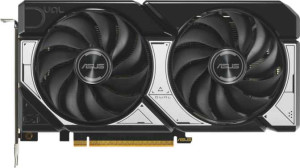
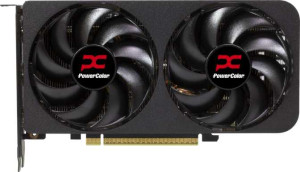
At the silicon level, these two cards come from distinct architectural generations and process nodes. The RX 9060 XT is built on a 4 nm process with 29,700 million transistors, while the RTX 5060 OC uses a 5 nm process packing 21,900 million transistors. A smaller node generally enables greater transistor density and improved power efficiency, and the AMD die's significantly higher transistor count reflects the larger, more complex chip underneath — which aligns with its stronger raw throughput numbers seen in the performance group.
Power consumption tells an interesting story in context. The RX 9060 XT carries a 160W TDP versus 145W for the RTX 5060 — a 15W gap that is noticeable but not dramatic. Given that the AMD card delivers considerably higher compute throughput, its power-per-performance ratio is competitive. For system builders, both cards are well within the range of a modern mid-range power supply, and both use PCIe 5.0, ensuring neither is bottlenecked by slot bandwidth on current platforms.
Physically, the two cards are nearly identical in footprint — the RTX 5060 OC measures 228 × 123 mm and the RX 9060 XT comes in at 220 × 120 mm, a negligible difference that will have no practical impact on case compatibility. Neither card offers liquid cooling. Overall, this group doesn't hand a decisive advantage to either product — the RTX 5060 OC edges ahead on TDP efficiency, while the RX 9060 XT's more advanced node and higher transistor count underpin its architectural ambition.