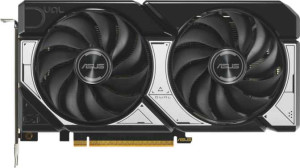
Asus Dual GeForce RTX 5060 OC Edition
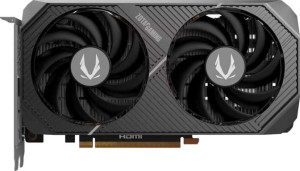
Zotac Gaming GeForce RTX 5050 Twin Edge OC

Asus Dual GeForce RTX 5060 OC Edition Zotac Gaming GeForce RTX 5050 Twin Edge OC

Common Features

  • Both products have 8GB of VRAM.
  • Both products have a 128-bit memory bus width.
  • Both products support ECC memory.
  • Both products support DirectX 12 Ultimate.
  • Both products support OpenGL version 4.6.
  • Both products support OpenCL version 3.
  • Both products support multi-display technology.
  • Both products support ray tracing.
  • Both products support 3D.
  • Both products support DLSS.
  • Both products have HDMI output.
  • Both products have one HDMI port.
  • Both products use HDMI 2.1b.
  • Both products have three DisplayPort outputs.
  • Both products have no USB-C ports.
  • Both products have no DVI outputs.
  • Both products have no mini DisplayPort outputs.
  • Both products are based on Blackwell GPU architecture.
  • Both products use PCI Express version 5.
  • Both products have a 5 nm semiconductor size.

Main Differences

  • GPU clock speed is 2280 MHz on Asus Dual GeForce RTX 5060 OC Edition and 2317 MHz on Zotac Gaming GeForce RTX 5050 Twin Edge OC.
  • GPU turbo is 2535 MHz on Asus Dual GeForce RTX 5060 OC Edition and 2602 MHz on Zotac Gaming GeForce RTX 5050 Twin Edge OC.
  • Pixel rate is 121.7 GPixel/s on Asus Dual GeForce RTX 5060 OC Edition and 83.26 GPixel/s on Zotac Gaming GeForce RTX 5050 Twin Edge OC.
  • Floating-point performance is 19.47 TFLOPS on Asus Dual GeForce RTX 5060 OC Edition and 13.32 TFLOPS on Zotac Gaming GeForce RTX 5050 Twin Edge OC.
  • Texture rate is 304.2 GTexels/s on Asus Dual GeForce RTX 5060 OC Edition and 208.2 GTexels/s on Zotac Gaming GeForce RTX 5050 Twin Edge OC.
  • GPU memory speed is 1750 MHz on Asus Dual GeForce RTX 5060 OC Edition and 2500 MHz on Zotac Gaming GeForce RTX 5050 Twin Edge OC.
  • Shading units are 3840 on Asus Dual GeForce RTX 5060 OC Edition and 2560 on Zotac Gaming GeForce RTX 5050 Twin Edge OC.
  • Texture mapping units (TMUs) are 120 on Asus Dual GeForce RTX 5060 OC Edition and 80 on Zotac Gaming GeForce RTX 5050 Twin Edge OC.
  • Render output units (ROPs) are 48 on Asus Dual GeForce RTX 5060 OC Edition and 32 on Zotac Gaming GeForce RTX 5050 Twin Edge OC.
  • Effective memory speed is 28000 MHz on Asus Dual GeForce RTX 5060 OC Edition and 20000 MHz on Zotac Gaming GeForce RTX 5050 Twin Edge OC.
  • Maximum memory bandwidth is 448 GB/s on Asus Dual GeForce RTX 5060 OC Edition and 320 GB/s on Zotac Gaming GeForce RTX 5050 Twin Edge OC.
  • GDDR version is GDDR7 on Asus Dual GeForce RTX 5060 OC Edition and GDDR6 on Zotac Gaming GeForce RTX 5050 Twin Edge OC.
  • Thermal Design Power (TDP) is 145W on Asus Dual GeForce RTX 5060 OC Edition and 130W on Zotac Gaming GeForce RTX 5050 Twin Edge OC.
  • Number of transistors is 21900 million on Asus Dual GeForce RTX 5060 OC Edition and 16900 million on Zotac Gaming GeForce RTX 5050 Twin Edge OC.
  • Width is 228 mm on Asus Dual GeForce RTX 5060 OC Edition and 220.5 mm on Zotac Gaming GeForce RTX 5050 Twin Edge OC.
  • Height is 123 mm on Asus Dual GeForce RTX 5060 OC Edition and 120.3 mm on Zotac Gaming GeForce RTX 5050 Twin Edge OC.
Specs Comparison
Asus Dual GeForce RTX 5060 OC Edition

Asus Dual GeForce RTX 5060 OC Edition

Zotac Gaming GeForce RTX 5050 Twin Edge OC

Zotac Gaming GeForce RTX 5050 Twin Edge OC

Performance:
GPU clock speed 2280 MHz 2317 MHz
GPU turbo 2535 MHz 2602 MHz
pixel rate 121.7 GPixel/s 83.26 GPixel/s
floating-point performance 19.47 TFLOPS 13.32 TFLOPS
texture rate 304.2 GTexels/s 208.2 GTexels/s
GPU memory speed 1750 MHz 2500 MHz
shading units 3840 2560
texture mapping units (TMUs) 120 80
render output units (ROPs) 48 32
Has Double Precision Floating Point (DPFP)

When comparing the performance specs of the Asus Dual GeForce RTX 5060 OC Edition and the Zotac Gaming GeForce RTX 5050 Twin Edge OC, several key differences stand out. The Asus card has a GPU clock speed of 2280 MHz and a turbo boost of 2535 MHz, while the Zotac card runs at a slightly higher GPU clock speed of 2317 MHz, with a turbo boost of 2602 MHz. These clock speeds indicate that the Zotac card may provide a bit more raw GPU performance in terms of speed.

In terms of pixel rate, the Asus card significantly outperforms the Zotac with a pixel rate of 121.7 GPixel/s compared to the Zotac's 83.26 GPixel/s. The Asus card also leads in floating-point performance, delivering 19.47 TFLOPS, while the Zotac offers 13.32 TFLOPS. The texture rate is another area where the Asus card excels, achieving 304.2 GTexels/s, surpassing the Zotac's 208.2 GTexels/s.

Other performance factors like GPU memory speed, shading units, texture mapping units (TMUs), and render output units (ROPs) show a mixed picture. The Asus card has a GPU memory speed of 1750 MHz, while the Zotac card has a faster memory speed of 2500 MHz. The Asus card is equipped with 3840 shading units, 120 TMUs, and 48 ROPs, while the Zotac card has 2560 shading units, 80 TMUs, and 32 ROPs. Both cards support Double Precision Floating Point (DPFP), though no direct comparison of this feature can be made as both support it.

Memory:
effective memory speed 28000 MHz 20000 MHz
maximum memory bandwidth 448 GB/s 320 GB/s
VRAM 8GB 8GB
GDDR version GDDR7 GDDR6
memory bus width 128-bit 128-bit
Supports ECC memory

The memory specifications for the Asus Dual GeForce RTX 5060 OC Edition and the Zotac Gaming GeForce RTX 5050 Twin Edge OC show a few notable differences. Both cards feature 8GB of VRAM, which is a common amount for mid-range graphics cards. However, the Asus card uses GDDR7 memory, while the Zotac card uses GDDR6, indicating a difference in memory generation and potential data transfer speeds, with GDDR7 generally offering faster speeds than GDDR6.

In terms of effective memory speed, the Asus card leads with a speed of 28000 MHz, while the Zotac card is lower at 20000 MHz. This higher effective memory speed on the Asus card could translate into better overall memory performance. The maximum memory bandwidth also differs, with the Asus card offering 448 GB/s, whereas the Zotac card provides 320 GB/s, further emphasizing the memory performance gap between the two products.

Both cards feature a 128-bit memory bus width, meaning the width of the memory interface is the same. Additionally, both products support ECC (Error-Correcting Code) memory, ensuring reliability and error correction during data processing, though this feature is common to both and does not differ between the two cards.

Features:
DirectX version DirectX 12 Ultimate DirectX 12 Ultimate
OpenGL version 4.6 4.6
OpenCL version 3 3
Supports multi-display technology
supports ray tracing
Supports 3D
supports DLSS
has XeSS (XMX)
AMD SAM / Intel Resizable BAR Intel Resizable BAR Intel Resizable BAR
has LHR
has RGB lighting
supported displays 4 4

The Asus Dual GeForce RTX 5060 OC Edition and the Zotac Gaming GeForce RTX 5050 Twin Edge OC share several important features in common. Both cards support DirectX 12 Ultimate, OpenGL 4.6, and OpenCL 3, ensuring compatibility with modern gaming and productivity software. They also both support multi-display technology, ray tracing, 3D support, DLSS, and Intel Resizable BAR, which can improve performance with compatible CPUs. Additionally, neither card includes XeSS (XMX) support, and both are free from the limitations of LHR (Lite Hash Rate), making them suitable for gaming and other GPU-intensive tasks.

When it comes to RGB lighting, both the Asus and Zotac cards feature this aesthetic enhancement, allowing users to customize their system's look. They also both support up to four displays, offering flexibility for users with multi-monitor setups.

In summary, the feature sets of the two cards are nearly identical, with no significant differences between them in terms of supported technologies or capabilities.

Ports:
has an HDMI output
HDMI ports 1 1
HDMI version HDMI 2.1b HDMI 2.1b
DisplayPort outputs 3 3
USB-C ports 0 0
DVI outputs 0 0
mini DisplayPort outputs 0 0

The port configurations of the Asus Dual GeForce RTX 5060 OC Edition and the Zotac Gaming GeForce RTX 5050 Twin Edge OC are identical in several key areas. Both cards feature one HDMI output with HDMI 2.1b support, making them suitable for modern displays and high-resolution setups. Each card also includes three DisplayPort outputs, providing ample options for connecting to multiple monitors.

Both the Asus and Zotac cards have no USB-C ports, DVI outputs, or mini DisplayPort outputs, meaning there are no additional specialized ports beyond the HDMI and DisplayPort connections.

Overall, the port offerings of both cards match exactly, providing users with the same connectivity options for display setups.

General info:
GPU architecture Blackwell Blackwell
release date May 2025 June 2025
Thermal Design Power (TDP) 145W 130W
PCI Express (PCIe) version 5 5
semiconductor size 5 nm 5 nm
number of transistors 21900 million 16900 million
Has air-water cooling
width 228 mm 220.5 mm
height 123 mm 120.3 mm

In the general specifications, both the Asus Dual GeForce RTX 5060 OC Edition and the Zotac Gaming GeForce RTX 5050 Twin Edge OC feature the same GPU architecture, based on Blackwell, and both use a 5 nm semiconductor size. However, they differ in a few key areas. The Asus card has a Thermal Design Power (TDP) of 145W, which is slightly higher than the Zotac card's TDP of 130W. This suggests that the Asus card may consume a bit more power during operation.

Both cards are built on the PCI Express 5.0 interface, ensuring compatibility with modern motherboards. In terms of transistor count, the Asus card has 21.9 billion transistors, while the Zotac card has 16.9 billion transistors, indicating the Asus card has a higher transistor count for potentially improved processing power.

Regarding physical dimensions, the Asus card measures 228 mm in width and 123 mm in height, whereas the Zotac card is slightly smaller at 220.5 mm in width and 120.3 mm in height. Neither card includes air-water cooling, both relying on standard cooling solutions.

Comparison Summary

This is a specification comparison between the Asus Dual GeForce RTX 5060 OC Edition and the Zotac Gaming GeForce RTX 5050 Twin Edge OC. Both products feature 8GB of VRAM, 128-bit memory bus width, and support for DirectX 12 Ultimate. The Asus model offers higher performance with a GPU clock speed of 2280 MHz and floating-point performance of 19.47 TFLOPS, compared to the Zotac model’s 2317 MHz clock and 13.32 TFLOPS. Additionally, the Asus card features a higher texture rate of 304.2 GTexels/s and a greater number of shading units (3840) versus the Zotac's 208.2 GTexels/s and 2560 shading units. The TDP is 145W for the Asus and 130W for the Zotac model, with the Asus also having more transistors at 21900 million compared to the Zotac’s 16900 million.