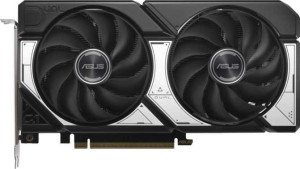
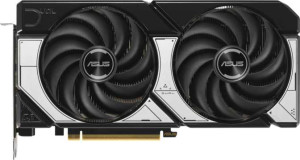
Sharing the same Blackwell architecture, 5 nm process node, and PCIe 5.0 interface, these two cards are cut from the same generational cloth — but the silicon underneath tells a story of meaningfully different scale. The RTX 5070 OC packs 31,100 million transistors against the 5060 Ti's 21,900 million, a gap of over 40%. More transistors generally mean more functional units and greater architectural complexity, which aligns directly with the performance gaps seen in compute and texture throughput. Both cards use air cooling exclusively, so neither has a thermal dissipation advantage by design type.
Power consumption is where the two diverge most consequentially for system builders. The 5070 OC carries a 250W TDP versus the 5060 Ti's 180W — a 70W difference that has real downstream implications. A higher TDP demands a more robust PSU, produces more heat that the case and cooling solution must manage, and will result in higher sustained power draw under load. For compact builds or systems with modest power supplies, the 5060 Ti's lower thermal envelope is a genuine practical advantage.
Physically, the 5070 OC is modestly larger at 249 × 126 mm compared to 229 × 120 mm for the 5060 Ti — a difference unlikely to cause fitment issues in most mid-tower or larger cases, but worth noting for smaller form factor builds. On balance, the 5060 Ti holds the edge here for system compatibility and efficiency, while the 5070 OC's larger die and higher TDP are the expected cost of its greater performance headroom.