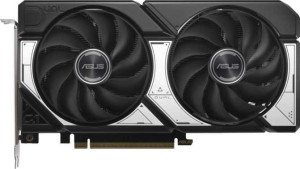
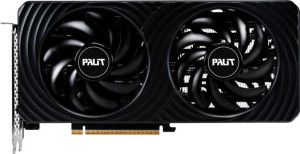
The most telling performance gap between these two cards lies in their shader and compute architecture. The Asus Dual RTX 5060 Ti fields 4608 shading units and 144 TMUs, versus 3840 shading units and 120 TMUs on the Palit RTX 5060 Dual OC — a roughly 20% advantage in raw parallelism. This translates directly into the floating-point gap: 23.7 TFLOPS versus 19.47 TFLOPS, which is a meaningful ~22% lead for the Ti in shader-heavy workloads like ray tracing, AI-accelerated rendering, and compute tasks. Similarly, the texture throughput difference — 370.4 GTexels/s vs 304.2 GTexels/s — means the Ti can push more textured detail per frame, benefiting complex scenes with high texture density.
Clock speeds tell a more nuanced story. The Ti runs a higher base clock at 2407 MHz vs 2280 MHz, and its boost is modestly ahead at 2572 MHz vs 2535 MHz. The turbo gap is relatively small (~37 MHz), so the Ti's broader performance lead comes primarily from having more execution units, not dramatically higher clocks. Notably, both cards share identical 1750 MHz memory speed and the same 48 ROPs, which means pixel fill rate is nearly equal — 123.5 GPixel/s vs 121.7 GPixel/s — keeping rasterization throughput roughly on par.
Overall, the Asus RTX 5060 Ti holds a clear performance advantage in this group. The ~22% edge in compute throughput and texture rate is significant enough to matter in demanding games and GPU-accelerated workloads, while the equal ROPs and memory speed mean the Palit 5060 is not fundamentally bottlenecked in simpler rendering tasks. Both support Double Precision Floating Point, so neither has an exclusive edge there. Users prioritizing raw performance should lean toward the Ti; the Palit 5060 remains competitive only where the workload does not heavily stress shader or texture throughput.