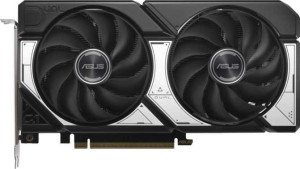
Asus Dual GeForce RTX 5060 Ti 16GB
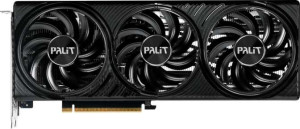
Palit GeForce RTX 5060 Ti Infinity 3 16GB

Asus Dual GeForce RTX 5060 Ti 16GB Palit GeForce RTX 5060 Ti Infinity 3 16GB

Overview

Welcome to our in-depth specification comparison between the Asus Dual GeForce RTX 5060 Ti 16GB and the Palit GeForce RTX 5060 Ti Infinity 3 16GB. Both cards are built on the same Blackwell architecture and share an identical feature set, making this a fascinating head-to-head where physical dimensions become the decisive factor. Read on to discover how these two RTX 5060 Ti variants stack up across performance, memory, connectivity, and form factor.

Common Features

  • GPU clock speed is 2407 MHz on both products.
  • GPU turbo speed is 2572 MHz on both products.
  • Pixel rate is 123.5 GPixel/s on both products.
  • Floating-point performance is 23.7 TFLOPS on both products.
  • Texture rate is 370.4 GTexels/s on both products.
  • GPU memory speed is 1750 MHz on both products.
  • Both products have 4608 shading units.
  • Both products have 144 texture mapping units (TMUs).
  • Effective memory speed is 28000 MHz on both products.
  • Maximum memory bandwidth is 448 GB/s on both products.
  • Both products feature 16GB of VRAM.
  • Both products use GDDR7 memory.
  • Memory bus width is 128-bit on both products.
  • ECC memory support is available on both products.
  • Both products support DirectX 12 Ultimate.
  • OpenGL version is 4.6 on both products.
  • OpenCL version is 3 on both products.
  • Multi-display technology is supported on both products.
  • Ray tracing is supported on both products.
  • DLSS is supported on both products.
  • 3D support is available on both products.
  • XeSS (XMX) support is not available on either product.
  • Both products have one HDMI output running version 2.1b.
  • Both products offer three DisplayPort outputs.
  • Neither product has USB-C, DVI, or mini DisplayPort outputs.
  • Both products are built on the Blackwell GPU architecture.
  • Thermal Design Power (TDP) is 180W on both products.
  • Both products use PCI Express version 5.
  • Semiconductor size is 5 nm on both products.
  • Both products contain 21900 million transistors.
  • Air-water cooling is not available on either product.

Main Differences

  • Width is 229 mm on the Asus Dual GeForce RTX 5060 Ti 16GB and 291.9 mm on the Palit GeForce RTX 5060 Ti Infinity 3 16GB.
  • Height is 120 mm on the Asus Dual GeForce RTX 5060 Ti 16GB and 116.6 mm on the Palit GeForce RTX 5060 Ti Infinity 3 16GB.
Specs Comparison
Asus Dual GeForce RTX 5060 Ti 16GB

Asus Dual GeForce RTX 5060 Ti 16GB

Palit GeForce RTX 5060 Ti Infinity 3 16GB

Palit GeForce RTX 5060 Ti Infinity 3 16GB

Performance:
GPU clock speed 2407 MHz 2407 MHz
GPU turbo 2572 MHz 2572 MHz
pixel rate 123.5 GPixel/s 123.5 GPixel/s
floating-point performance 23.7 TFLOPS 23.7 TFLOPS
texture rate 370.4 GTexels/s 370.4 GTexels/s
GPU memory speed 1750 MHz 1750 MHz
shading units 4608 4608
texture mapping units (TMUs) 144 144
render output units (ROPs) 48 48
Has Double Precision Floating Point (DPFP)

In terms of raw performance, the Asus Dual RTX 5060 Ti 16GB and the Palit RTX 5060 Ti Infinity 3 16GB are identical across every measurable metric. Both cards share the same 2407 MHz base clock and 2572 MHz boost clock, the same 4608 shading units, 144 TMUs, and 48 ROPs, and both deliver 23.7 TFLOPS of floating-point performance alongside a 370.4 GTexel/s texture fill rate and 123.5 GPixel/s pixel rate. Memory runs at 1750 MHz on both cards. These figures are not coincidental — they reflect the fact that both boards are built on the exact same GPU silicon, operating at reference clock speeds.

What do these numbers mean in practice? The 23.7 TFLOPS figure puts both cards in a strong position for 1080p and 1440p gaming, and the high texture rate ensures detailed scenes with complex shading are handled efficiently. The 48 ROPs are adequate for the target resolution range, though notably lower than higher-tier cards. Both also support Double Precision Floating Point, which is relevant for certain compute and scientific workloads, though it is rarely a deciding factor for gaming users.

From a pure performance standpoint, this comparison is a complete tie. Neither card holds any advantage over the other in this spec group. Any real-world difference between these two products will come down to factors outside this group — such as cooling design, power delivery, or factory overclocking — none of which are reflected in the data here. Buyers choosing between them based solely on performance metrics have no reason to prefer one over the other.

Memory:
effective memory speed 28000 MHz 28000 MHz
maximum memory bandwidth 448 GB/s 448 GB/s
VRAM 16GB 16GB
GDDR version GDDR7 GDDR7
memory bus width 128-bit 128-bit
Supports ECC memory

The memory configurations of the Asus Dual RTX 5060 Ti 16GB and the Palit RTX 5060 Ti Infinity 3 16GB are mirror images of each other. Both cards carry 16GB of GDDR7 VRAM on a 128-bit bus, running at an effective speed of 28000 MHz to deliver 448 GB/s of memory bandwidth. There is not a single differentiating figure in this entire spec group.

That said, the shared specifications are worth contextualizing. GDDR7 is a significant generational step over GDDR6X, offering higher efficiency and bandwidth per pin — meaning the 448 GB/s here punches above what older 128-bit cards could achieve. The 16GB VRAM capacity is a genuine strong point for this tier, providing comfortable headroom for high-resolution texture packs and future game titles that are increasingly memory-hungry. The narrower 128-bit bus is a known architectural trade-off, but GDDR7′s speed largely compensates for it at 1080p and 1440p workloads. ECC memory support is also present on both, which is rarely relevant for gaming but adds value for users running creative or compute tasks on the side.

As with the performance group, this is an unambiguous tie. Both cards will behave identically in any memory-bound scenario. The choice between them cannot be made on memory grounds — buyers should look to other factors such as cooling, build quality, or price.

Features:
DirectX version DirectX 12 Ultimate DirectX 12 Ultimate
OpenGL version 4.6 4.6
OpenCL version 3 3
Supports multi-display technology
supports ray tracing
Supports 3D
supports DLSS
has XeSS (XMX)
AMD SAM / Intel Resizable BAR Intel Resizable BAR Intel Resizable BAR
has LHR
has RGB lighting
supported displays 4 4

Feature parity continues to define this comparison. Both the Asus Dual RTX 5060 Ti and the Palit RTX 5060 Ti Infinity 3 support DirectX 12 Ultimate, which is the current gold standard for gaming APIs, enabling hardware-accelerated ray tracing, variable rate shading, and mesh shaders in supported titles. DLSS support is present on both, giving users access to AI-driven upscaling that can meaningfully boost frame rates with minimal visual quality loss — a practical and frequently used advantage in modern games.

Ray tracing support is listed for both cards, which aligns with the DirectX 12 Ultimate capability set. Neither card supports XeSS, which is Intel′s competing upscaling technology — but this is a non-issue for the vast majority of users who will rely on DLSS instead. Both support up to 4 simultaneous displays, which covers virtually all multi-monitor setups including enthusiast triple-screen configurations. Intel Resizable BAR is supported on both, allowing the CPU to access the full GPU frame buffer at once, which can provide modest performance uplift in certain titles. Neither card features RGB lighting, which simplifies builds where aesthetics are not a priority.

Once again, the data reveals a complete tie. Every feature available on one card is equally available on the other, with no exceptions across the entire group. Buyers who prioritize software capabilities, API support, or display flexibility will find no reason to favor either card over the other based on this data alone.
Ports:
has an HDMI output
HDMI ports 1 1
HDMI version HDMI 2.1b HDMI 2.1b
DisplayPort outputs 3 3
USB-C ports 0 0
DVI outputs 0 0
mini DisplayPort outputs 0 0

Both the Asus Dual RTX 5060 Ti and the Palit RTX 5060 Ti Infinity 3 offer an identical port layout: 3 DisplayPort outputs and 1 HDMI 2.1b port, totaling four display connections — which matches the four-display support noted in the Features group. There are no USB-C, DVI, or mini DisplayPort outputs on either card.

The port selection is well-suited to modern use cases. HDMI 2.1b supports up to 4K at high refresh rates and is the connector of choice for connecting to a television or a monitor without a DisplayPort input. The three DisplayPort outputs comfortably accommodate triple-monitor gaming setups or mixed-use workstation configurations. The absence of USB-C is worth noting for users who own USB-C or Thunderbolt-based displays, as they would require an active adapter — but this is a common trade-off at this product tier.

This group is yet another tie. The port configurations are identical down to the version numbers, offering the same connectivity flexibility and the same limitations. Neither card presents any advantage over the other for users with specific display or cabling requirements.

General info:
GPU architecture Blackwell Blackwell
release date April 2025 April 2025
Thermal Design Power (TDP) 180W 180W
PCI Express (PCIe) version 5 5
semiconductor size 5 nm 5 nm
number of transistors 21900 million 21900 million
Has air-water cooling
width 229 mm 291.9 mm
height 120 mm 116.6 mm

At the architectural level, the two cards are built on the same foundation: both use Nvidia′s Blackwell architecture on a 5 nm process with 21.9 billion transistors, operate within a 180W TDP, and connect via PCIe 5.0. The 180W power envelope is relatively modest for a card at this performance tier, making both suitable for mid-range builds without demanding premium power supplies. PCIe 5.0 ensures maximum future compatibility, though in practice these cards will perform identically on PCIe 4.0 systems as well.

The one area where the data diverges is physical size. The Asus Dual RTX 5060 Ti measures 229 mm in length, while the Palit RTX 5060 Ti Infinity 3 is notably longer at 291.9 mm — a difference of roughly 63 mm. This is a meaningful real-world consideration: the Palit card is significantly larger and may not fit in compact or mid-tower cases with restricted GPU clearance. The Asus card′s shorter length makes it considerably more compatible with smaller form factor builds. The height difference is marginal — 120 mm versus 116.6 mm — and unlikely to affect fitment in any practical scenario.

This group finally produces a clear, if narrow, edge: the Asus Dual RTX 5060 Ti holds a practical advantage for users with space-constrained cases. For those building in full-size towers where length is not a concern, the two cards remain effectively equivalent on every other general specification.

Comparison Summary & Verdict

After a thorough comparison, the Asus Dual GeForce RTX 5060 Ti 16GB and the Palit GeForce RTX 5060 Ti Infinity 3 16GB are effectively identical in every performance and feature metric — sharing the same 2572 MHz boost clock, 16GB GDDR7 memory with 448 GB/s bandwidth, 180W TDP, and full support for ray tracing and DLSS. The only meaningful distinction lies in their physical size: the Asus card measures a more compact 229 mm wide and 120 mm tall, while the Palit model is notably larger at 291.9 mm wide and 116.6 mm tall. Choose the Asus Dual if you have a smaller chassis or tight clearance requirements, and opt for the Palit Infinity 3 if your case accommodates longer cards and cooling headroom is a priority.

Asus Dual GeForce RTX 5060 Ti 16GB
Buy Asus Dual GeForce RTX 5060 Ti 16GB if...

Buy the Asus Dual GeForce RTX 5060 Ti 16GB if you have a compact or mid-tower case where card length is a concern, as its 229 mm width makes it the more space-friendly choice.

Palit GeForce RTX 5060 Ti Infinity 3 16GB
Buy Palit GeForce RTX 5060 Ti Infinity 3 16GB if...

Buy the Palit GeForce RTX 5060 Ti Infinity 3 16GB if your case has ample room for a longer card, as its 291.9 mm width suggests a larger cooler design that may benefit thermal headroom.