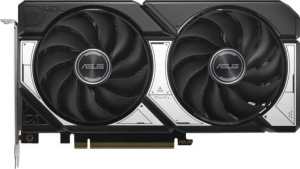
Asus Dual GeForce RTX 5060 Ti OC Edition 16GB
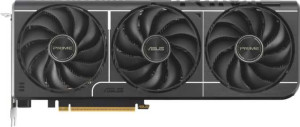
Asus Prime GeForce RTX 5060 Ti OC Edition 16GB

Asus Dual GeForce RTX 5060 Ti OC Edition 16GB Asus Prime GeForce RTX 5060 Ti OC Edition 16GB

Overview

Welcome to our in-depth spec comparison between the Asus Dual GeForce RTX 5060 Ti OC Edition 16GB and the Asus Prime GeForce RTX 5060 Ti OC Edition 16GB. Both cards share the same Blackwell architecture, 16GB of GDDR7 memory, and a 180W TDP, making this a finely balanced matchup. The key battlegrounds come down to peak GPU turbo clocks, raw compute throughput, and physical card dimensions — factors that could meaningfully influence your buying decision depending on your build and priorities.

Common Features

  • Both cards share a base GPU clock speed of 2407 MHz.
  • Both cards have a GPU memory speed of 1750 MHz.
  • Both cards feature 4608 shading units.
  • Both cards include 144 texture mapping units (TMUs).
  • Both cards have 48 render output units (ROPs).
  • Double Precision Floating Point (DPFP) is supported on both cards.
  • Both cards have an effective memory speed of 28000 MHz.
  • Both cards offer a maximum memory bandwidth of 448 GB/s.
  • Both cards come with 16GB of VRAM.
  • Both cards use GDDR7 memory.
  • Both cards have a 128-bit memory bus width.
  • ECC memory is supported on both cards.
  • Both cards support DirectX 12 Ultimate.
  • Both cards support OpenGL version 4.6.
  • Both cards support OpenCL version 3.
  • Multi-display technology is supported on both cards.
  • Ray tracing is supported on both cards.
  • 3D output is supported on both cards.
  • DLSS is supported on both cards.
  • XeSS (XMX) is not available on either card.
  • Both cards include one HDMI 2.1b port and three DisplayPort outputs.
  • Neither card includes USB-C, DVI, or mini DisplayPort outputs.
  • Both cards are built on the Blackwell GPU architecture.
  • Both cards have a Thermal Design Power (TDP) of 180W.
  • Both cards use PCIe version 5.
  • Both cards are manufactured on a 5 nm semiconductor process.
  • Both cards feature 21,900 million transistors.
  • Air-water cooling is not present on either card.
  • Both cards have a height of 120 mm.

Main Differences

  • GPU turbo clock speed is 2602 MHz on the Asus Dual GeForce RTX 5060 Ti OC Edition 16GB and 2617 MHz on the Asus Prime GeForce RTX 5060 Ti OC Edition 16GB.
  • Pixel rate is 124.9 GPixel/s on the Asus Dual GeForce RTX 5060 Ti OC Edition 16GB and 125.6 GPixel/s on the Asus Prime GeForce RTX 5060 Ti OC Edition 16GB.
  • Floating-point performance is 23.98 TFLOPS on the Asus Dual GeForce RTX 5060 Ti OC Edition 16GB and 24.12 TFLOPS on the Asus Prime GeForce RTX 5060 Ti OC Edition 16GB.
  • Texture rate is 374.7 GTexels/s on the Asus Dual GeForce RTX 5060 Ti OC Edition 16GB and 376.8 GTexels/s on the Asus Prime GeForce RTX 5060 Ti OC Edition 16GB.
  • Card width is 229 mm on the Asus Dual GeForce RTX 5060 Ti OC Edition 16GB and 304 mm on the Asus Prime GeForce RTX 5060 Ti OC Edition 16GB.
Specs Comparison
Asus Dual GeForce RTX 5060 Ti OC Edition 16GB

Asus Dual GeForce RTX 5060 Ti OC Edition 16GB

Asus Prime GeForce RTX 5060 Ti OC Edition 16GB

Asus Prime GeForce RTX 5060 Ti OC Edition 16GB

Performance:
GPU clock speed 2407 MHz 2407 MHz
GPU turbo 2602 MHz 2617 MHz
pixel rate 124.9 GPixel/s 125.6 GPixel/s
floating-point performance 23.98 TFLOPS 24.12 TFLOPS
texture rate 374.7 GTexels/s 376.8 GTexels/s
GPU memory speed 1750 MHz 1750 MHz
shading units 4608 4608
texture mapping units (TMUs) 144 144
render output units (ROPs) 48 48
Has Double Precision Floating Point (DPFP)

At their core, both the Asus Dual RTX 5060 Ti OC and the Asus Prime RTX 5060 Ti OC share identical silicon foundations: the same 4608 shading units, 144 TMUs, 48 ROPs, and a base GPU clock of 2407 MHz. This means their theoretical parallelism and memory bandwidth — clocked at the same 1750 MHz — are perfectly matched. For the vast majority of workloads, these two cards are functionally equivalent.

The only meaningful divergence lies in the factory boost clock. The Prime OC edges ahead with a turbo of 2617 MHz versus the Dual OC's 2602 MHz — a gap of just 15 MHz, or roughly 0.6%. This marginal difference cascades into similarly slim leads in derived metrics: floating-point performance of 24.12 TFLOPS vs 23.98 TFLOPS, and a texture rate of 376.8 GTexels/s vs 374.7 GTexels/s. In real-world rendering, gaming, or compute tasks, a sub-1% clock advantage is well within frame-time noise and would not produce a perceptible difference in framerates or render times.

The Prime OC technically holds the performance edge in this group, but the advantage is purely on paper. Both cards support Double Precision Floating Point, which is relevant for professional or scientific compute use cases. Unless one card is priced meaningfully lower, the performance specs alone should not be the deciding factor between these two — design, cooling solution, and acoustics are far more likely to differentiate them in practice.

Memory:
effective memory speed 28000 MHz 28000 MHz
maximum memory bandwidth 448 GB/s 448 GB/s
VRAM 16GB 16GB
GDDR version GDDR7 GDDR7
memory bus width 128-bit 128-bit
Supports ECC memory

Memory is one area where these two cards are in complete lockstep. Both feature 16GB of GDDR7 VRAM running at an effective 28000 MHz over a 128-bit bus, delivering 448 GB/s of memory bandwidth. That bandwidth figure is particularly noteworthy: GDDR7's architectural efficiency allows a 128-bit interface to punch well above its weight compared to older GDDR6X designs at the same bus width, making this a genuinely capable configuration rather than a compromised one.

The 16GB capacity is a meaningful generational step for this market segment, comfortably handling high-resolution textures, large AI inference models, and 4K asset streaming without the VRAM pressure that plagued previous mid-range cards. The inclusion of ECC memory support on both cards is a notable bonus, offering error-correcting capability typically associated with professional-grade hardware — useful for creators or developers running compute workloads where data integrity matters.

This group is an absolute tie: every single memory specification is identical across the Dual OC and the Prime OC. Memory performance will have zero influence on choosing between these two cards.

Features:
DirectX version DirectX 12 Ultimate DirectX 12 Ultimate
OpenGL version 4.6 4.6
OpenCL version 3 3
Supports multi-display technology
supports ray tracing
Supports 3D
supports DLSS
has XeSS (XMX)
AMD SAM / Intel Resizable BAR Intel Resizable BAR Intel Resizable BAR
has LHR
has RGB lighting
supported displays 4 4

Feature parity between these two cards is total. Both support DirectX 12 Ultimate — the current gold standard for modern gaming APIs, enabling hardware-accelerated ray tracing, mesh shaders, and variable rate shading across supported titles. Paired with ray tracing and DLSS support, both cards are well-equipped for the current generation of visually demanding games, where DLSS in particular can dramatically recover framerates lost to ray tracing overhead.

On the practical side, both cards drive up to 4 displays simultaneously and support Intel Resizable BAR, which allows the CPU to access the full VRAM pool at once rather than in chunks — a feature that can yield modest but real performance gains in optimized titles. Neither card carries an LHR limiter, which is relevant for compute and mining workloads, and neither includes RGB lighting, signaling a more utilitarian design philosophy on both models.

With every feature spec identical across the Dual OC and the Prime OC, this category is a definitive tie. Whichever card a buyer chooses, they are getting the exact same software and API capabilities.

Ports:
has an HDMI output
HDMI ports 1 1
HDMI version HDMI 2.1b HDMI 2.1b
DisplayPort outputs 3 3
USB-C ports 0 0
DVI outputs 0 0
mini DisplayPort outputs 0 0

Both cards offer an identical output configuration: 3 DisplayPort and 1 HDMI 2.1b port, totaling four display outputs — consistent with the multi-display support noted in their feature specs. The adoption of HDMI 2.1b is meaningful here, as it supports up to 4K at high refresh rates and 8K output, making either card future-compatible with high-end monitors and TVs without the need for adapters.

The three DisplayPort outputs are the workhorses for a multi-monitor setup, and their quantity means a user can run a full three-screen array on DisplayPort alone while keeping the HDMI port free for a TV or a fourth display. The absence of USB-C and legacy DVI outputs is unsurprising at this tier — DVI is effectively extinct in modern GPU design, and USB-C display output, while useful for direct connection to certain monitors and laptops, is not a standard inclusion on cards in this class.

No differentiation exists between the Dual OC and the Prime OC in this category — it is a clean tie. Connectivity needs will not factor into the decision between these two cards.

General info:
GPU architecture Blackwell Blackwell
release date April 2025 April 2025
Thermal Design Power (TDP) 180W 180W
PCI Express (PCIe) version 5 5
semiconductor size 5 nm 5 nm
number of transistors 21900 million 21900 million
Has air-water cooling
width 229 mm 304 mm
height 120 mm 120 mm

Under the hood, these two cards are built from identical foundations: the same Blackwell architecture, manufactured on a 5nm process with 21.9 billion transistors, running at a 180W TDP over a PCIe 5.0 interface. The 5nm node delivers strong performance-per-watt, and the 180W power envelope is reasonable for this performance tier — manageable for most mid-range PSUs without requiring exotic power delivery.

Where these two cards genuinely diverge is physical footprint. The Dual OC measures 229mm in length, while the Prime OC stretches to 304mm — a difference of 75mm, or about 33% longer. That gap is substantial. The Dual OC's shorter PCB makes it a far more compatible choice for compact ATX cases, Mini-ITX builds, or any chassis with tight GPU clearance limits. The Prime OC, by contrast, occupies the space typical of a full-size dual or triple-fan card and will require buyers to verify case clearance before purchasing.

For this group, the Dual OC holds a clear practical advantage for space-constrained builds. Buyers with a standard mid-tower or full-tower have nothing to worry about with either card, but anyone building in a smaller enclosure should treat the Prime OC's 304mm length as a hard compatibility check.

Comparison Summary & Verdict

After examining every specification, these two cards are remarkably similar at their core, sharing the same base clock of 2407 MHz, 16GB of GDDR7 memory on a 128-bit bus, identical port configurations, and full support for ray tracing and DLSS. The Asus Prime GeForce RTX 5060 Ti OC Edition 16GB edges ahead with a slightly higher GPU turbo of 2617 MHz, a pixel rate of 125.6 GPixel/s, and 24.12 TFLOPS of floating-point performance, making it the marginally stronger performer on paper. However, it is also notably wider at 304 mm versus the Dual variant's 229 mm, which could be a real constraint in compact or mid-tower builds. The Asus Dual GeForce RTX 5060 Ti OC Edition 16GB is the smarter pick for space-conscious users, while enthusiasts who can accommodate the larger footprint may appreciate the Prime's modest performance advantage.

Asus Dual GeForce RTX 5060 Ti OC Edition 16GB
Buy Asus Dual GeForce RTX 5060 Ti OC Edition 16GB if...

Buy the Asus Dual GeForce RTX 5060 Ti OC Edition 16GB if you have a compact or space-constrained PC build, as its significantly smaller width of 229 mm makes it far easier to fit than the Prime variant.

Asus Prime GeForce RTX 5060 Ti OC Edition 16GB
Buy Asus Prime GeForce RTX 5060 Ti OC Edition 16GB if...

Buy the Asus Prime GeForce RTX 5060 Ti OC Edition 16GB if you want the highest possible out-of-the-box performance, since it offers a higher GPU turbo clock, better pixel rate, and greater floating-point throughput than the Dual model.